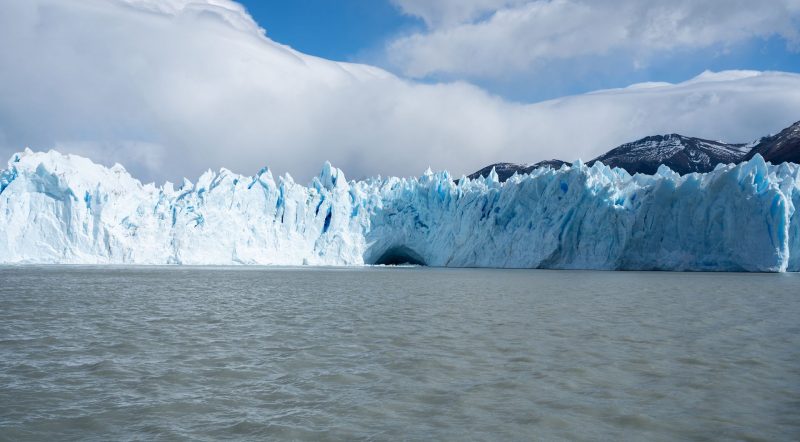
Glaciologists have recently released a white paper advocating for increased research into novel strategies to protect fragile ice sheets, including the construction of flexible barriers and deep drilling. Over the past 10 months, experts have convened in workshops and symposiums to discuss these bold proposals, aiming to safeguard the ice sheets from sliding into the ocean.
However, these untested ideas have faced strong opposition from some glaciologists, who argue that they are not only expensive but also logistically flawed. Critics emphasize the importance of focusing on reducing greenhouse gas emissions instead of diverting resources towards unproven techniques.
One of the authors of the white paper, John Moore, a glaciologist at the University of Lapland in Finland, suggests the implementation of buoyant "curtains" anchored to the seafloor beyond the ice shelves and glaciers. These curtains would impede the natural flow of warm water that erodes the ice sheet from beneath. Preliminary modeling studies mentioned in the white paper indicate that a curtain extending halfway from the seafloor along the West Antarctic coast could potentially reduce glacial melt by a factor of 10 in certain areas. Another proposed intervention involves drilling holes beneath the ice sheet to extract water or introduce heat, thereby slowing its movement.
Undoubtedly, such a monumental engineering endeavor would rank among the most expensive projects ever undertaken by humanity. During a seminar at the University of California in October 2023, researchers estimated that constructing an 80-kilometer-long curtain around the Antarctic glacier could incur costs of up to $88 billion. Furthermore, the success of such an intervention would require international political support, which some glaciologists perceive as a greater obstacle than the financial burden.
While the debate continues among glaciologists, the need for further research and exploration of innovative approaches to protect ice sheets remains a pressing concern. As the effects of climate change continue to impact these vulnerable regions, finding effective solutions is crucial to mitigate the potential consequences of ice sheet melt and its contribution to rising sea levels.
Glaciologists Call for Research on Innovative Ice Sheet Protection Methods
Tags
Prochlorococcus, the most abundant microbe in the oceans, is facing a survival crisis due to global warming. This single-celled cyanobacterium, found across more than 75% of the ocean's surface waters,…

Climate change is not only intensifying droughts, heatwaves, and storm surges but may also be increasing the risk of earthquakes through accelerated glacier melt. A research team from ETH Zurich…
A recent study published in Science Advances highlights a striking gap in our understanding of the deep ocean, which covers 66% of Earth's surface. According to the findings, less than…

Carbon dioxide (CO₂) emissions from human activities are not only altering the Earth’s atmosphere but are also rapidly acidifying the oceans. A new study published this week in the Proceedings…
A new study published in Nature Communications suggests that rising temperatures in polar regions could significantly disrupt ocean circulation patterns. The lead author of this study underscores that our findings indicate…
Enduring for 250 Million Years: The Ancient Presence of the Weather-Influencing El Niño Oscillation
The El Niño phenomenon, a massive warm oceanic mass in the tropical Pacific Ocean, has the capacity to alter global rainfall patterns and is not a modern occurrence. A recent modeling…