The El Niño phenomenon, a massive warm oceanic mass in the tropical Pacific Ocean, has the capacity to alter global rainfall patterns and is not a modern occurrence.
A recent modeling study by two researchers from Duke University in the United States and their colleagues suggests that oscillations between El Niño and its counterpart La Niña existed at least 250 million years ago, with amplitudes typically larger than what we observe today.
Published in the latest issue of the Proceedings of the National Academy of Sciences (PNAS), the research indicates that these temperature fluctuations were more intense in the past, occurring even with different continental configurations.
Employing climate modeling tools akin to those utilized by the Intergovernmental Panel on Climate Change (IPCC) to forecast future climate changes, the researchers traced these patterns back in time.
Due to the computational intensity, the researchers couldn't simulate every year continuously from 250 million years ago. Instead, they "sliced" the simulations into units of 10 million years, totaling 26 slices.
The study highlights that two key variables in assessing historical El Niño oscillation amplitudes are oceanic thermal structure and surface winds. While previous studies focused mainly on ocean temperatures, this research emphasizes the significance of surface winds.
Enduring for 250 Million Years: The Ancient Presence of the Weather-Influencing El Niño Oscillation

Tags
The Sahara Desert, one of the driest places on Earth with an average annual rainfall of just about three inches, may experience a striking transformation later this century. A new study…

A new study led by the University of Exeter warns that the world has crossed its first recognized climate "tipping point", as coral reef ecosystems enter a state of widespread…

A new study led by the University of Reading challenges long-held assumptions about primate origins. For decades, scientists believed primates, including humans, emerged from warm, humid tropical forests. However, reanalysis…

A research team from The Hong Kong Polytechnic University has, for the first time, used Satellite Laser Ranging (SLR) technology to generate precise global records of ocean mass changes spanning…

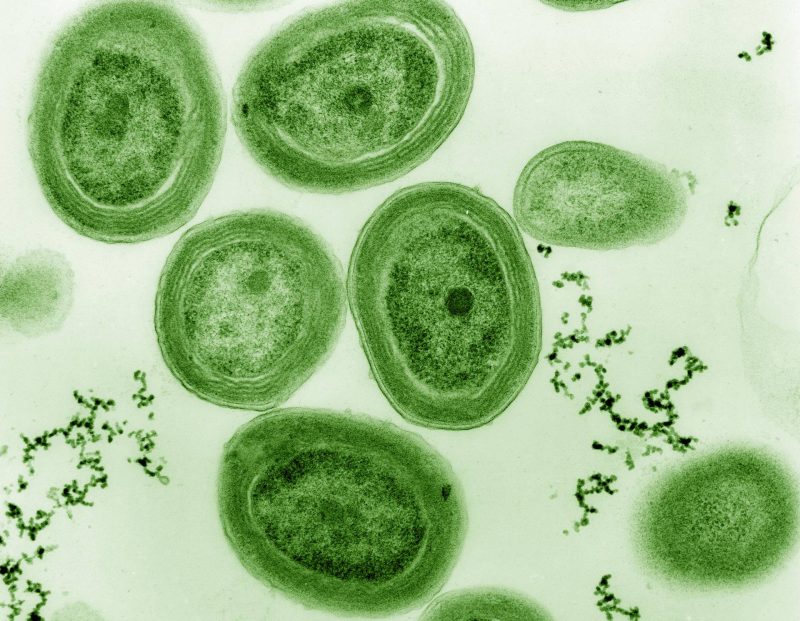
Prochlorococcus, the most abundant microbe in the oceans, is facing a survival crisis due to global warming. This single-celled cyanobacterium, found across more than 75% of the ocean's surface waters,…
A new study from the University of Hong Kong, published in Nature Climate Change, has found that long-term exposure to extreme heat can accelerate organ aging and increase multiple health…