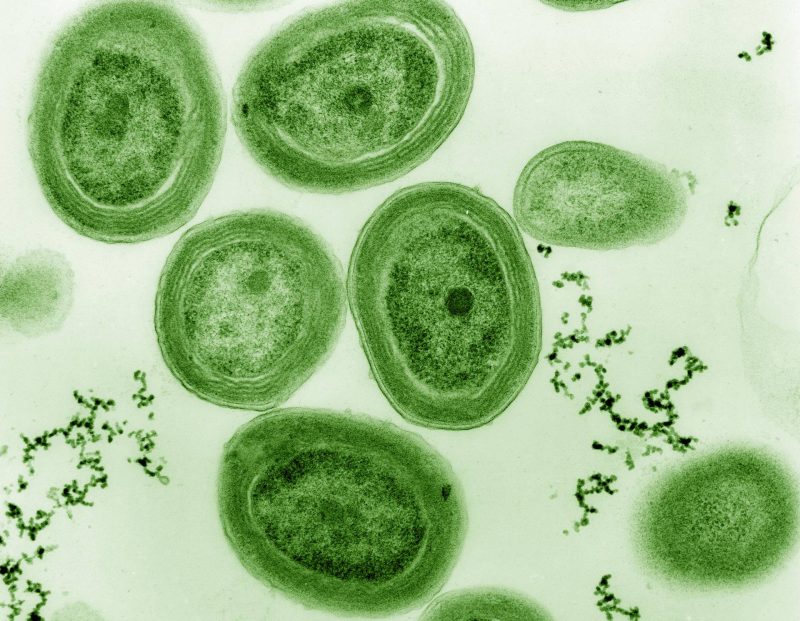
Prochlorococcus, the most abundant microbe in the oceans, is facing a survival crisis due to global warming. This single-celled cyanobacterium, found across more than 75% of the ocean's surface waters, contributes around 5% of global photosynthesis and forms a critical foundation of marine food webs.
Although once thought to thrive in tropical waters, a new study published in Nature Microbiology reveals that Prochlorococcus can only flourish within a narrow temperature range of 66–86°F. Beyond this threshold, its growth rate declines sharply. Climate models predict that within the next 75 years, rising sea surface temperatures in tropical and subtropical regions will exceed this limit, causing significant population declines.
Researchers led by the University of Washington employed the advanced "SeaFlow" flow cytometry system to conduct large-scale, real-time monitoring of global ocean samples. Their findings show that high temperatures reduce the cell division rate of Prochlorococcus to just one-third of normal. This vulnerability is linked to the organism's evolution, during which it shed many genes—including those essential for heat stress responses—to adapt to nutrient-poor environments.
While Synechococcus, another cyanobacterium, may partially replace Prochlorococcus, differences in their ecological roles and nutrient needs mean such a shift could disrupt marine food web structures and alter global carbon cycling.
Under moderate and high warming scenarios, Prochlorococcus primary production is projected to decline by 10–17% and 37–51% respectively, with its distribution gradually shifting toward higher latitudes, reshaping marine ecosystems worldwide.
Global Warming Threatens Survival of Ocean's Most Abundant Microbe
Tags
The Sahara Desert, one of the driest places on Earth with an average annual rainfall of just about three inches, may experience a striking transformation later this century. A new study…

A new study led by the University of Exeter warns that the world has crossed its first recognized climate "tipping point", as coral reef ecosystems enter a state of widespread…

A new study led by the University of Reading challenges long-held assumptions about primate origins. For decades, scientists believed primates, including humans, emerged from warm, humid tropical forests. However, reanalysis…

A research team from The Hong Kong Polytechnic University has, for the first time, used Satellite Laser Ranging (SLR) technology to generate precise global records of ocean mass changes spanning…

A new study from the University of Hong Kong, published in Nature Climate Change, has found that long-term exposure to extreme heat can accelerate organ aging and increase multiple health…