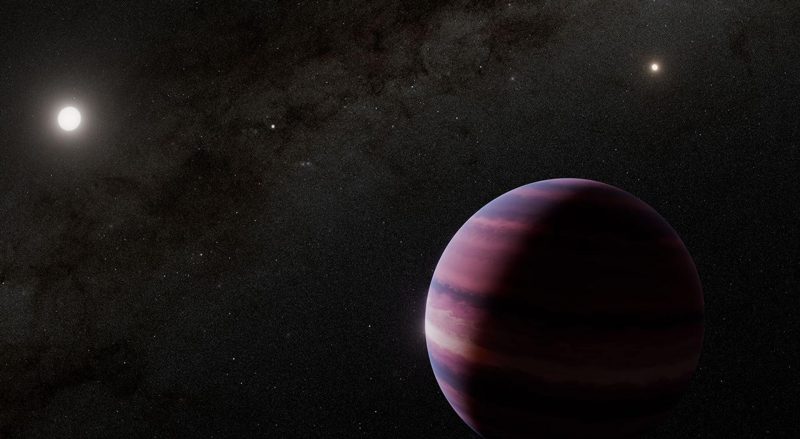
Since its 2022 launch, NASA's James Webb Space Telescope (JWST) has detected hundreds of mysterious “little red dots” in the early universe—objects appearing within the first billion years after the Big Bang. Compact yet unusually bright, these bodies defy conventional models.
A new study suggests they may be massive gas envelopes powered not by nuclear fusion, but by black holes. JWST observations reveal that these red dots measure less than 2% the diameter of the Milky Way, yet shine too brightly to be explained by densely packed stars alone. Astronomers suspect a supermassive black hole lies at their core, surrounded by a dense shell of gas. Radiation from the black hole heats the gas, making it glow like a star, while the shell absorbs high-energy ultraviolet and X-ray emissions, producing the distinctive red spectrum.
Researchers from Princeton University and the Max Planck Institute for Astronomy propose that these “black hole stars” could represent a critical stage in galaxy evolution, offering clues to the rapid growth of supermassive black holes. Theoretical modeling by the University of Colorado Boulder further supports this view, suggesting that massive early-universe stars may have collapsed, leaving outer layers of gas wrapped around a newborn black hole to form luminous "quasi-stars".
JWST Unveils “Black Hole Stars” in Early Universe, Shedding Light on Galaxy Formation
Tags
A mysterious gamma-ray glow at the center of the Milky Way — puzzling scientists for decades—may finally offer the first observational evidence of dark matter. The finding, based on a…
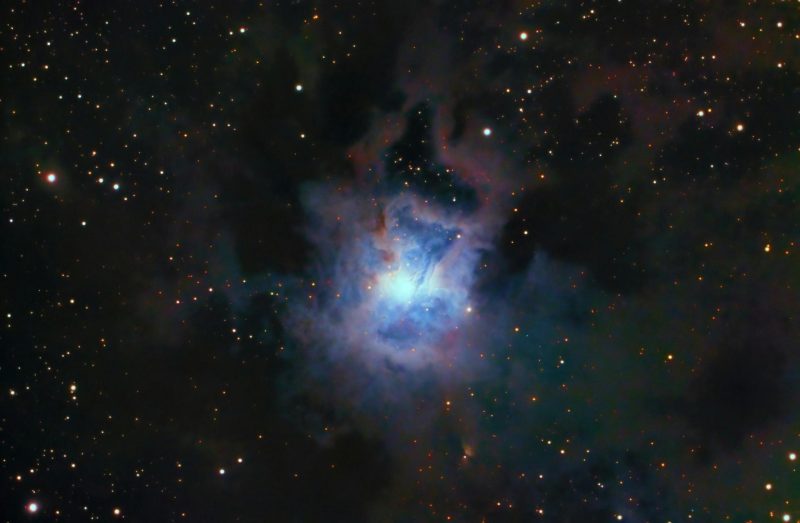
ng data from the MaNGA survey at the Apache Point Observatory, researchers detected this black hole in a dwarf galaxy about 230 million light-years away. Unlike typical supermassive black holes…
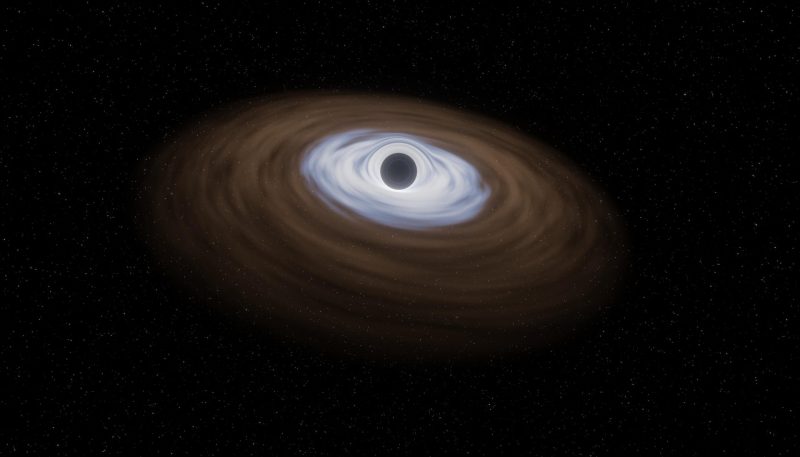
LIGO Detects Record-Breaking Black Hole Merger, Confirming Einstein and Hawking Predictions
Astronomers have detected the strongest gravitational wave signal ever recorded, produced by the collision of two black holes, using the U.S.-based Laser Interferometer Gravitational-Wave Observatory (LIGO). The breakthrough provides the…
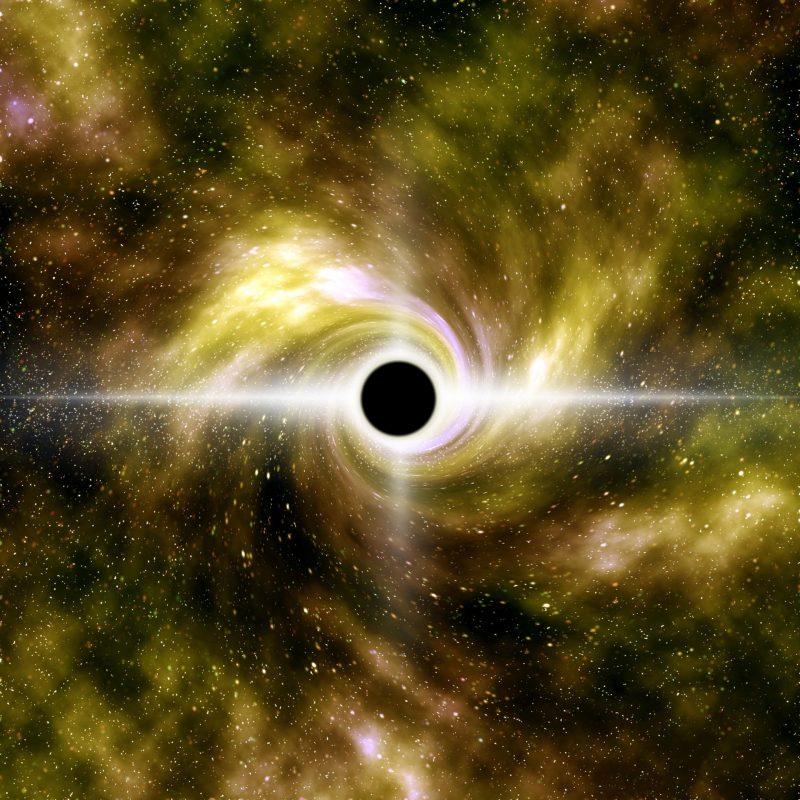
A new study suggests that supermassive black holes could function as natural particle colliders, potentially offering a novel path to detect dark matter and other unknown particles. This discovery may…
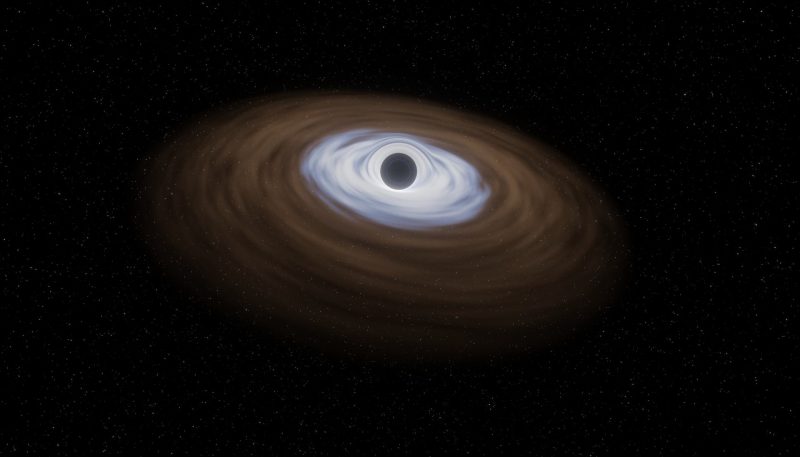
Astronomers may have detected a giant exoplanet orbiting Alpha Centauri A, a Sun-like star located about 4.3 light-years from Earth. The candidate planet lies within the star's habitable zone and…