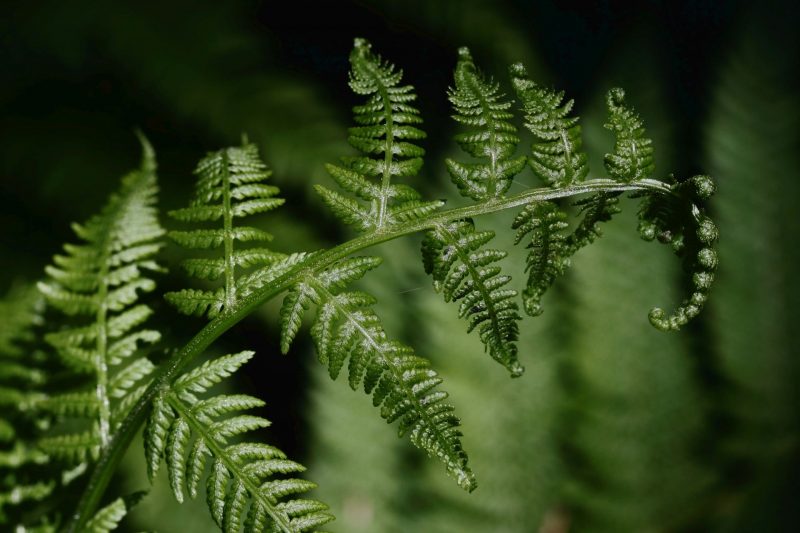
A recent study has uncovered evidence that ferns, much like flowering plants, developed nectar glands around 135 million years ago to attract ants as protective allies. This evolutionary adaptation took place as ferns transitioned from the forest floor to the canopy, indicating a parallel evolutionary trajectory with flowering plants.
Cooperative relationships between different species can lead to unexpected and mutually beneficial evolutionary advancements. While this phenomenon has been extensively studied in flowering plants, it has also been observed in non-flowering ferns. Previously, it was believed that ferns lacked the necessary sap for such intricate biological interactions. To explore this further, researchers from the University of Tennessee and Cornell University collaborated to investigate the evolutionary timeline and potential factors involved in this phenomenon. Their findings were published in Nature Communications.
The study revealed that nectar glands, which produce sugary nectar to attract ant bodyguards, evolved almost simultaneously in ferns and flowering plants. This development occurred approximately 135 million years ago, aligning with the emergence of plant communities during the Cretaceous period.
Moreover, ferns were originally terrestrial plants that thrived on the forest floor. However, around 60 million years ago, during the Cenozoic Era, they underwent a significant transformation, becoming epiphytes or arboreal plants. The researchers discovered that as ferns transitioned from the forest floor to the canopy, whether as epiphytes, climbers, or tree ferns, they capitalized on existing interactions with flowering plants and developed nectaries.
This discovery suggests that despite ferns and flowering plants diverging from a common ancestor over 400 million years ago and following separate evolutionary paths, they share similar dynamics in the evolution of nectaries and mutualistic symbiosis. The researchers propose that there may be fundamental principles governing the evolution of nectaries and symbiotic relationships in non-flowering plants, akin to "laws of life." This study provides an evolutionary framework and context for future ecological, developmental, or genomic analyses.
Parallel Evolution: Ferns Develop Nectar Glands Like Flowering Plants
Tags
A 97-million-year-old sea turtle fossil unearthed in Lebanon is reshaping scientists' understanding of how turtles adapted to life in the ocean. The study, published in iScience, a journal under Cell,…
Although all vertebrates possess a pelvis, only humans have evolved a structure optimized for efficient, long-distance bipedal locomotion. This evolutionary transformation took over five million years, yet the precise developmental…

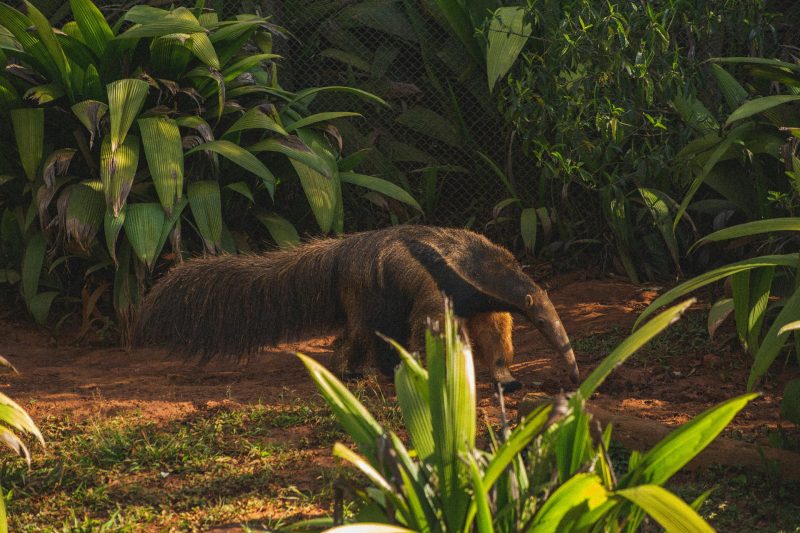
Mammals Have Evolved Ant- and Termite-Eating Adaptations at Least 12 Times Since Dinosaur Extinction
Since the extinction of non-avian dinosaurs 66 million years ago, mammals have independently evolved specialized adaptations for feeding on ants and termites at least 12 times. This finding, published in…
MIT Boosts Key Photosynthesis Enzyme Efficiency by 25%, Paving Way for Higher Crop Yields
A research team at the Massachusetts Institute of Technology (MIT) has significantly enhanced the efficiency of Rubisco, a crucial enzyme in photosynthesis, using an advanced technique known as continuous directed…
A new study has found that two soil-dwelling nematode species—Caenorhabditis elegans and Caenorhabditis briggsae—despite diverging from a common ancestor over 20 million years ago, still exhibit remarkably similar patterns of…

California's deserts, once thought to be naturally resistant to plant invasions, are now under severe threat from an aggressive weed—Sahara mustard (Brassica tournefortii). A recent study by the University of…