A study published on March 28 in The Astrophysical Journal presents substantial evidence supporting the existence of a tidally synchronized exoplanet, characterized by a 1:1 tidal locking phenomenon.
The research, led by Nicolas Cowan, an astronomer from McGill University in Canada, demonstrates that theoretical predictions are consistent with observational data, providing a realistic representation of these planets.
Tidal locking occurs when a planet orbits closely to its host star, causing the near side of the planet to experience a stronger gravitational pull than the far side. Over time, this imbalance in tidal forces gradually slows down the planet's rotation until it becomes perfectly synchronized with its orbit. Consequently, the planet takes an equivalent amount of time to complete a full rotation on its axis as it does to orbit the star. A well-known example of this phenomenon is the Moon, which always presents the same face to Earth.
Due to their close proximity to their host stars, many exoplanets are presumed to be tidally locked in a 1:1 ratio, although confirming this has been challenging. While measuring the orbit of an exoplanet is relatively straightforward, determining its rotation poses greater difficulties, particularly if the planet's atmosphere obscures the rotating surface.
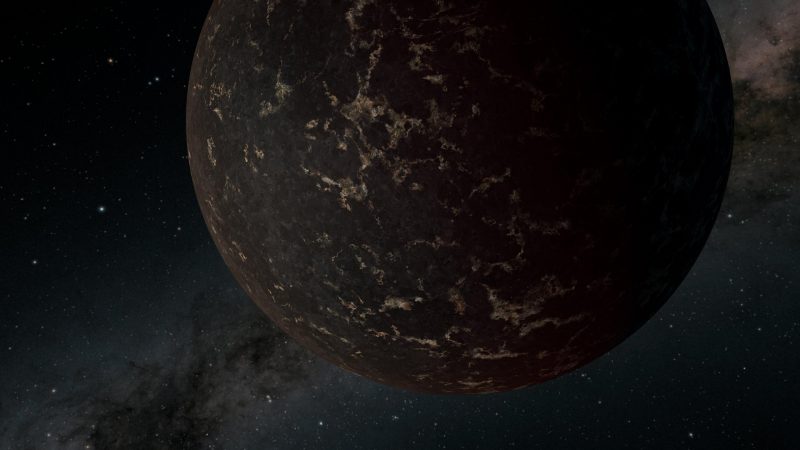
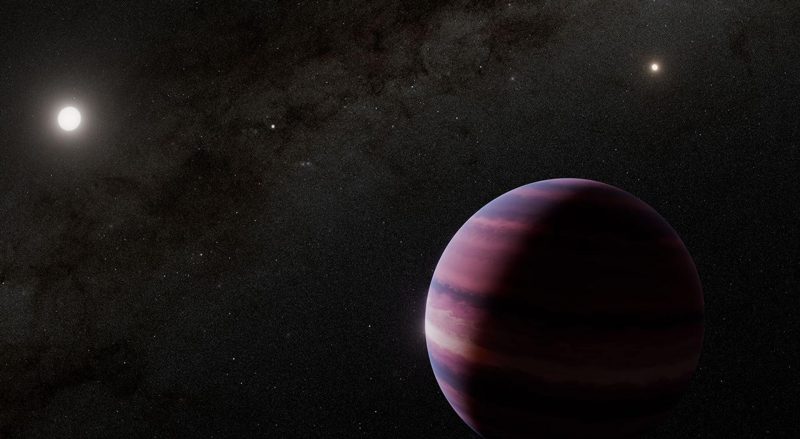
The study focused on an exoplanet in close proximity to its star, providing long-awaited evidence in support of the tidal locking hypothesis. Using the Spitzer Space Telescope in 2019, researchers measured the light intensity emitted by the planet, referred to as the super-Earth LHS 3844b. Cowan and his colleagues realized that these measurements could be used to infer the temperature of the planet's Earth-facing surface, assuming it lacks an atmosphere.
Planets that aren't tidally synchronized experience elevated temperatures due to the conflict between their rotation and the significant tidal forces exerted by their stars. The research team discovered that the surface of LHS 3844b remains relatively cool, as expected for a tidally synchronized planet.
Emily Rauscher, a theoretical astrophysicist at the University of Michigan in Ann Arbor, describes the findings as the most compelling evidence collected to date using existing information and instruments.
Moreover, further evidence is anticipated in the near future. Cowan believes that the James Webb Space Telescope (JWST) will significantly contribute to this field of research. The JWST's capabilities will enable astronomers to investigate the rotation of exoplanets situated slightly farther from their stars compared to LHS 3844b. Scientists now speculate that such planets could exhibit mild temperatures in their atmospheres and potentially constitute a significant portion of habitable space within the Milky Way.
If the JWST confirms that these planets are tidally locked like LHS 3844b, Cowan suggests that a considerable fraction of planets, particularly those suitable for habitation, may be tidally synchronized.
Regarding the habitability of such planets, Cowan refrains from speculating. However, an intriguing question arises: Would life on these planets evolve with the same diversity and complexity in the absence of tides, seasons, and day-night cycles?
Planet LHS 3844b was discovered in 2018 by NASA's Transiting Exoplanet Satellite Survey (TESS). It is located 48.6 light-years from Earth and makes one full revolution around its parent star within 11 hours.
New Study Provides Compelling Evidence of Tidally Synchronized Exoplanet
Tags
At a joint meeting of the European Planetary Science Congress (EPSC) and the Division for Planetary Sciences (DPS) in Helsinki, scientists from the Space Research Institute of the Austrian Academy…
Astronomers have discovered a mysterious new world at the edge of the solar system—a trans-Neptunian object (TNO) designated 2017 OF201. The discovery, made by researchers from the Institute for Advanced…
Astronomers may have detected a giant exoplanet orbiting Alpha Centauri A, a Sun-like star located about 4.3 light-years from Earth. The candidate planet lies within the star's habitable zone and…
Since its 2022 launch, NASA's James Webb Space Telescope (JWST) has detected hundreds of mysterious “little red dots” in the early universe—objects appearing within the first billion years after the…
For the first time, astronomers have observed a planetary system in the earliest known stage of formation outside our solar system—a breakthrough that sheds new light on the origins of…
For years, dark streaks observed on the surface of Mars were thought to be potential evidence of liquid water, sparking discussions about the planet's habitability. However, a new study suggests…