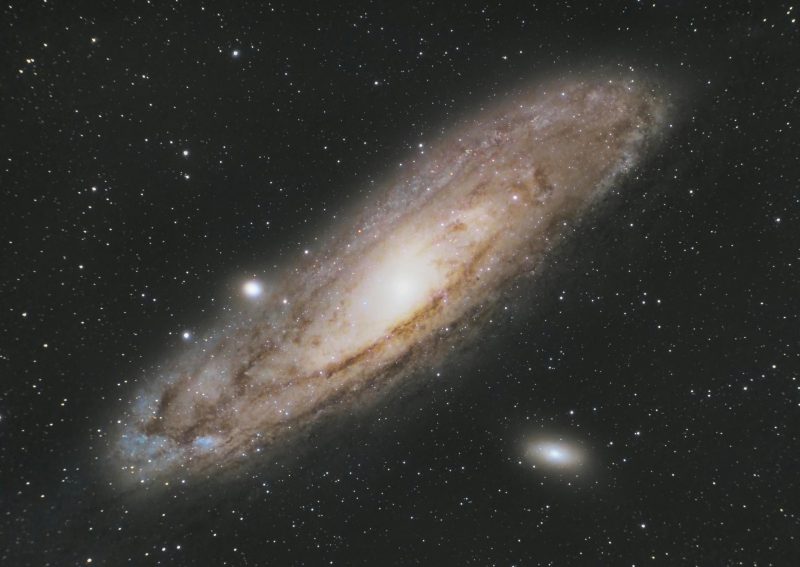
For the first time, astronomers have observed a planetary system in the earliest known stage of formation outside our solar system—a breakthrough that sheds new light on the origins of our own planetary neighborhood. The discovery centers on HOPS-315, a young star located approximately 1,370 light-years from Earth in the Orion constellation.
Using both ground-based and space telescopes, including the James Webb Space Telescope (JWST), researchers detected the telltale signs of planet formation around HOPS-315. The star's favorable orientation allowed scientists to clearly observe its surrounding disk of gas and dust—structures often obscured by jets of gas ejected from newborn stars.
Of particular interest was the detection of warm silicon monoxide (SiO) gas within the disk—marking the first time this chemical signature has been found in such an environment. The presence of crystalline silicate minerals, a known indicator of early planet formation, further supports the findings. Data from Chile's Atacama Large Millimeter/submillimeter Array (ALMA) revealed extremely high temperatures in the inner regions of the disk—sufficient to vaporize rock, which later cools and condenses into the building blocks of planets.
Published in Nature, this study offers unprecedented direct evidence of the initial conditions required for planet formation. Whereas past research relied largely on ancient meteorites to reconstruct the solar system's early history, the HOPS-315 observation provides a real-time glimpse into the processes that shaped planetary systems like our own.
Astronomers Capture Earliest Stage of Planet Formation Beyond Solar System
Tags
At a joint meeting of the European Planetary Science Congress (EPSC) and the Division for Planetary Sciences (DPS) in Helsinki, scientists from the Space Research Institute of the Austrian Academy…
Astronomers have discovered a mysterious new world at the edge of the solar system—a trans-Neptunian object (TNO) designated 2017 OF201. The discovery, made by researchers from the Institute for Advanced…
Astronomers may have detected a giant exoplanet orbiting Alpha Centauri A, a Sun-like star located about 4.3 light-years from Earth. The candidate planet lies within the star's habitable zone and…
Since its 2022 launch, NASA's James Webb Space Telescope (JWST) has detected hundreds of mysterious “little red dots” in the early universe—objects appearing within the first billion years after the…
A new study published in Nature Astronomy suggests that the probability of a future collision between the Milky Way and the Andromeda galaxy may be only 50%—significantly lower than previously…