Black holes can form through multiple mechanisms, with stellar death being the most well-known. When stars more massive than 25 to hundreds of times the mass of our sun exhaust their fuel, they can no longer maintain their temperature through stellar nucleosynthesis. As a result, their internal pressure becomes insufficient to resist their own gravity, and they undergo gravitational collapse. This collapse occurs when the star's temperature is no longer high enough to prevent it from collapsing under its own weight. Alternatively, a star that would have remained stable receives matter from another source. This additional matter cannot raise the star's core temperature, but it can cause the star to collapse under its own weight, forming a black hole.
The type of black hole that forms depends on the mass of the remaining core of the star after a supernova event. If the core is too massive to support itself against gravity, it continues to collapse, compressing all of its mass into a small space and forming a black hole. These are known as stellar-mass black holes and typically have a mass of 3 to 100 times that of our Sun. It is estimated that there may be around 100 million of these black holes in our Galaxy. After formation, stellar-mass black holes can grow by accumulating matter from their surroundings, including other stars, gas, and other black holes.
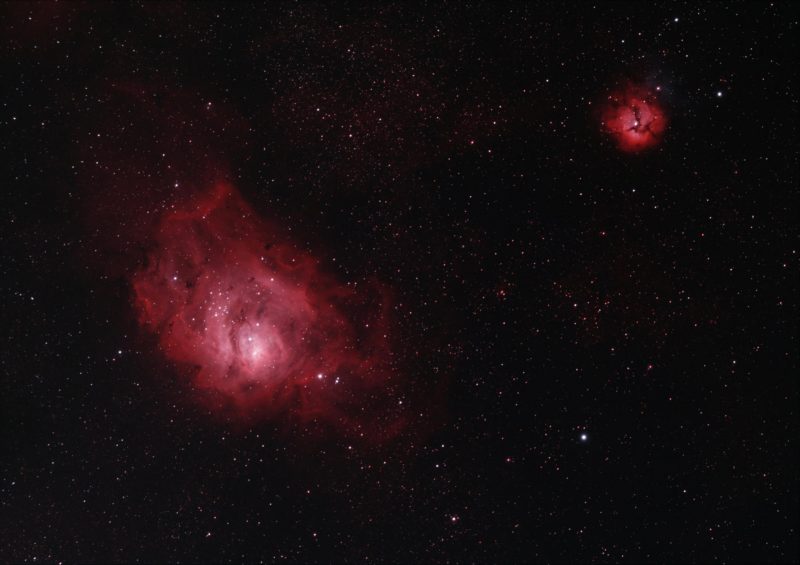
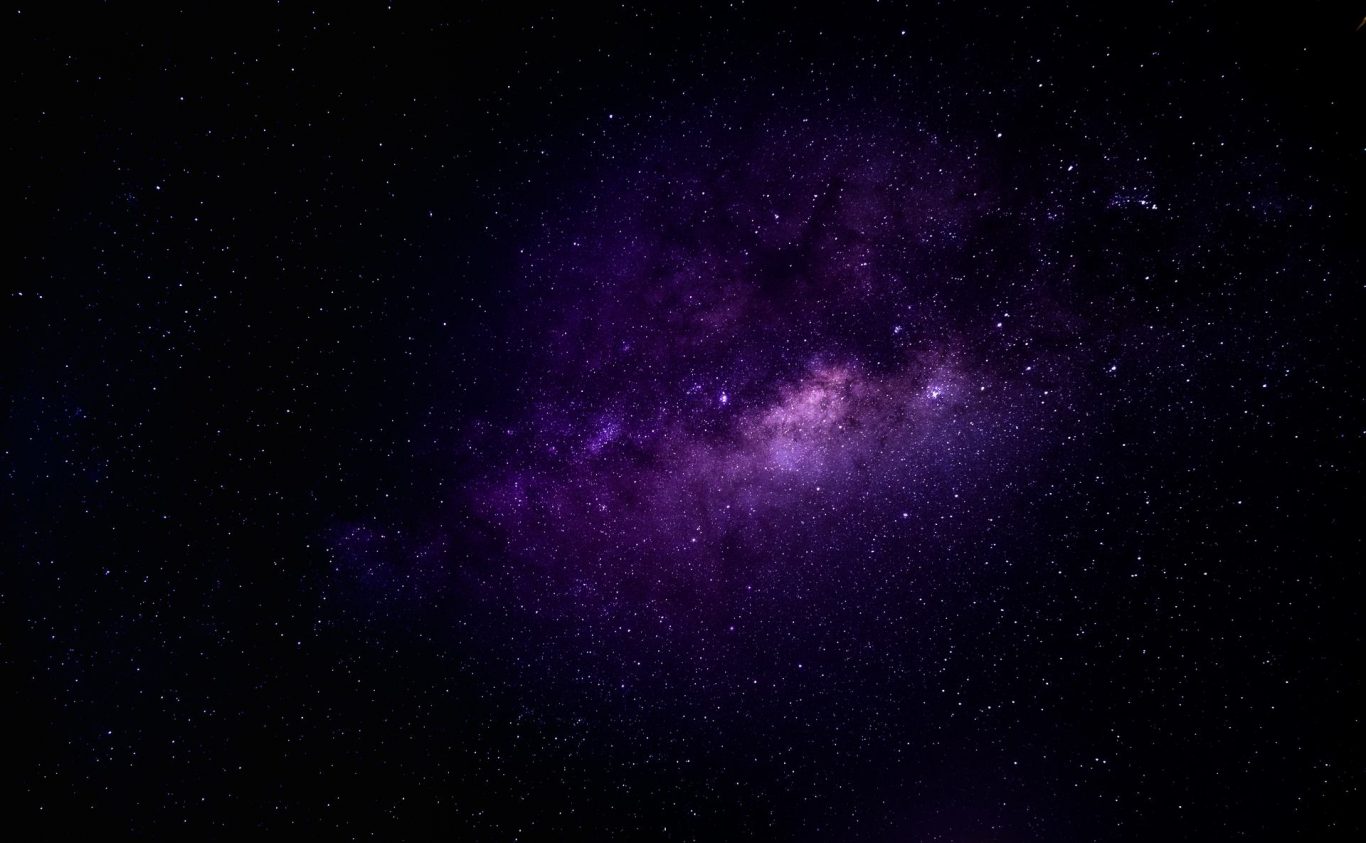 Image Credit: Renato Calsavara
When a black hole accumulates sufficient matter, it can become more massive than a million suns, forming a supermassive black hole. These black holes are the largest and exist at the center of most galaxies, including the Milky Way. Scientists suggest that many stellar-mass black holes may have existed in the early Universe and merged together over time, gradually accumulating material to create more massive black holes. This process eventually leads to the formation of supermassive black holes with enough mass to sustain their enormous size.
Intermediate-mass black holes (IMBHs) have a mass between that of stellar and supermassive black holes. In May 2019, an international team of astronomers detected the first-ever intermediate-mass black hole using the Laser Interferometry Gravitational-wave Observatory (LIGO) and Virgo observatories. The detection was made through an unusual signal called GW190521, which lasted less than a tenth of a second. As the collapse of a black hole takes a finite amount of time from the reference frame of infalling matter, an external observer will never see the formation of the event horizon. Instead, the collapsing material appears dimmer and increasingly red-shifted before eventually fading away.
In theory, primordial black holes or mini black holes may exist, which are smaller than stellar-mass black holes. These are the smallest black holes and are thought to have formed shortly after the Big Bang due to the extreme pressures and temperatures present at the time. However, despite theoretical predictions, mini black holes have not yet been observed.
High density is a must for gravitational collapse to occur. In the present universe, this density is only found in stars. However, shortly after the Big Bang, densities were much greater, and it could have allowed for the creation of black holes. But high density alone is not enough to allow black hole formation because a uniform mass distribution will not allow the mass to bunch up. To form primordial black holes, initial density perturbations must have been present and able to grow under their own gravity. Different models predict the creation of primordial black holes ranging in size from a Planck mass to hundreds of thousands of solar masses. Even though the early universe was denser than what's required for black hole formation, it did not collapse into a black hole during the Big Bang because of several factors, including the universe's high temperature, expansion, and the presence of radiation.
The models for gravitational collapse of objects, such as stars, may not apply in the same way to rapidly expanding space, such as the Big Bang. Though gravitational collapse is a well-known process that can create black holes, it is not the only process. In principle, black holes could also form in high-energy collisions that achieve sufficient density. Currently there is ongoing scientific debate and research on the feasibility of this mechanism for black hole formation.
How Are Black Holes Formed: From Primordial Beginning to Stellar Deaths
Tags
ng data from the MaNGA survey at the Apache Point Observatory, researchers detected this black hole in a dwarf galaxy about 230 million light-years away. Unlike typical supermassive black holes…
LIGO Detects Record-Breaking Black Hole Merger, Confirming Einstein and Hawking Predictions
Astronomers have detected the strongest gravitational wave signal ever recorded, produced by the collision of two black holes, using the U.S.-based Laser Interferometer Gravitational-Wave Observatory (LIGO). The breakthrough provides the…
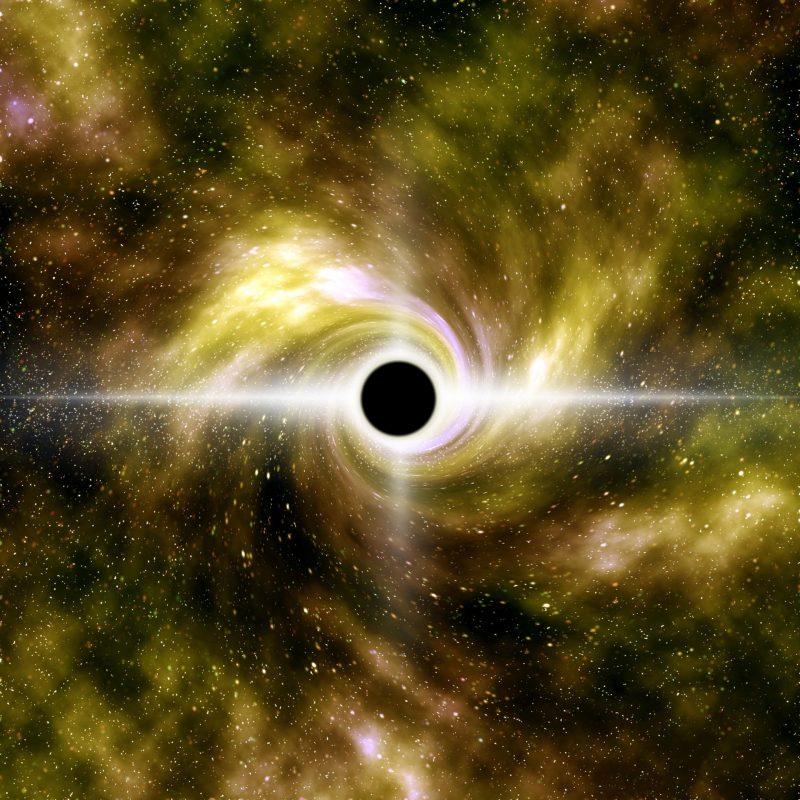
A new study suggests that supermassive black holes could function as natural particle colliders, potentially offering a novel path to detect dark matter and other unknown particles. This discovery may…
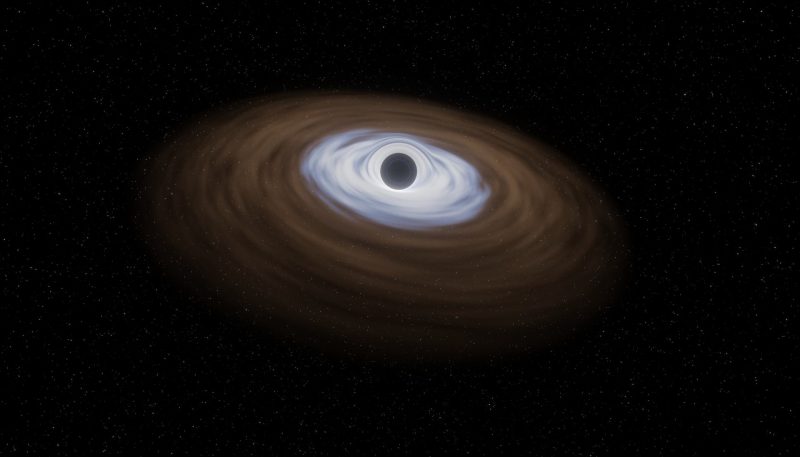
Since its 2022 launch, NASA's James Webb Space Telescope (JWST) has detected hundreds of mysterious “little red dots” in the early universe—objects appearing within the first billion years after the…
Supermassive Black Hole in Nearby Galaxy Launches High-Speed Jets into Intergalactic Space
The European Southern Observatory (ESO) has announced a significant discovery: a supermassive black hole at the center of the spiral galaxy NGC 4945 is not only actively consuming matter but…
Recent astronomical observations suggest that dark energy—the mysterious force driving the accelerated expansion of the universe—may not be constant, a revelation that could reshape the foundations of modern physics. An international…