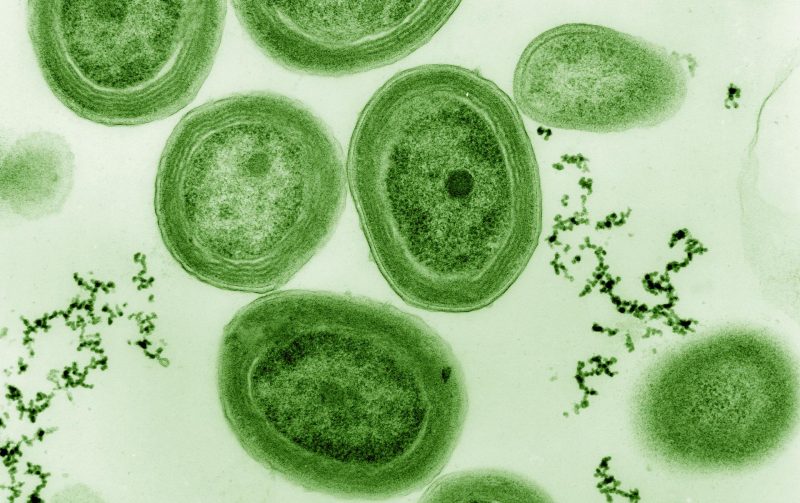
A team of Belgian scientists recently made a significant discovery regarding the oldest evidence of photosynthesis. These scientists found microfossils dating back 1.75 billion years that provide valuable insights into the evolution of oxygenic photosynthesis. The research findings were published in the journal "Nature" on January 4.
Oxygenic photosynthesis is a process where sunlight triggers the conversion of water and carbon dioxide into glucose and oxygen. This process is unique to certain organelles in cyanobacteria and eukaryotes. Cyanobacteria played a crucial role in the early evolution of life and were particularly active during the "Great Oxygenation Event" approximately 2.4 billion years ago. However, due to limited evidence, the exact origin of oxygenic photosynthesis has remained a subject of controversy.
Catherine Demoulin and her colleagues from the University of Liège presented direct evidence of a fossilized photosynthetic structure belonging to an algae. This structure, known as a thylakoid, is a membrane structure found inside plant chloroplasts and some modern cyanobacteria. The researchers identified these thylakoids in fossils from two different sites, with the oldest sample originating from the McDermott Formation in Australia, which is roughly 1.75 billion years old.
Based on their analysis, the researchers speculate that the fossilized structure belongs to a type of cyanobacteria. The discovery of thylakoids in samples of this age suggests that photosynthesis may have evolved around 1.75 billion years ago. However, this finding does not conclusively answer the question of whether photosynthesis emerged before or after the Great Oxygenation Event. To address this mystery, the researchers suggest conducting similar ultrastructural analyses on even older microfossils. Such investigations could help determine whether the evolution of thylakoids contributed to the rise in oxygen levels during the Great Oxygenation Event.
Ancient Microfossils Unveil Origin of Photosynthesis 1.7 Billion Years Ago
Tags
A 97-million-year-old sea turtle fossil unearthed in Lebanon is reshaping scientists' understanding of how turtles adapted to life in the ocean. The study, published in iScience, a journal under Cell,…
A new study led by the University of Reading challenges long-held assumptions about primate origins. For decades, scientists believed primates, including humans, emerged from warm, humid tropical forests. However, reanalysis…

MIT Boosts Key Photosynthesis Enzyme Efficiency by 25%, Paving Way for Higher Crop Yields
A research team at the Massachusetts Institute of Technology (MIT) has significantly enhanced the efficiency of Rubisco, a crucial enzyme in photosynthesis, using an advanced technique known as continuous directed…
Scientists have discovered a more than one-billion-year-old asteroid impact structure in the “Dome of the Arctic” region of northwestern Australia. Hidden within volcanic breccia dating back 3.47 billion years, this…
In a significant paleoanthropological discovery, researchers have recovered fossils of Homo erectus—an extinct close relative of modern humans—from the seabed of a Southeast Asian construction site. The findings, published in…

UCL Study Challenges Extinction Narrative: Dinosaurs May Have Thrived Until Asteroid Impact
A new study led by researchers at University College London (UCL) offers a fresh perspective on dinosaur extinction, suggesting that dinosaurs were not in decline prior to the asteroid impact…