In a significant paleoanthropological discovery, researchers have recovered fossils of Homo erectus—an extinct close relative of modern humans—from the seabed of a Southeast Asian construction site. The findings, published in the journal June Quaternary Environments and Humans, reveal that a now-submerged plain was once home to Homo erectus, who likely lived along rivers and hunted animals such as water buffalo and turtles.
Homo erectus migrated out of Africa around 1.8 million years ago and reached present-day Java, Indonesia, where they persisted until approximately 108,000 years ago. While evidence of early human activity has been found in other marine environments, this marks the first time Homo erectus remains have been unearthed from the seafloor in this region. According to archaeologists from the University of York, the area may have also been inhabited by other ancient human species such as the Denisovans and served as a crucial migration corridor to Australia and New Guinea.
The fossils were discovered by a Dutch research team from Leiden University during dredging operations near Java. Due to historic sea-level changes, the present-day Madura Strait was once a vast plain and part of the now-submerged Sunda Shelf. Between 2015 and 2018, researchers collected 6,372 fossils from artificial islands and transferred them to the Geological Museum in Bandung, Indonesia. Seafloor drilling data enabled the team to reconstruct this lost landscape—a river-crossed plain teeming with life.
Fossil analysis indicates that between 131,000 and 146,000 years ago, the region supported a rich riverine ecosystem, home to turtles, pythons, sharks, and large mammals like water buffalo, hexaprotodont hippos, and Stegodon—a prehistoric elephant species. Cut marks and fractures on some bones suggest that Homo erectus hunted these animals and extracted marrow. Notably, most bovine remains belonged to young adults, implying a selective hunting strategy.
Although no stone tools were found, experts from the Natural History Museum in London suggest that Homo erectus may have used perishable tools such as bamboo or shells. The group's advanced hunting techniques might reflect independent innovation or possible interactions with other hominin species.
Homo Erectus Fossils Found on Seabed Reveal Submerged Southeast Asian Homeland

Tags
A 97-million-year-old sea turtle fossil unearthed in Lebanon is reshaping scientists' understanding of how turtles adapted to life in the ocean. The study, published in iScience, a journal under Cell,…
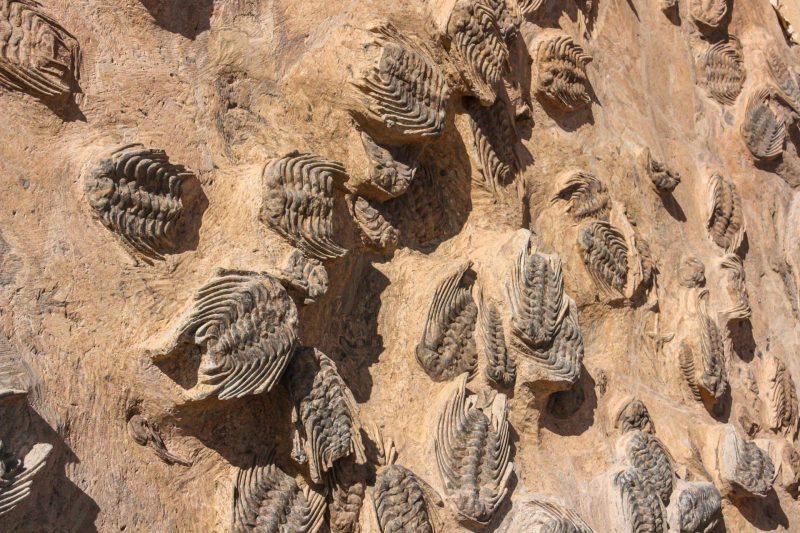
A new study led by the University of Reading challenges long-held assumptions about primate origins. For decades, scientists believed primates, including humans, emerged from warm, humid tropical forests. However, reanalysis…

Scientists have discovered a more than one-billion-year-old asteroid impact structure in the “Dome of the Arctic” region of northwestern Australia. Hidden within volcanic breccia dating back 3.47 billion years, this…

UCL Study Challenges Extinction Narrative: Dinosaurs May Have Thrived Until Asteroid Impact
A new study led by researchers at University College London (UCL) offers a fresh perspective on dinosaur extinction, suggesting that dinosaurs were not in decline prior to the asteroid impact…

Scientists have long known that many dinosaurs sported brightly colored feathers. Now, a new study has shed light on the fur coloration of early mammals that once lived alongside them.…