Reports suggest that AMD is considering using Samsung's 4nm process production line to mass-produce their next generation of CPUs. This indicates that Samsung's 4nm process has reached a competitive level, approaching TSMC's 3nm process. Previously, AMD relied solely on TSMC for CPU production. Samsung's advancements in the 4nm process have narrowed the gap with TSMC and increased pressure on the latter.
Not only AMD, but other companies have also made changes. Large orders for high-performance computing (HPC) chips and automotive chips, which were previously handled by TSMC, have shifted to Samsung. Samsung has also received AI chip foundry orders from major players like Google, Microsoft, and Amazon. These companies aim to reduce their reliance on a single wafer foundry and benefit from Samsung's maturing technology and improved yield.
Samsung has achieved a yield rate of around 70% for its 4nm process and is focusing on advancements in automotive chips. Tesla has chosen Samsung to produce their new-generation FSD chip, planned for mass production in their Hardware 5 (HW 5.0) computers within three years.
 Image Credit: Vladimir Srajber
Initially, Samsung was Tesla's foundry partner for earlier versions of FSD chips used in vehicles like Model 3, Model S, Model X, and Model Y. However, yield issues with Samsung's 4nm process led Tesla to shift to TSMC in 2022. Tesla's decision to return to Samsung for chip production is driven by the substantial progress in Samsung's 4nm yield rate. Tesla plans to utilize both TSMC and Samsung's advanced process production lines for mass production of their fifth-generation automotive chips.
In addition to the significant improvement in yield, Samsung also offers a competitive price advantage. In May of this year, Samsung Chairman Lee Jae-yong met with Tesla CEO Elon Musk, and it is reported that Lee Jae-yong provided Tesla with a highly favorable price.
Apart from Tesla, Samsung has made other notable agreements. In February of this year, Samsung partnered with Ambarella to OEM the CV3-AD685 chip, which is used for processing Level 2 to Level 4 autonomous driving. Additionally, in April, Samsung secured an order for Mobileye's ADAS chips. Previously, TSMC had been the primary supplier for Mobileye's chip orders.
After establishing a presence in the automotive chip market, Samsung plans to expand its advanced processes to target the HPC (High-Performance Computing) market, which is currently dominated by TSMC's customers such as AMD and Nvidia.
Samsung's 4nm process is divided into five generations: SF4E, SF4, SF4P, SF4X, and SF4A, with each generation iterating year by year. In 2024, Samsung will introduce its fourth-generation 4nm process technology, SF4X, which specifically aims to compete with TSMC's N4 process. SF4X is designed to meet the requirements of high-performance processors, including data center CPUs and GPUs. This marks Samsung's first process node tailored for high-performance computing applications in recent years.
TSMC has started mass production of its 3nm process in late 2022, with Apple being the first customer to use the 3nm chips in its 2023 iPhone models. The volume of the 3nm production is expected to increase significantly in the third quarter of 2023, as more customers adopt the advanced node. However, based on the current situation, TSMC's 2023 version of the 3nm process has not yet reached the level of their planned N3E version. Further improvements in yield and cost-effectiveness are anticipated to be achieved by the second half of 2024. According to TSMC, compared with the 5nm process, the N3E process offers an 18% increase in speed at the same power consumption, a 32% reduction in power consumption at the same speed, a logic density increase of about 60%, and a 30% chip density increase.
Samsung is leading the race in the development of the 3nm process technology. Unlike TSMC, which still uses the FinFET process, Samsung has introduced the all-around gate (GAA) technology for their 3nm process. However, Samsung's orders for the 3nm process are relatively small and mainly focused on producing mining ASICs.
For Samsung, the 3nm process presents an opportunity to catch up with TSMC. Reports suggest that Samsung's LSI division is working on the Exynos 2500, their first mobile phone processor utilizing the 3nm process. It is expected to enter mass production in the second half of 2024. If Samsung's self-designed 3nm Exynos processor performs well, it could attract more customers to Samsung's offerings.
Regarding yield rates, TSMC currently achieves a yield rate of around 70%, while Samsung has improved to approximately 60%.
In 2024, TSMC will introduce an upgraded version of the 3nm process, known as N3E, which will further enhance the cost-effectiveness of their foundry. Samsung's 3nm process will need to optimize cost-effectiveness to effectively compete with TSMC.
In the latter half of 2024, Samsung plans to launch a new version of the 3nm process called SF3. It is anticipated that SF3 will provide a 22% performance improvement compared to SF4 at the same power consumption. Additionally, it is expected to achieve a 34% reduction in power consumption at the same frequency and transistor count, while shrinking the logical area by 21%.
Looking ahead to 2025, Samsung aims to release the SF3P version of the 3nm process, targeting data center and cloud computing CPU and GPU orders. Additionally, Samsung has plans for a 2nm process (SF2), which will introduce back-side power supply technology. This innovative approach relocates the power supply circuit to the back of the chip, allowing for more transistor integration on the front and further enhancing overall performance.
For its 2nm process, Samsung plans to use nanosheet technology, which can increase the number of nanosheets in transistors, boost drive current, and enhance performance. By incorporating more nanosheets, the transistor can facilitate a higher flow of current, thereby improving its switching capabilities and operating speed. Additionally, increased nanosheets enable better control of current flow, leading to reduced leakage current and lower power consumption. The improved current control also helps in minimizing heat generation, enhancing overall power efficiency.
TSMC is also set to launch its 2nm process in 2025, utilizing nanosheet technology. And Samsung has been developing GAA transistors for several years, which could give them an edge over their competitors in wafer foundry. Consequently, Samsung has high expectations for the 2nm process, aiming to catch up with and compete against TSMC in terms of process technology and yield rate.
Overall, the yield rates for Samsung's wafer foundry's SF5 and SF4 processes have reached approximately 70%. Based on this achievement, several major customers are expected to return in 2024. Furthermore, by 2025, the SF2 process is likely to compete for additional orders against TSMC.
TSMC currently holds a dominant position as the world's leading wafer foundry company. However, the company remains vigilant and continues to invest heavily in research and development of new technologies, processes, and advanced production lines each year. While significant investments have been made, the gradual "invalidation" of Moore's Law has impacted the company's return on investment compared to previous years.
Analyzing the financial report data from the third quarter of 2023, TSMC's revenue from the 3nm and 5nm production lines has experienced significant growth, particularly from the 3nm process. In comparison to the same period in 2022, it has contributed 6% to the company's overall revenue this year, whereas it was nearly negligible the previous year. Overall, TSMC's advanced processes (5nm, 4nm, 3nm) have filled the revenue gaps caused by the decline in other process nodes.
Through an analysis of revenue data for each process node, it is evident that TSMC's revenue growth has stagnated in the years following the introduction of new process technologies. Incremental revenue is primarily driven by more advanced processes. Consequently, the company's revenue growth is heavily reliant on the iteration of the most advanced manufacturing processes. However, starting from the 10nm process, TSMC's revenue iteration speed for new process technologies has significantly slowed down.
Since the 7nm process, the research and development challenges associated with advanced process technology have notably increased, particularly in terms of cost. The R&D cost for the 5nm process has exceeded $9 billion. The high cost of the 3nm process has deterred TSMC's traditional major customers, who are waiting for the cost to decrease before placing orders for the upcoming N3E version. Looking ahead, the development of new processes such as 2nm and 1nm will become even more difficult and require higher investments.
The pace of process technology iteration has considerably decelerated, and future advancements are becoming more challenging, providing competitors with opportunities to catch up.
According to TrendForce statistics, Samsung's wafer foundry market share increased from 9.9% in the first quarter of 2023 to 11.7% in the second quarter. Additionally, their revenue rose from $2.757 billion to $3.234 billion. While TSMC remains the dominant player in the field, their market share has decreased to 56.4%.
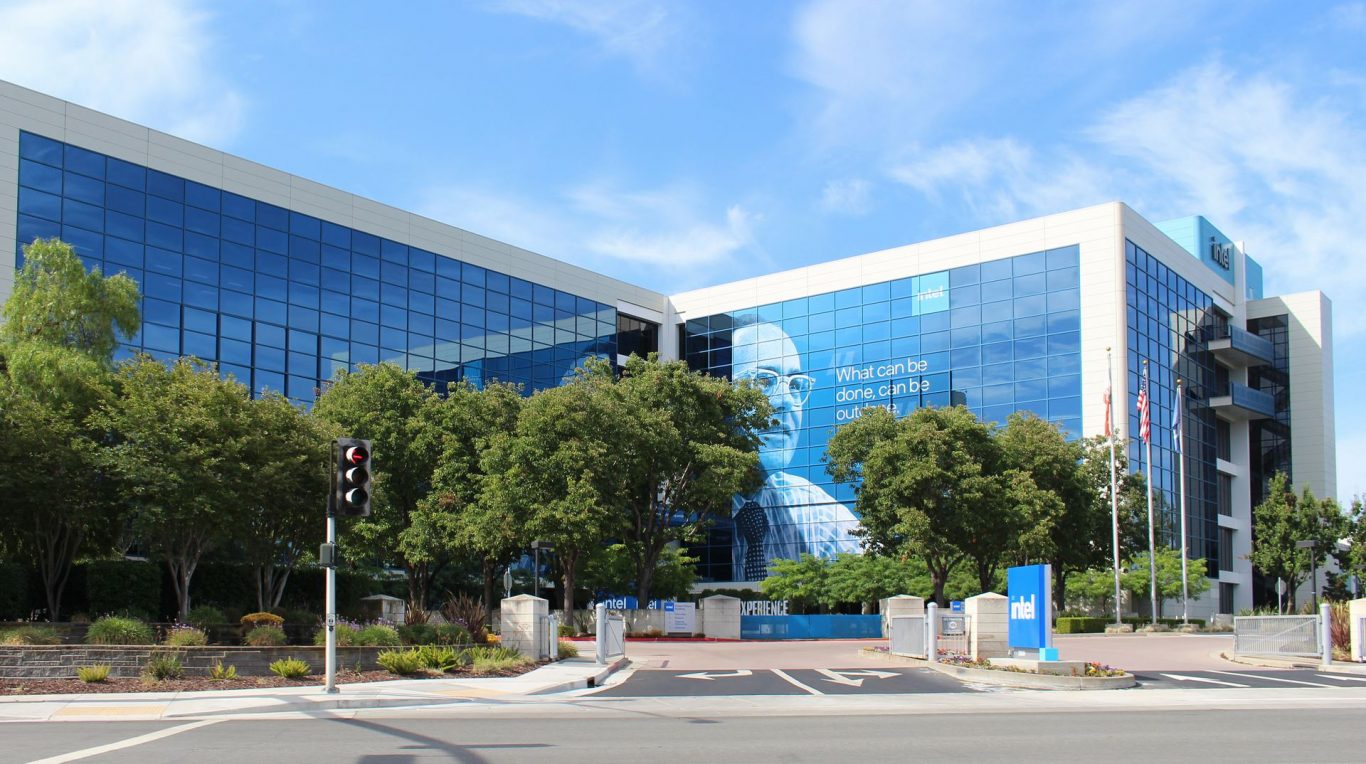 Image Credit: Wikipedia/Intel
Since 2021, Intel has made significant investments in the foundry business, particularly in advanced processes, which has accelerated the pace of iteration. Intel has established both competitive and cooperative relationships with TSMC.
To enhance competitiveness, Intel aims to quickly iterate through five advanced process nodes within four years. The Intel 7 process is already in mass production, and the next iteration will be Intel 4. Subsequent plans include Intel 3, Intel 20A, and Intel 18A.
Regarding production capacity, Intel has been expanding its wafer fabs in the United States, specifically in Arizona and Oregon. The company also operates wafer fabs in Mexico, Ireland, Israel, and other locations, along with packaging and testing plants in mainland China and Malaysia.
In 2022, Intel announced plans to invest in semiconductor R&D and manufacturing projects in the European Union (EU). These investments will encompass various countries, including Germany, Ireland, Italy, France, Poland, and others.
In terms of foundry customers, Intel has disclosed that Qualcomm will utilize its Intel 20A process for chip production, while MediaTek will leverage Intel's mature process through IFS (Intel Foundry Services) for chip manufacturing. Additionally, AWS (Amazon Web Services) will be the first customer to adopt Intel's IFS packaging solution.
However, it is important to note that Intel is still in the early stages of developing its wafer foundry capabilities and may not pose an immediate threat to TSMC and Samsung. Nevertheless, the entry of new strong competitors will undoubtedly impact TSMC's market share, which is something the latter would prefer to avoid.
Examining the current structure of the global foundry market, it becomes evident that controlling advanced process technologies (7nm and below) and securing customers allows companies to capture a significant share of the overall market. TSMC and Samsung are the notable leaders in this regard, as they account for over 95% of the global orders for 7nm and more advanced process wafer foundry, with a combined market share of approximately 56% and 18%, respectively.
For Samsung to catch up with TSMC, the key focus lies in advancing its own process technology. However, Samsung has faced challenges in competing with TSMC in the race for 7nm, 5nm, and 3nm processes. Nevertheless, as technology iteration becomes increasingly difficult, TSMC's progress in the most advanced process technology has started to slow down. Simultaneously, while Samsung may be lagging behind, its iteration speed is accelerating. It is anticipated that Samsung will be able to compete with TSMC in the foreseeable mass production stage of the 2nm process.
As for TSMC, the company is facing growing technical and business expansion challenges, compounded by additional burdens imposed by the U.S. government. Consequently, TSMC's share of the global foundry market is expected to gradually decline in the coming years. It is hoped that Samsung and Intel's market shares will gradually increase, as the long-term dominance of a single company limits choices and innovation for the entire market and numerous IC design companies.
The Race for the 2nm Process: A Comparative Analysis of TSMC, Samsung, and Intel

Tags
According to media reports, ASML's CEO, Christophe Fouquet, has announced that Intel has completed the assembly of its second High-NA EUV lithography machine. Christophe Fouquet stated that unlike conventional EUV…
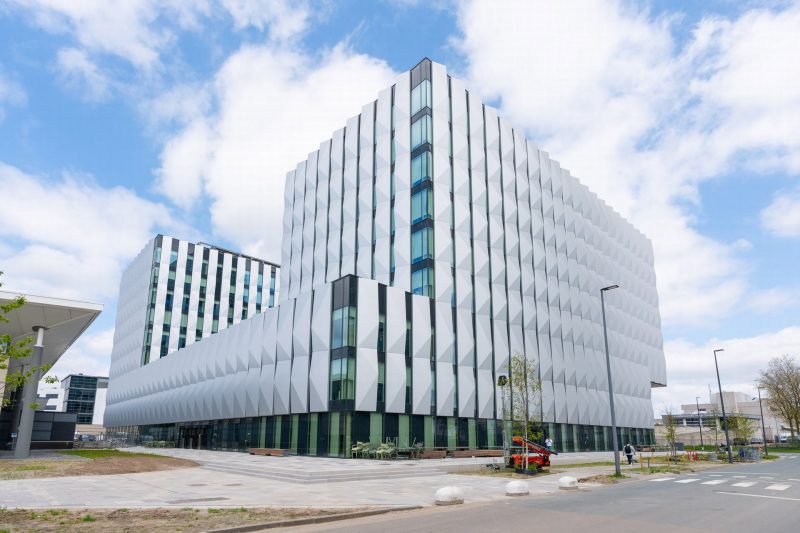
On October 3, local time, Samsung Electronics held the 2024 Samsung Developer Conference (SDC) at the McEnery Convention Center in Silicon Valley, California, USA. During the event, Samsung Electronics announced…

Jen-Hsun Huang, the CEO and founder of NVIDIA, a prominent American semiconductor company, recently expressed his excitement for "high bandwidth memory (HBM)" during a speech in the United States. As…
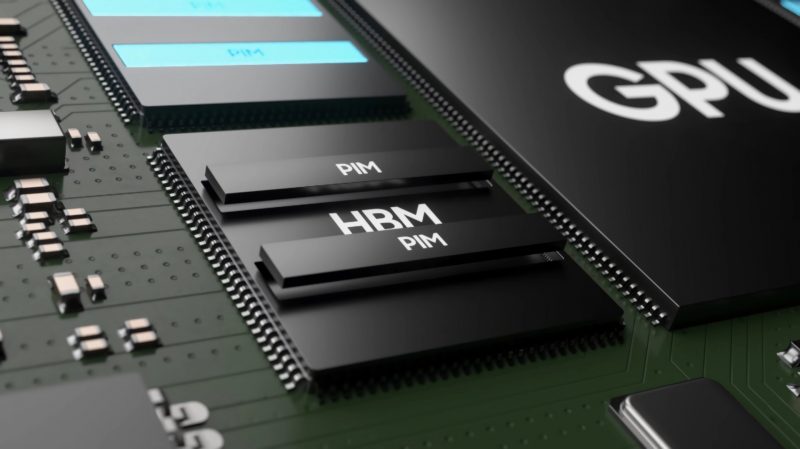
Samsung, the leading company in both memory chip and logic chip fields, has announced plans to invest over $40 billion in establishing a comprehensive semiconductor R&D and production ecosystem. In…

Intel's Chip Foundry Business Reports $7 Billion Loss in 2023, Faces Long Road to Recovery
In a recent filing with the U.S. Securities and Exchange Commission (SEC), Intel revealed concerning financial figures for its chip manufacturing division, Intel Foundry. The document stated that the division's…
Recent reports indicate that the release of the Apple iPad Pro 2024 has been delayed until May due to a shortage of OLED panels. The iPad Pro 2024 comes in both…