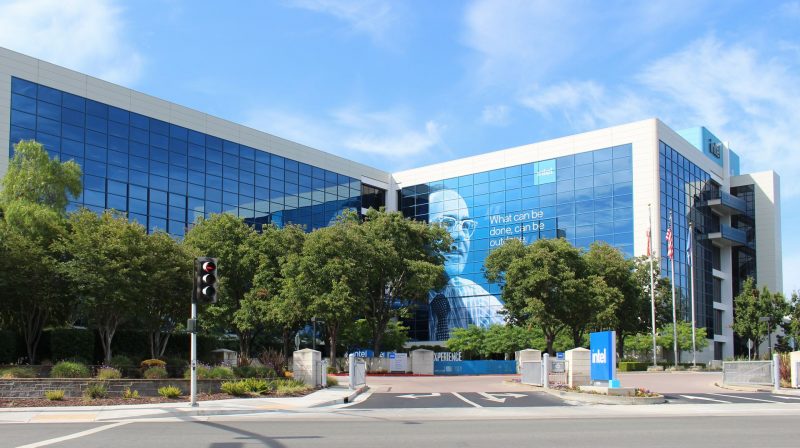
In a recent filing with the U.S. Securities and Exchange Commission (SEC), Intel revealed concerning financial figures for its chip manufacturing division, Intel Foundry. The document stated that the division's revenue for 2023 is expected to reach $18.9 billion, marking a significant year-on-year decrease of 31%. This comes after the division reported revenue of $27.49 billion in 2022, with operating losses widening from $5.2 billion to $7 billion.
Intel CEO Pat Gelsinger openly acknowledged the challenges faced by the chip manufacturing business and expressed his belief that 2024 will be a critical year, with the operating losses potentially reaching their peak.
Despite the current setbacks, Gelsinger remains optimistic about the future. He predicts that the chip manufacturing business will achieve operating breakeven by the end of 2030. Intel's ambitious goals include targeting a gross profit margin of 40% and an operating profit margin of 30% under non-GAAP guidelines.
Unlike many industry peers who adopt the "Fabless" model, where they focus on chip design and outsource manufacturing to foundries such as TSMC, Intel has traditionally operated under the "Integrated Device Manufacturer" (IDM) model. This model involves maintaining control over both design and manufacturing processes.
During an online analyst meeting in June of the previous year, Intel announced its intention to separate its design and manufacturing businesses in the first quarter of 2024. The resulting foundry division will operate independently, assuming full responsibility for its own profits and losses.
In February of this year, at the IFS Direct Connect 2024 conference in California, Intel made another notable announcement. The company officially changed the name of its wafer business from Intel Foundry Services to Intel Foundry. Furthermore, Intel showcased the progress of its 1.8nm chip process, intel18A, which has entered mass production. The company also unveiled its process roadmap for the next decade, including the anticipated Intel 14A (equivalent to 1.4nm) process, demonstrating its commitment to technological advancement.
According to the SEC filings, Intel's business is divided into two main segments based on "OEM-Product". The product divisions include the Client Computing Group (CCG), the Data Center and Artificial Intelligence Group (DCAI), and the Network and Edge Group (NEX). Meanwhile, the foundry division encompasses foundry technology research and development, foundry manufacturing and supply chain, and foundry services. It now operates as an independent department under the name Intel Foundry, with its own distinct profit and loss statement.
As part of the split plan, the independent foundry department at Intel will now calculate revenue from external customers and Intel products based on market pricing. It will also consider the R&D and manufacturing costs that were previously allocated to the company's product departments. This arrangement is expected to significantly increase the profits of Intel's product division. The company aims to achieve a gross profit margin of 60% and an operating profit margin of 40% under non-standard accounting standards by the end of 2030.
Furthermore, Intel's management has set ambitious goals for its post-independence wafer foundry business. The company aims to challenge its main competitors, such as TSMC and Samsung, in the chip manufacturing sector. Intel aspires to become the world's second-largest foundry by 2030.
To support this ambitious plan, Intel has taken a proactive approach by accepting wafer foundry orders from external customers. CEO Gelsinger has even expressed the company's willingness to OEM chips for any company, including its competitor, AMD. This open approach has attracted interest and led to on-site cooperation agreements with major players like Microsoft and ARM, as announced during the conference in February. Intel estimates that wafer foundry orders will reach $15 billion, surpassing the initial expectation of $10 billion.
According to recent statistics from the international consulting agency CounterPoint, TSMC currently holds the top position in the market with a 61% market share, followed by Samsung with a 14% market share. While Intel is listed among the top ten, its market share remains below 1%, indicating a significant gap compared to its competitors.
However, industry insiders specializing in semiconductor manufacturing processes have noted Intel's efforts to revitalize chip manufacturing. In recent years, Intel's independent foundry business has made strategic moves, including acquiring ASML's most advanced EUV lithography machines and implementing initiatives like the "Five Nodes in Four Years" chip advanced manufacturing process. These actions demonstrate the determination of this long-standing chip giant to regain its presence in the chip manufacturing field.
Furthermore, Intel enjoys a significant advantage as one of the few chip companies in the United States with manufacturing capabilities, particularly due to the government's support through industrial policies.
Recently, Intel secured $8.5 billion in direct funding subsidies from the U.S. Chips and Science Act, making it one of the largest payments issued under this act. The company is also eligible for future federal loans amounting to $11 billion, which will be used to advance the construction of its factories located in Arizona, New Mexico, Ohio, and Oregon.
Moreover, Intel was selected as part of the first wave of the European Union's 43 billion euro subsidy plan, similar to the "Chip Act". Under this plan, Intel's new factory in Germany, with a total investment of 30 billion euros, will be the first project to be implemented.
According to industry insiders, the chip foundry market has long been dominated by leading manufacturers, with TSMC holding a virtual monopoly on the manufacturing of advanced process chips. However, the introduction of subsidy policies by the United States and the European Union reflects a growing trend among major countries to bring back the chip manufacturing supply chain to their respective nations. This shift in focus may potentially reshape the competitive landscape of the global market.
Now it remains crucial to closely monitor whether Intel can leverage these favorable conditions and secure a prominent position in the evolving market.
Intel's Chip Foundry Business Reports $7 Billion Loss in 2023, Faces Long Road to Recovery
Tags
Recent reports indicate that Qualcomm has begun developing the next-generation Snapdragon X2 series processors. As the successor to the existing Snapdragon X series chips, the Snapdragon X2 will continue to…
According to media reports, ASML's CEO, Christophe Fouquet, has announced that Intel has completed the assembly of its second High-NA EUV lithography machine. Christophe Fouquet stated that unlike conventional EUV…
Although rarely included in discussions of technological or manufacturing powerhouses, Malaysia is the world's sixth-largest exporter of semiconductors, holding a 13% share of the chip packaging and testing market. Last…
Samsung, the leading company in both memory chip and logic chip fields, has announced plans to invest over $40 billion in establishing a comprehensive semiconductor R&D and production ecosystem. In…
Intel introduced the oneAPI toolkit in late 2020, marking its debut as a cross-architecture programming tool. The toolkit aims to simplify programming across various hardware platforms including GPUs, CPUs, FPGAs,…