Jen-Hsun Huang, the CEO and founder of NVIDIA, a prominent American semiconductor company, recently expressed his excitement for "high bandwidth memory (HBM)" during a speech in the United States. As NVIDIA has become synonymous with semiconductors for AI, Huang referred to HBM as a "technological miracle" and emphasized its significance in the AI revolution.
NVIDIA primarily focuses on producing GPUs (graphics processing units) that power advanced generative AI applications like ChatGPT. To maximize GPU performance, HBM is essential. Historically, NVIDIA has predominantly sourced HBM from SK Hynix, a Korean semiconductor giant. However, due to the surging demand for AI semiconductors, NVIDIA is now seeking to expand its supplier base. This shift has sparked intense competition among semiconductor manufacturers vying to secure new revenue streams.
Presently, SK Hynix holds a dominant position in the HBM market, commanding over half of the global market share. Nevertheless, Samsung Electronics from South Korea and Micron Technology from the United States are making significant strides to catch up.
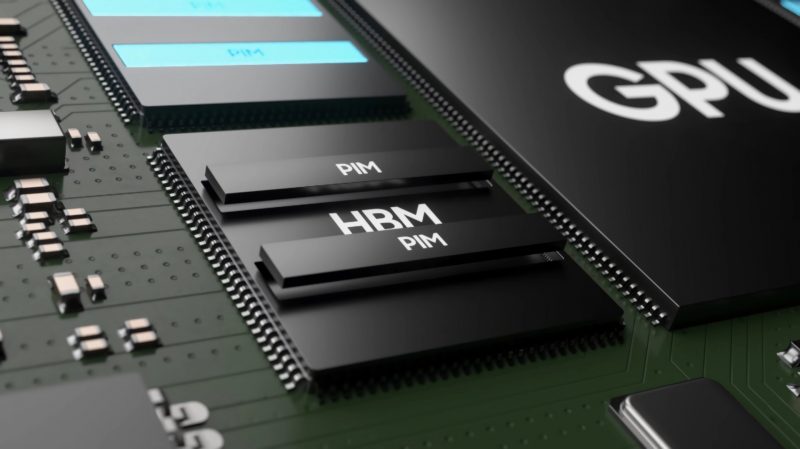
HBM achieves high-speed and large-capacity data processing by stacking multiple ordinary DRAMs (dynamic random access memories). To stay competitive, HBM manufacturers must not only produce or procure DRAMs but also possess advanced stacking technology.
In reality, the production of HBM presents challenges. If any layer of the stacked semiconductors encounters a problem, the entire HBM module becomes non-functional and must be discarded. The most arduous aspect of the manufacturing process involves flawlessly connecting the individual semiconductor layers.
The sales price of HBM is approximately five times higher than that of the most advanced DRAM used in computers, making it a significant potential revenue stream. It is projected that HBM will account for over 20% of DRAM market shipments in 2024. With the increasing demand for AI computers, experts forecast that this proportion may continue to grow, surpassing 30% by 2025.
SK Hynix aims to maintain its leadership in the HBM market through its advanced stacking technology. Company executives assert that their mastery of 4 to 8-layer technology has enabled them to sustain a competitive edge in the industry.
Ten years ago, SK Hynix pioneered the development of HBM for gaming applications, but its true value came to light with the rise of generative AI. Nvidia is set to adopt the latest iteration of HBM in the second half of 2024.
According to data from research firm TrendForce, SK Hynix holds a market share of over 52% in this field in 2024, securing the leading position. Samsung Electronics closely follows with a market share of 42.4%, while Micron's share is expected to exceed 5%.
Samsung has traditionally regarded itself as superior to SK Hynix, given its larger business scale, and the current situation is unacceptable to Samsung. Consequently, Samsung is vigorously striving to catch up and plans to supply new HBM modules from April to June. Executives responsible for Samsung's semiconductor business state that commercialization is progressing smoothly according to the customers' schedule, with sales anticipated to commence in April through June. While the specific customer name remains undisclosed, Nvidia has acknowledged testing Samsung's samples in March.
Some experts believe that there is still a technical gap between SK Hynix and Samsung, and it may take time for Samsung to bridge this gap.
Shelley Jang, an executive at Fitch Ratings, opines that Samsung requires additional time to catch up. Notably, there are technical differences in producing HBM. In the short term, SK Hynix is likely to maintain its market advantage.
SK Hynix remains relatively unconcerned about intensified competition, as the demand for HBM is expected to expand in the future. However, the memory semiconductor market is susceptible to fluctuations in supply and demand. Analysts at Hyundai Securities in South Korea caution that if Samsung Electronics successfully sells new semiconductors, the HBM market may face oversupply by 2025.
In February, Micron announced the commencement of mass production of HBM. Their product is reported to consume approximately 30% less energy than other competitors and has been adopted by Nvidia. Micron's supply for the remainder of 2024 is already sold out, and a significant portion of the supply for 2025 has been secured. Additionally, semiconductor-related companies in Taiwan are also planning to enter the HBM market.
Battle for AI Supremacy: SK Hynix and Samsung Compete for HBM Market Dominance
Tags
With the rapid advancement of large language models, today's most sophisticated artificial intelligence (AI) systems can easily pass the classic Turing Test. This has prompted scientists to reconsider whether new…

Artificial intelligence (AI) is rapidly transforming scientific research. Once limited to analyzing data, AI systems are now able to design experiments and even generate new hypotheses. Some experts believe that,…

According to WIRED, OpenAI is preparing to launch a standalone social app built around its AI video generation model, Sora 2. The app closely mirrors the design and user experience…

Artificial intelligence (AI) is increasingly helping scientists decode how animals communicate and explore the possibility of dialogue across species. Recent studies show that species such as bonobos, chimpanzees, Japanese tits,…

Artificial intelligence (AI) is increasingly accelerating research across multiple disciplines worldwide, particularly in automating the generation of scientific hypotheses. By scanning vast amounts of literature, AI can identify research gaps…

Advances in dataset optimization, computing power, and algorithms have significantly boosted the accuracy of artificial intelligence (AI)-based facial recognition, with most systems now surpassing 99% accuracy in controlled environments and…