In a recent study, Richard Lieu, an astrophysicist from the University of Alabama in Huntsville, USA, presents a novel hypothesis suggesting the existence of thin, shell-like layers known as "topological defects" in the universe. These defects are proposed to generate gravity independently of any underlying mass, challenging the prevailing notion that dark matter is responsible for holding galaxies and celestial bodies together.
Lieu's primary objective is to offer an alternative solution to Einstein's field equations, which establish the relationship between the curvature of spacetime and the presence of matter within it.
Lieu's proposed solution involves the presence of shell-shaped topological defects that can manifest in highly compressed and densely packed regions of space.
Within these concentric shells, a thin layer of positive mass is enveloped by an outer layer of negative mass. The combined mass of the two layers amounts to precisely zero, as their masses counterbalance each other. Nevertheless, a star located on top of the shell experiences a significant gravitational force that draws it towards the center of the shell.
Lieu argues that the proposed shell is, at least in theory, devoid of mass. If these controversial ideas hold merit, it could potentially obviate the need for the ongoing and seemingly interminable search for dark matter.
Tags
A mysterious gamma-ray glow at the center of the Milky Way — puzzling scientists for decades—may finally offer the first observational evidence of dark matter. The finding, based on a…
New Theory Suggests Gravity Might Trigger Quantum Entanglement Without Being Quantum Itself
In recent years, scientists have sought to test whether gravity can generate quantum entanglement —— a mysterious phenomenon in which two particles remain instantaneously linked, even when separated by vast…
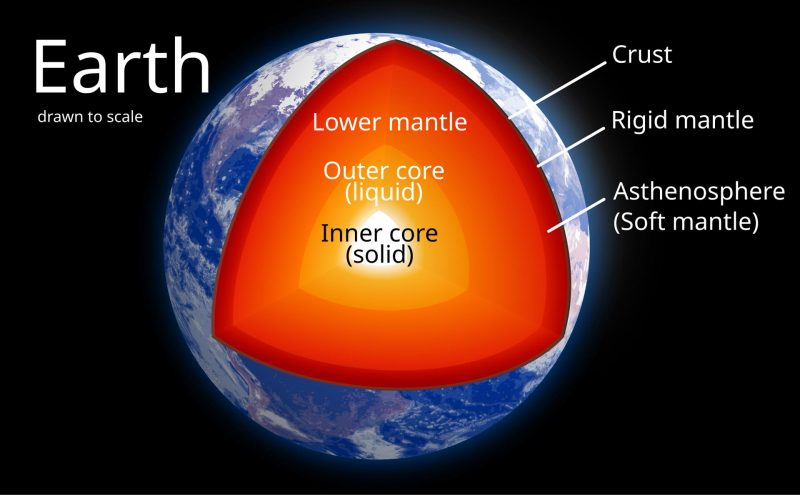
Scientists analyzing satellite data have uncovered a mysterious material disturbance near Earth’s core–mantle boundary that occurred between 2006 and 2008. The anomaly, recently detected by the US–German "Gravity Recovery and…
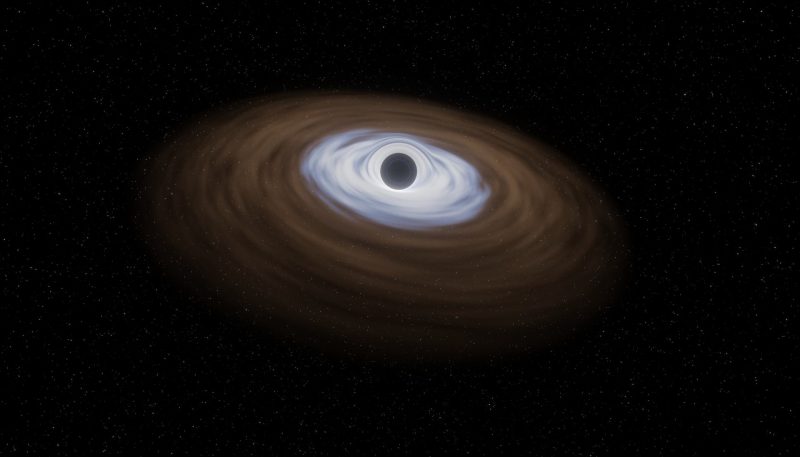
A new study suggests that supermassive black holes could function as natural particle colliders, potentially offering a novel path to detect dark matter and other unknown particles. This discovery may…
Quantum physics has successfully explained phenomena ranging from atomic structure to stellar radiation, yet it has long failed to account for one fundamental force—gravity. This unresolved challenge, known as the…
Despite their simple structure, mosses are capable of surviving in some of Earth's most extreme environments, such as Antarctica, deserts, and high mountains. Now, researchers from Hokkaido University in Japan…