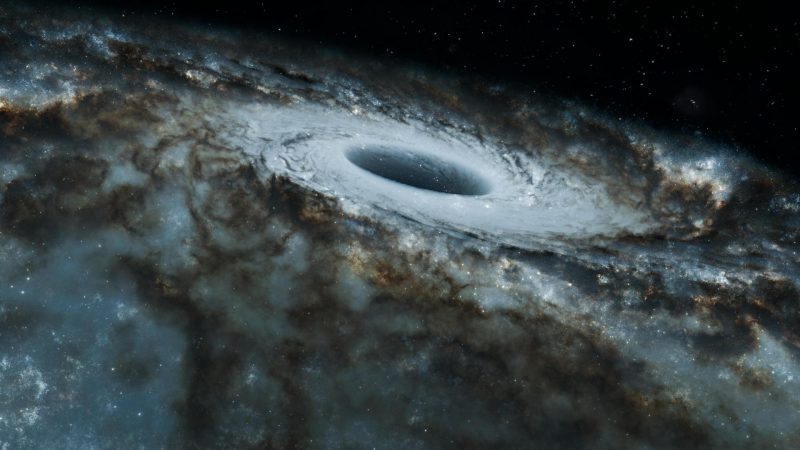
Quantum physics has successfully explained phenomena ranging from atomic structure to stellar radiation, yet it has long failed to account for one fundamental force—gravity. This unresolved challenge, known as the quantum gravity problem, remains one of the most pressing frontiers in modern physics.
General relativity describes gravity as the curvature of spacetime, while quantum theory demands that all fundamental interactions exhibit probabilistic behavior. Attempts in the 1960s to quantize Einstein's gravitational equations yielded meaningless infinities. Later frameworks such as string theory and loop quantum gravity offered mathematically consistent models, but their predicted particles—such as gravitons—have never been observed.
In recent years, experimental physicists have pursued more direct tests. A team at the University of Vienna proposed that if two microscopic objects interact solely through gravity yet become quantum entangled, it would confirm the quantum nature of gravity. This requires placing a 22-microgram object (containing quintillions of atoms) into a quantum superposition, though current technology can only measure gravitational effects for objects as small as 90 milligrams. Meanwhile, researchers at University College London designed a more ambitious free-fall experiment, using diamond crystals in a four-path superposition to probe gravity-induced entanglement—an effort that may take decades to realize.
Other groups are exploring alternative approaches. Scientists at ETH Zurich suggest that the evolution of Bose–Einstein condensates could reveal whether gravity behaves classically or quantum mechanically. At Caltech, researchers are constructing a tabletop gravity detector aimed at capturing the random spacetime fluctuations predicted by quantum gravity.
Although most of these experiments may take more than a decade to achieve, astrophysical observations could also provide evidence for string theory, such as detecting hypothetical cosmic strings. Physics has thus entered a turning point—shifting from purely theoretical models toward experimental validation. This century-long quest may ultimately redefine humanity's understanding of the very fabric of spacetime.
Toward Detecting Quantum Gravity: From Theory to Experiment
Tags
New Theory Suggests Gravity Might Trigger Quantum Entanglement Without Being Quantum Itself
In recent years, scientists have sought to test whether gravity can generate quantum entanglement —— a mysterious phenomenon in which two particles remain instantaneously linked, even when separated by vast…
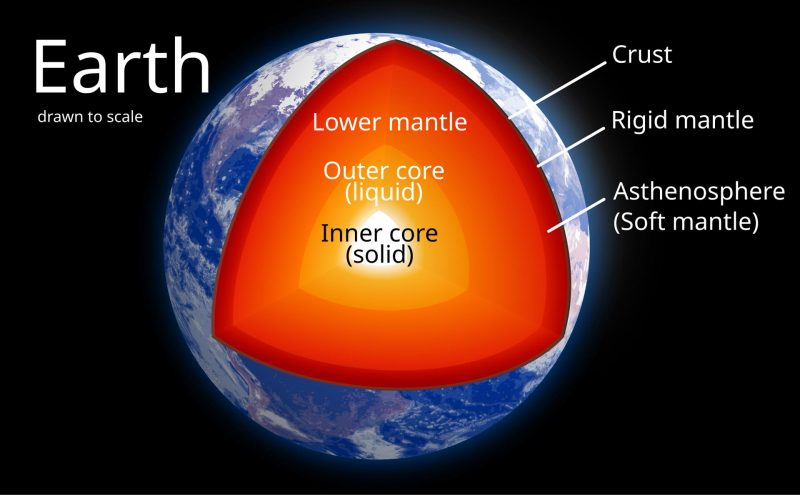
Scientists analyzing satellite data have uncovered a mysterious material disturbance near Earth’s core–mantle boundary that occurred between 2006 and 2008. The anomaly, recently detected by the US–German "Gravity Recovery and…
Despite their simple structure, mosses are capable of surviving in some of Earth's most extreme environments, such as Antarctica, deserts, and high mountains. Now, researchers from Hokkaido University in Japan…

A new study published in Nature Astronomy suggests that the probability of a future collision between the Milky Way and the Andromeda galaxy may be only 50%—significantly lower than previously…
An international research team has utilized cosmic-scale observational data to verify the gravitational predictions of Einstein's general theory of relativity. Scientists employed the Dark Energy Spectroscopic Instrument (DESI) in the creation…