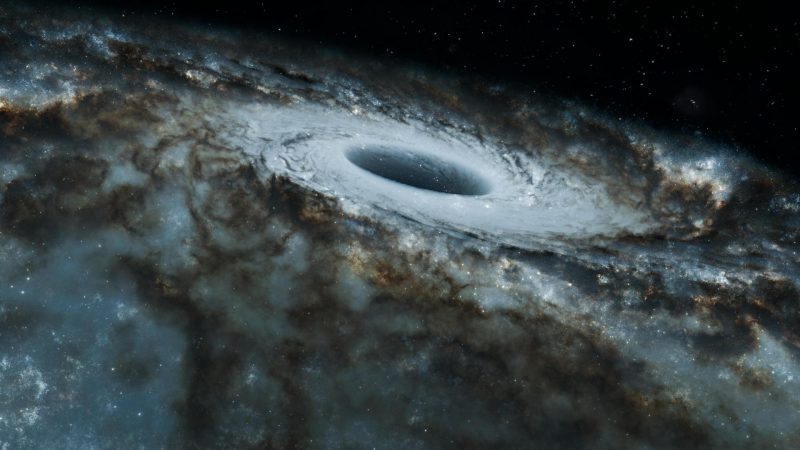
In recent years, scientists have sought to test whether gravity can generate quantum entanglement —— a mysterious phenomenon in which two particles remain instantaneously linked, even when separated by vast distances. According to conventional understanding, if gravity can entangle particles, then gravity itself must also behave as a quantum field.
However, a new theoretical study from Royal Holloway, University of London, offers a different perspective. Using the framework of quantum field theory, researchers found that when two objects interact through gravity, not only the gravitational field but also the surrounding matter fields take part in the process. These matter fields can independently create quantum entanglement, suggesting that even if gravity is fundamentally classical, it could still indirectly lead to quantum effects.
The theory has sparked wide discussion in the scientific community. Some experts argue that if entanglement arises from matter fields rather than the gravitational field itself, it may not be accurate to call it a “quantum effect of gravity.” Others see the study as a valuable reminder that matter fields play a crucial role in gravitational interactions, offering a fresh way to think about how quantum and classical physics might connect.
Importantly, the researchers' calculations indicate that any entanglement caused by classical gravity would be extremely weak—much weaker than what quantum-gravity models predict. This means experimental physicists are still on the right track: if future experiments detect gravitationally induced entanglement, it would be strong evidence that gravity truly possesses quantum properties.
New Theory Suggests Gravity Might Trigger Quantum Entanglement Without Being Quantum Itself
Tags
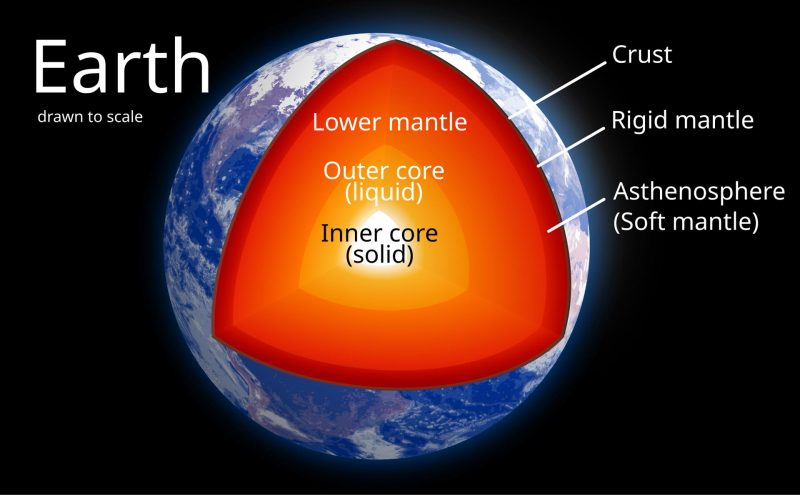
Scientists analyzing satellite data have uncovered a mysterious material disturbance near Earth’s core–mantle boundary that occurred between 2006 and 2008. The anomaly, recently detected by the US–German "Gravity Recovery and…
Quantum physics has successfully explained phenomena ranging from atomic structure to stellar radiation, yet it has long failed to account for one fundamental force—gravity. This unresolved challenge, known as the…
Despite their simple structure, mosses are capable of surviving in some of Earth's most extreme environments, such as Antarctica, deserts, and high mountains. Now, researchers from Hokkaido University in Japan…

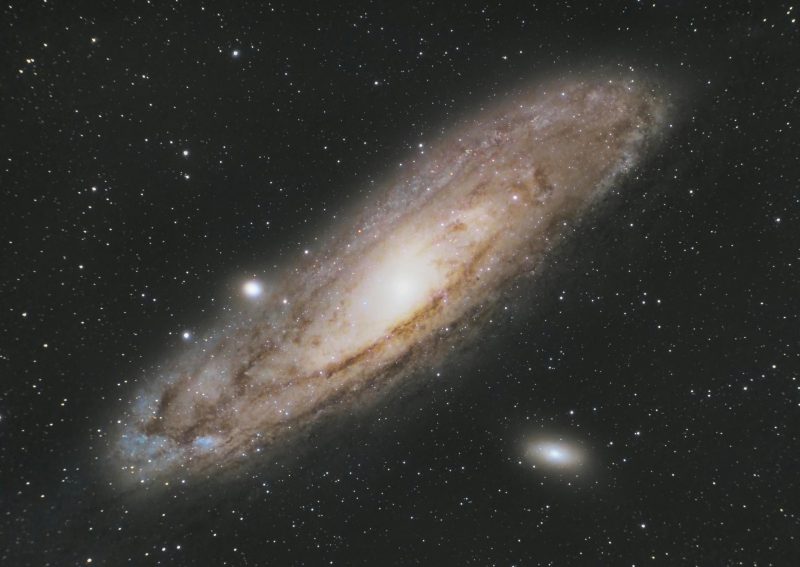
A new study published in Nature Astronomy suggests that the probability of a future collision between the Milky Way and the Andromeda galaxy may be only 50%—significantly lower than previously…
An international research team has utilized cosmic-scale observational data to verify the gravitational predictions of Einstein's general theory of relativity. Scientists employed the Dark Energy Spectroscopic Instrument (DESI) in the creation…