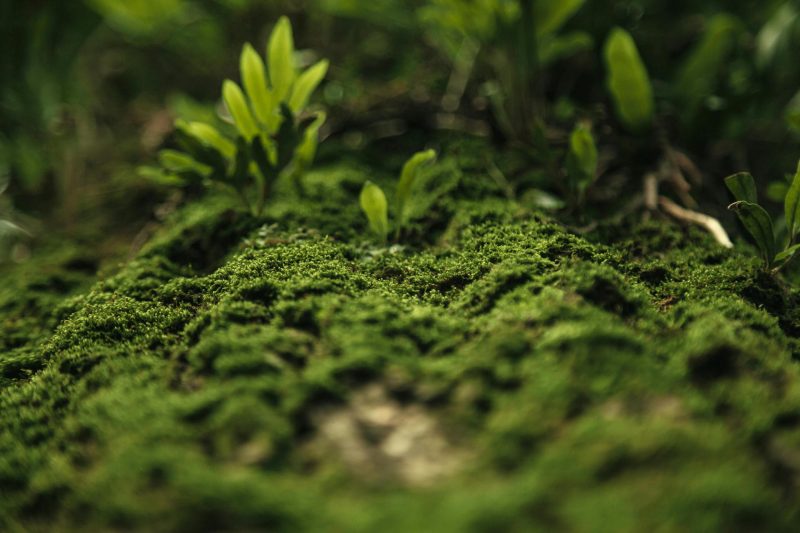
Despite their simple structure, mosses are capable of surviving in some of Earth's most extreme environments, such as Antarctica, deserts, and high mountains. Now, researchers from Hokkaido University in Japan have discovered that moss not only withstands hypergravity conditions but also shows enhanced growth.
In the study, the team cultivated the model moss Physcomitrium patens under artificially simulated gravity levels of 3x, 6x, and 10x Earth's gravity for eight weeks. Surprisingly, moss grown under 6x and 10x gravity exhibited a 36% to 52% increase in photosynthetic efficiency. This improvement was accompanied by an increase in chloroplast size and enhanced CO₂ diffusion capacity. The results, published in Science Advances, contrast sharply with previous findings—such as those from Savitribai Phule Pune University in India, which showed a dramatic decline in photosynthesis in wheat under 500x gravity.
The researchers also identified a key gene, named IBSH1, that, when activated under normal gravity, mimicked the effects of hypergravity—enlarging chloroplasts and boosting photosynthetic efficiency by up to 70%. This suggests that plants may have an innate potential to adapt to varying gravitational environments. The findings could provide insights into how ancient mosses evolved from aquatic to terrestrial life and may open new avenues for enhancing crop productivity through genetic approaches.
Moss Thrives Under Hypergravity, Offering Clues to Plant Evolution and Crop Enhancement
Tags
New Theory Suggests Gravity Might Trigger Quantum Entanglement Without Being Quantum Itself
In recent years, scientists have sought to test whether gravity can generate quantum entanglement —— a mysterious phenomenon in which two particles remain instantaneously linked, even when separated by vast…
When earthquakes strike, the ground shaking people feel accounts for only a small fraction of the total energy released. Researchers at the Massachusetts Institute of Technology (MIT) have now shown…

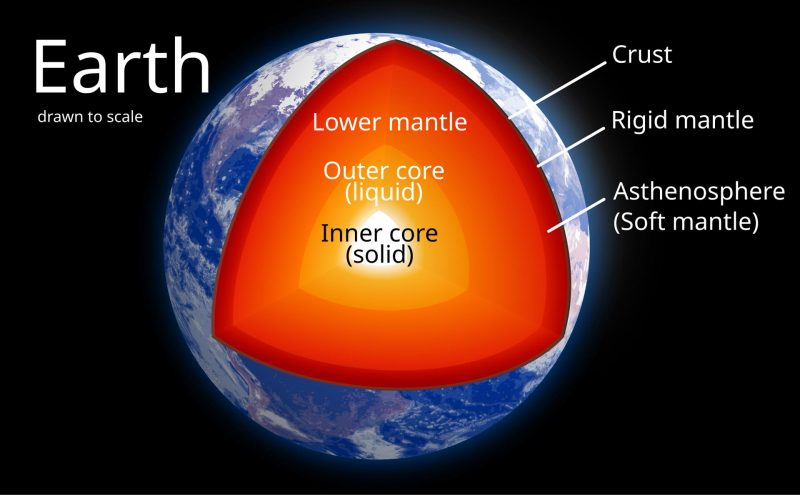
Scientists analyzing satellite data have uncovered a mysterious material disturbance near Earth’s core–mantle boundary that occurred between 2006 and 2008. The anomaly, recently detected by the US–German "Gravity Recovery and…
How did life arise from nothing? A new mathematical study offers a surprising perspective on this ultimate question. Researchers at Imperial College London suggest that the probability of life naturally…
Quantum physics has successfully explained phenomena ranging from atomic structure to stellar radiation, yet it has long failed to account for one fundamental force—gravity. This unresolved challenge, known as the…