On January 10th, NASA made an announcement during a media briefing regarding updates to the Artemis missions. The Artemis 2 astronaut mission, initially planned for November 2024, has been rescheduled to September 2025. Similarly, the Artemis 3 lunar landing mission, originally slated for completion by the end of 2025, has been postponed to September 2026.
During the meeting, NASA Administrator Bill Nelson emphasized the importance of safety and stated that the adjustments to the mission schedules were intended to allow the Artemis mission team more time to address the challenges associated with the development, operation, maintenance, and integration aspects. Nelson expressed the desire to inform everyone about the revised plans for reaching the South Pole of the Moon, as this mission holds significant importance.
Nelson also mentioned that the Artemis 4 mission remains on track for launch in September 2028.
Jim Free, NASA's Associate Administrator, emphasized that crew safety was the primary reason behind the decision to postpone the Artemis 2 mission. He reiterated NASA's unwavering commitment to ensuring the utmost safety during space exploration and stated that they would only proceed with the launch when fully prepared. Free acknowledged the crew's input, emphasizing the importance of focusing on the necessary work to guarantee their safe return.
During the briefing, Amit Kshatriya, Deputy Assistant Administrator of NASA's Moon to Mars Program, provided details on the new systems and technologies being tested and developed before the execution of the Artemis 2 mission. These include new facilities at the Kennedy Space Center in Florida, designed to facilitate rapid propellant loading, crew entry and exit, as well as new abort systems and enhanced life support systems. Kshatriya emphasized that these developments aimed to support the crew's safety throughout the mission.
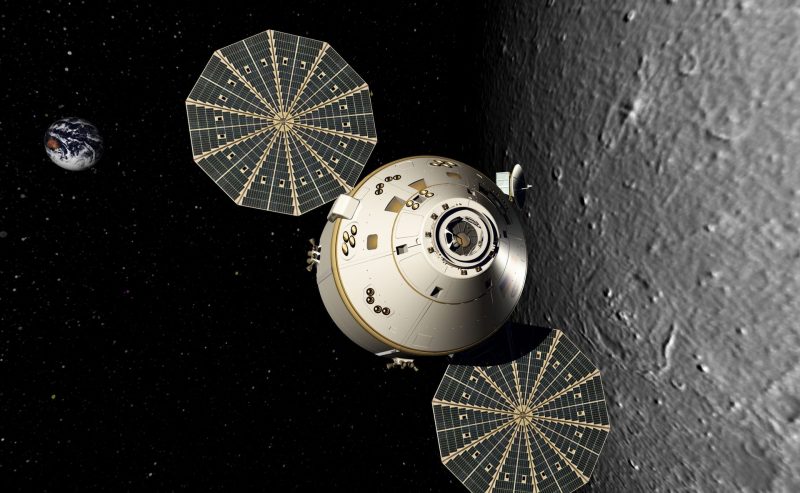
Kshatriya also addressed a heat shield problem that NASA's Orion spacecraft encountered during the Artemis 1 lunar flight test at the end of 2022. He explained that the heat shield issue had raised concerns, as the data analysis from the successful mission revealed unexpected scorching and shrinkage in certain areas. While the entire heat shield adequately protected the Orion spacecraft, some charred fragments had detached from the insulation board, which was unanticipated. Kshatriya clarified that the ablative material used in the heat shield is designed to burn, but the extent of the burning was not as expected.
Regarding the Artemis 3 mission, Kshatriya shared that certain life support equipment in the Orion spacecraft needed to be replaced due to malfunctions observed during testing. He emphasized the complexity of the process, involving the dismantling and debugging of multiple systems within the cabin.
Additionally, NASA discovered an issue with the electrical system in the launch abort system, responsible for pulling the spacecraft away from the Space Launch System (SLS) rocket in case of a launch abnormality. Kshatriya stated that they are in the early stages of investigation and have not yet determined the cause, but they are exploring various options to resolve the issue. Extensive testing will be conducted to ensure a satisfactory solution while allowing sufficient time for the process.
Once the Artemis 2 mission is launched, four astronauts, including three from NASA (Commander Reid Wiseman, pilot Victor Glover - the first astronaut of color to leave Earth orbit, and mission specialist Christina Koch - the first female astronaut to leave Earth orbit), will fly around the moon in a spacecraft and return to Earth. Joining them will be Canadian Space Agency astronaut Jeremy Hansen, who will become the first non-NASA astronaut to venture beyond low-Earth orbit.
Despite the mission's delay, NASA executives maintain their enthusiasm for the Artemis 2 mission and its significance in advancing space exploration. Administrator Bill Nelson emphasized the agency's ability to overcome challenges and achieve unprecedented milestones when focusing on real difficulties.
NASA Postpones Manned Moon Landing to September 2026 Prioritizing Safety
Tags
A new NASA study indicates that Saturn's largest moon, Titan, may host naturally forming primitive cell-like structures called vesicles within its liquid hydrocarbon lakes. The finding offers fresh insight into…
A recent NASA study reveals that large circular features on Venus—known as coronae—may be evidence of ongoing geological activity. The findings, published in Science Advances, are based on data collected…

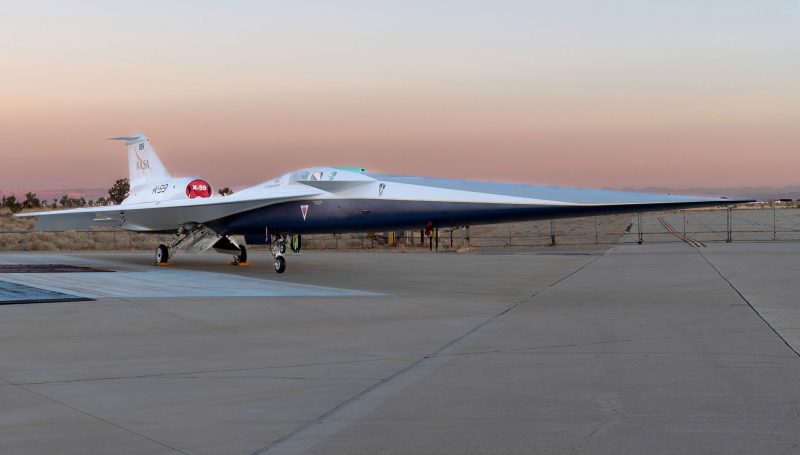
NASA has recently completed ground engine performance tests for the X-59 Quiet Supersonic Technology (QueSST) demonstrator—a key step toward mitigating the disruptive sonic booms produced by supersonic aircraft. In collaboration…
Boeing to Cut 400 Jobs from NASA's SLS Lunar Rocket Program Amid Speculation of Policy Shifts
Boeing plans to lay off 400 employees from its Space Launch System (SLS) lunar rocket program, raising speculation about potential changes to NASA's space exploration plans under a second Trump…
NISAR, a collaborative project between NASA and the Indian Space Research Organization (ISRO), is an upcoming radar satellite poised to revolutionize Earth observation. As the first satellite equipped with unique…
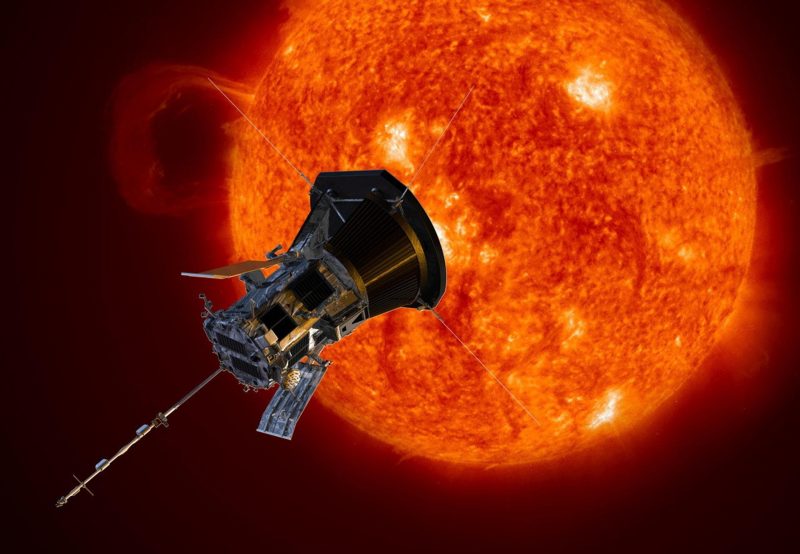
On December 24 of last year, NASA's Parker Solar Probe made history by becoming the first spacecraft to pass through the Sun's atmosphere. On January 1 this year, the probe…