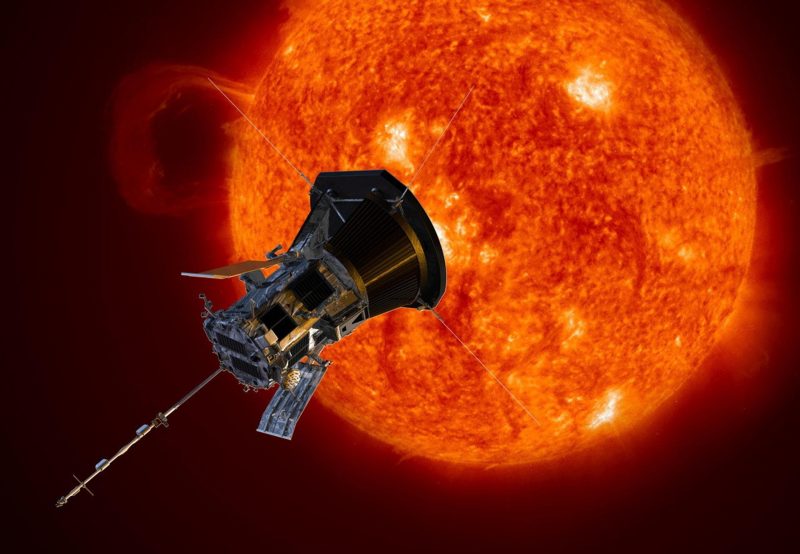
On December 24 of last year, NASA's Parker Solar Probe made history by becoming the first spacecraft to pass through the Sun's atmosphere. On January 1 this year, the probe successfully transmitted a signal back to Earth, confirming that its scientific instruments had collected valuable data during its groundbreaking journey.
In the coming weeks, the probe will continue to send this data to Earth, providing scientists with unprecedented insights into the origins of the solar wind—a stream of charged particles ejected from the Sun—and the mystery of why the Sun's outer atmosphere, the corona, reaches temperatures of millions of degrees Celsius, far hotter than the Sun’s surface.
While ground-based telescopes and other distant spacecraft have contributed to the study of solar wind and the corona, the Parker Solar Probe is uniquely capable of directly interacting with these phenomena. For instance, in 2023, scientists used data from the probe to confirm the existence of a relatively dust-free zone near the Sun. This theoretical region had been proposed years earlier but was only verified after the probe ventured close enough to observe it.
Beyond studying solar phenomena, the Parker Solar Probe's mission may also shed light on Einstein's theory of general relativity. Traveling at an astonishing speed of 692,000 kilometers per hour which is approximately 0.064% of the speed of light, the spacecraft offers a rare opportunity for scientists to study relativistic effects in a practical context.
This remarkable mission continues to push the boundaries of human understanding, providing critical data that could revolutionize our knowledge of the Sun and the fundamental laws of physics.
NASA's Parker Solar Probe Achieves Historic Milestone in Solar Exploration
Tags
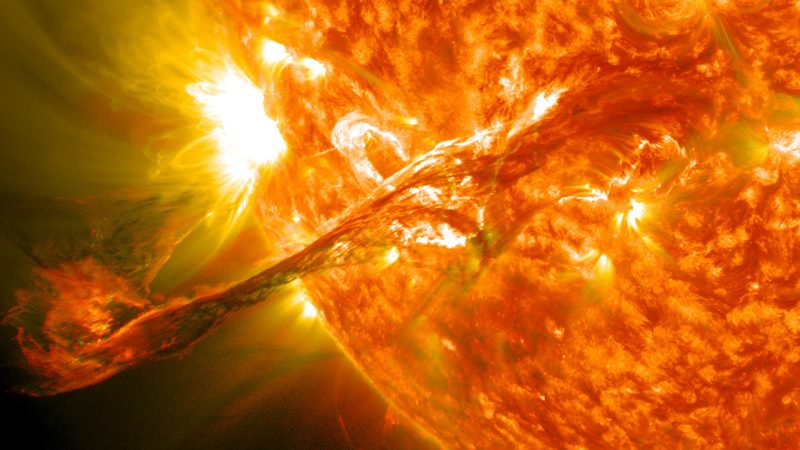
For decades, scientists have been puzzled by a strange solar phenomenon often called “solar rain.” Unlike rainfall on Earth, this occurs in the Sun's corona—a superheated plasma layer above its…
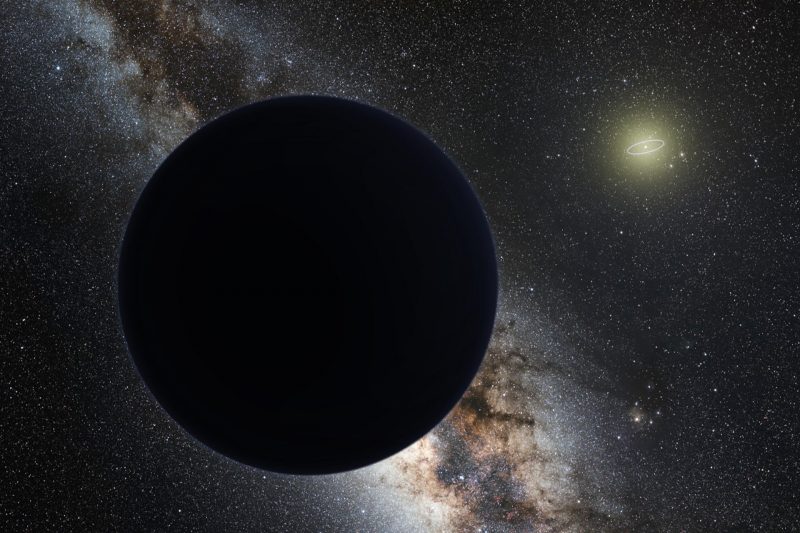
Astronomers have discovered a mysterious new world at the edge of the solar system—a trans-Neptunian object (TNO) designated 2017 OF201. The discovery, made by researchers from the Institute for Advanced…
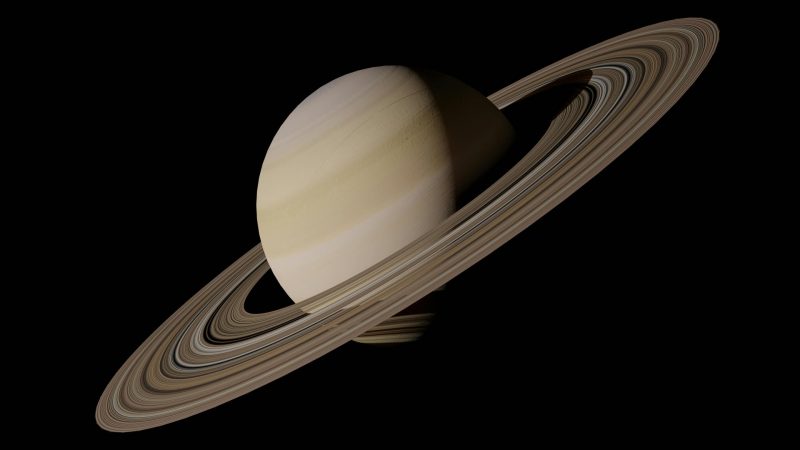
A new NASA study indicates that Saturn's largest moon, Titan, may host naturally forming primitive cell-like structures called vesicles within its liquid hydrocarbon lakes. The finding offers fresh insight into…
Sunlight-Driven Device Recovers Ammonia from Wastewater for Fertilizer and Water Purification
As solar energy applications expand, scientists have developed a cost-effective technology that uses sunlight to recover ammonia from wastewater. The innovation, published in Nature Sustainability, offers a low-cost source of…

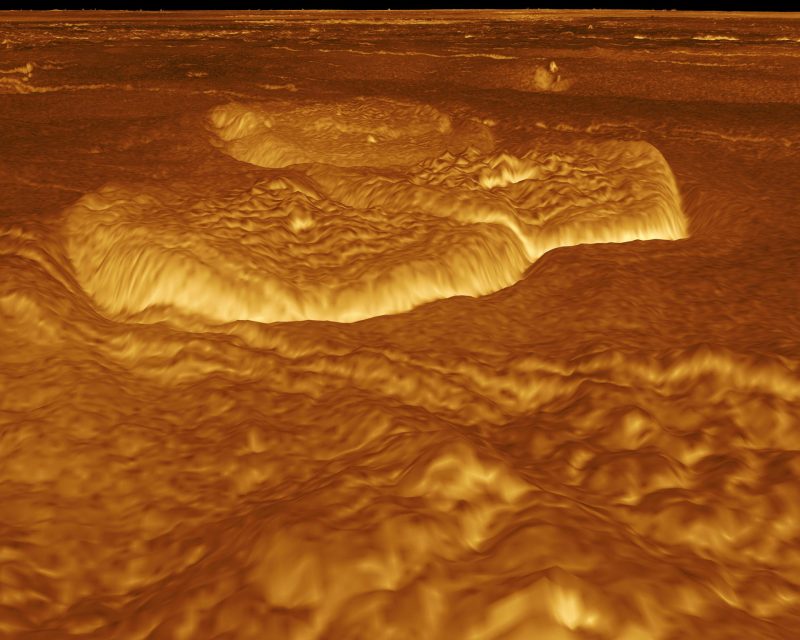
A recent NASA study reveals that large circular features on Venus—known as coronae—may be evidence of ongoing geological activity. The findings, published in Science Advances, are based on data collected…
Researchers have developed a novel sponge-like device that can extract moisture from the air and release it into a container using solar energy. Unlike traditional fog-harvesting or radiative cooling techniques,…
