NASA has recently announced the Landolt Space Mission, scheduled to launch in 2029, which aims to place the first artificial star into Earth's orbit. This project was approved in February, and announced to the public on June 10. With a budget of $19.5 million, the mission will involve a team of 30 individuals.
The artificial star, resembling a shoebox-sized satellite, will be equipped with eight lasers. Its primary function is to replicate various types of stars and supernovae found in the universe by directing lasers towards ground-based telescopes.
This groundbreaking technology will significantly contribute to astronomers' understanding of authentic cosmic objects. Once deployed, the artificial star will facilitate the fine-tuning of telescopes, enabling experts to more accurately measure stellar brightness.
In addition to its role in advancing astronomical knowledge, the Landolt Space Mission aims to address challenges in astrophysics through absolute flux calibration. This calibration process seeks to tackle complex issues such as determining the speed and acceleration of the universe's expansion. Currently, accurately measuring the rate at which stars emit photons, a crucial parameter in this calibration, presents significant difficulties.
NASA Approves Landolt Space Mission: First Artificial Star to Aid Astronomical Understanding

Tags
When earthquakes strike, the ground shaking people feel accounts for only a small fraction of the total energy released. Researchers at the Massachusetts Institute of Technology (MIT) have now shown…

Scientists analyzing satellite data have uncovered a mysterious material disturbance near Earth’s core–mantle boundary that occurred between 2006 and 2008. The anomaly, recently detected by the US–German "Gravity Recovery and…
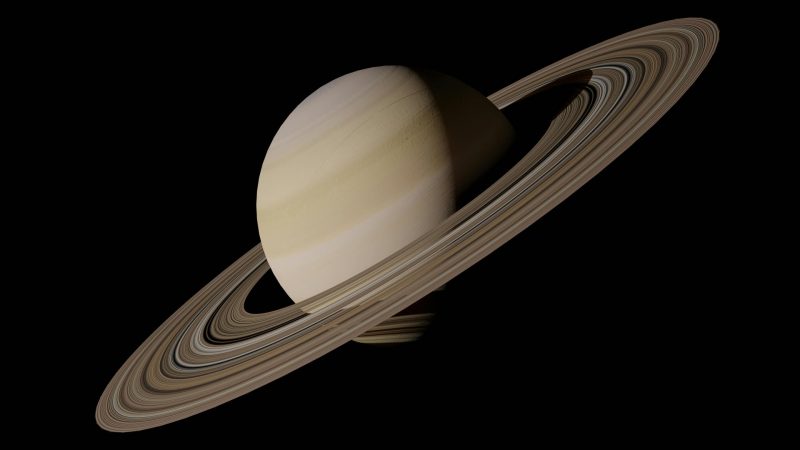
A new NASA study indicates that Saturn's largest moon, Titan, may host naturally forming primitive cell-like structures called vesicles within its liquid hydrocarbon lakes. The finding offers fresh insight into…
How did life arise from nothing? A new mathematical study offers a surprising perspective on this ultimate question. Researchers at Imperial College London suggest that the probability of life naturally…
Astronomers studying the unusual supernova SN2021yfj have gained rare insights into the internal structure of a massive star, challenging conventional theories of stellar death. The discovery, led by an international…
Astronomers may have detected a giant exoplanet orbiting Alpha Centauri A, a Sun-like star located about 4.3 light-years from Earth. The candidate planet lies within the star's habitable zone and…