When earthquakes strike, the ground shaking people feel accounts for only a small fraction of the total energy released. Researchers at the Massachusetts Institute of Technology (MIT) have now shown that the vast majority of this energy is instead converted into heat.
In a controlled laboratory setting, the team simulated “laboratory earthquakes” using granite powder samples that mimic the rocks where quakes occur. For the first time, they precisely calculated the full energy budget of an earthquake event. The results revealed that, on average, about 80% of earthquake energy near the epicenter is transformed into heat—sometimes intense enough to melt rock within microseconds. Only about 10% generates seismic shaking, while less than 1% is used to fracture rock and create new surfaces.
The study also found that this energy distribution is not fixed. It depends heavily on the deformation history of the rocks—that is, how tectonic movements over geological time have altered their physical properties. This history shapes how faults slip during earthquakes, ultimately influencing how much shaking and damage a quake produces.
Because the actual processes deep underground cannot be directly observed, laboratory experiments like these provide crucial insight into earthquake physics. The MIT team developed specialized methods and instruments to replicate fault slip at microscopic scales and simultaneously measure heat generation, vibrations, and rock fracture. Their findings were published in AGU Advances, a journal of the American Geophysical Union.
Most Earthquake Energy Dissipates as Heat, MIT Study Finds
Tags
A groundbreaking study by scientists from Pennsylvania State University and Columbia University, recently published in Nature Geoscience, reveals that Earth's continents owe their long-term stability—and their role as the cradle…

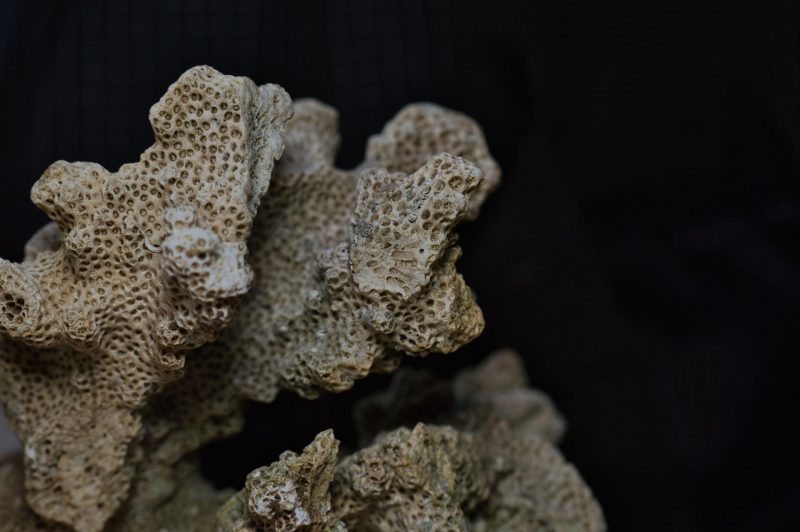
Scientists have discovered hundreds of massive coral boulders scattered inland on Anegada Island in the British Virgin Islands—evidence of a catastrophic tsunami that struck in the late 14th century. The…
A research team from the University of Washington School of Medicine has uncovered a new way brown fat generates heat, independent of the traditional mitochondrial pathway. Their study, published in…

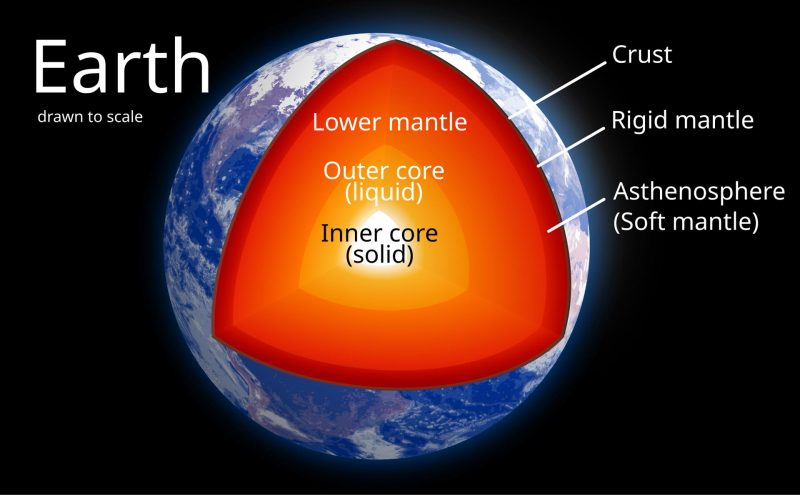
Scientists analyzing satellite data have uncovered a mysterious material disturbance near Earth’s core–mantle boundary that occurred between 2006 and 2008. The anomaly, recently detected by the US–German "Gravity Recovery and…
A groundbreaking study published in Nature Materials suggests that the combination of salt, ice, and mechanical strain could become a key to future renewable energy. Researchers have demonstrated that specially…