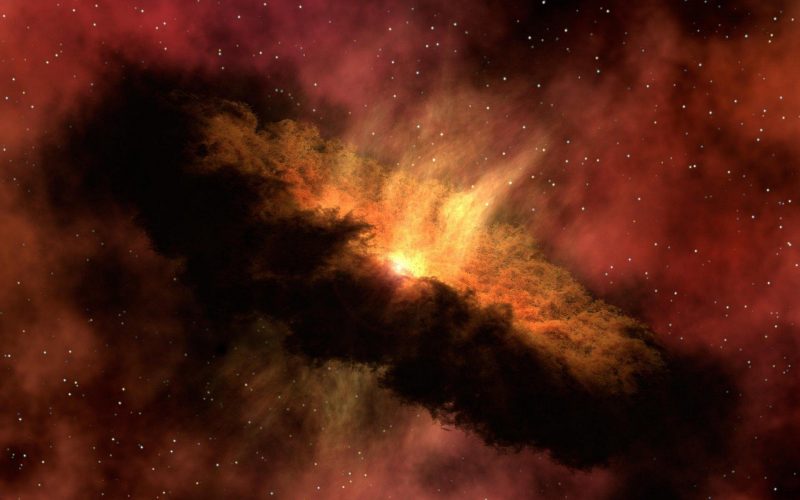
Astronomers studying the unusual supernova SN2021yfj have gained rare insights into the internal structure of a massive star, challenging conventional theories of stellar death. The discovery, led by an international team from Northwestern University, was recently published in Nature.
Unlike most supernovae, which typically retain abundant hydrogen and helium, SN2021yfj's spectrum was dominated by silicon, sulfur, and argon. This suggests that before its explosion, the star had already lost its hydrogen, helium, and even carbon layers—exposing deep inner regions rich in heavier elements. The finding provides direct evidence supporting the classic “onion-like” layered model of stellar interiors.
Researchers believe the progenitor star underwent an extreme mass-loss process prior to collapse. Possible explanations include interaction with a companion star, violent pre-supernova eruptions, or unusually powerful stellar winds. A leading hypothesis is that the star experienced multiple “pair-instability” pulses, ejecting its outer layers in successive bursts before the final catastrophic explosion.
Such events are exceedingly rare and highlight the limitations of current stellar evolution models. The team emphasizes the need to track more of these unusual supernovae to deepen our understanding of the diverse pathways through which massive stars meet their end.
Rare Supernova Reveals Hidden Layers of Massive Star's Death
Tags
Astronomers may have detected a giant exoplanet orbiting Alpha Centauri A, a Sun-like star located about 4.3 light-years from Earth. The candidate planet lies within the star's habitable zone and…
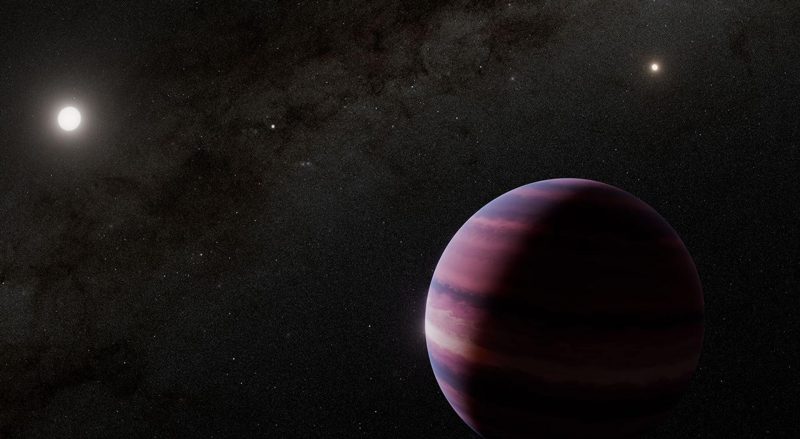
Using the Very Large Array (VLA) of the U.S. National Science Foundation’s National Radio Astronomy Observatory (NSF NRAO), astronomers have, for the first time, directly observed a dramatic accretion process…
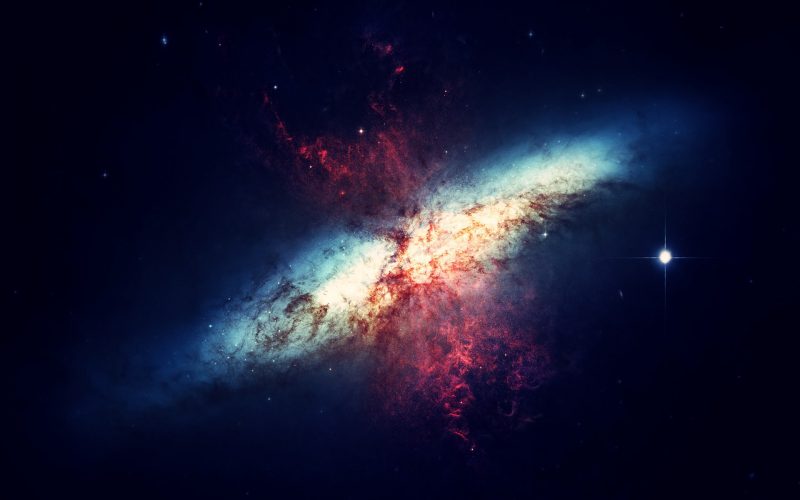
An international team of astronomers has discovered that "super-Earths"—planets several times the mass of Earth—can orbit their host stars at vast distances, much like gas giants such as Jupiter. This…
NASA's James Webb Space Telescope (JWST) has observed a rare and dramatic cosmic event: a planet actively spiraling into its host star. This groundbreaking discovery challenges the long-held belief that…
A groundbreaking discovery suggests that the first generation of stars in the universe may have produced significant amounts of water upon their death, challenging previous assumptions about the timeline of…