How did life arise from nothing? A new mathematical study offers a surprising perspective on this ultimate question. Researchers at Imperial College London suggest that the probability of life naturally emerging on Earth may be far lower than previously assumed.
Using tools from information theory and algorithmic complexity, the team modeled how life might have originated in early Earth's environment. They found that the spontaneous assembly of simple chemical molecules into primitive, functional cells faces enormous informational barriers—akin to expecting monkeys to randomly type out the complete works of Shakespeare.
The study highlights a paradox: while natural systems generally evolve from order to disorder, life required a leap from disorder to a highly ordered state. Within the limited time and resources available on early Earth, the chances of random chemical reactions producing structures complex enough to sustain life appear mathematically daunting.
The findings do not rule out natural origins but strongly suggest that key mechanisms remain undiscovered. Uncovering life's beginnings may demand new physical explanations—and possibly a shift beyond current scientific frameworks.
Mathematical Model Challenges Probability of Life's Natural Origin

Tags
A groundbreaking study by scientists from Pennsylvania State University and Columbia University, recently published in Nature Geoscience, reveals that Earth's continents owe their long-term stability—and their role as the cradle…

When earthquakes strike, the ground shaking people feel accounts for only a small fraction of the total energy released. Researchers at the Massachusetts Institute of Technology (MIT) have now shown…

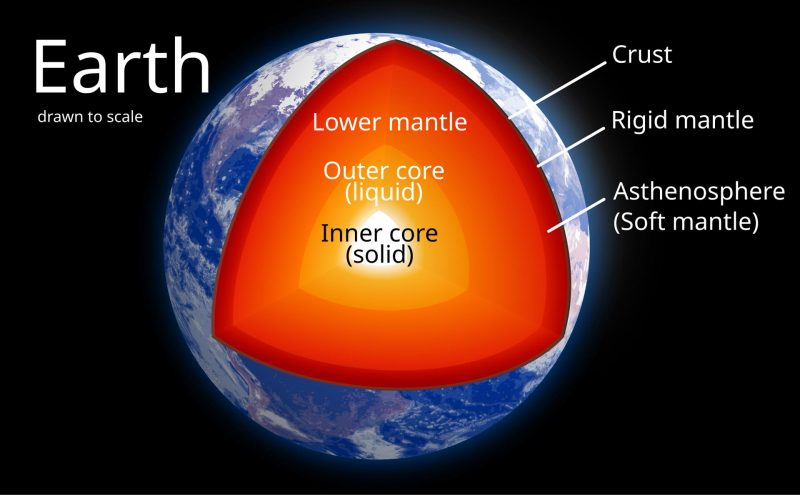
Scientists analyzing satellite data have uncovered a mysterious material disturbance near Earth’s core–mantle boundary that occurred between 2006 and 2008. The anomaly, recently detected by the US–German "Gravity Recovery and…
Despite their simple structure, mosses are capable of surviving in some of Earth's most extreme environments, such as Antarctica, deserts, and high mountains. Now, researchers from Hokkaido University in Japan…

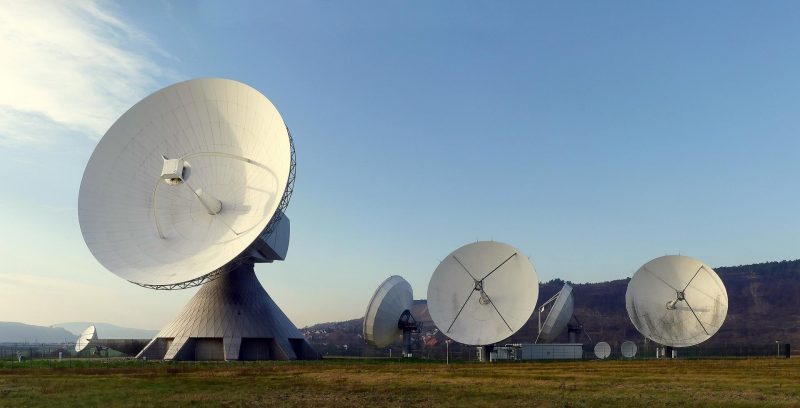
A new study reveals that Earth's civil and military radar systems may be inadvertently transmitting signals into space that could be detected by alien civilizations. These unintended electromagnetic emissions—especially from…