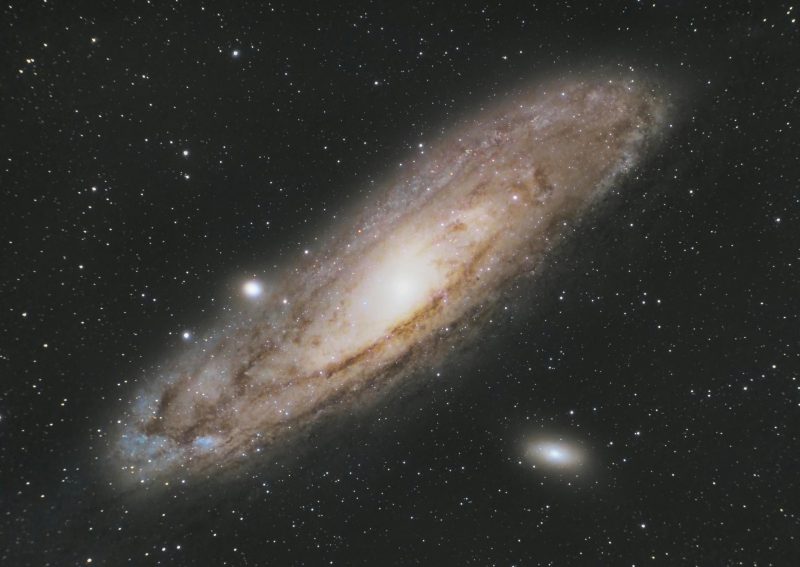
A new study published in Nature Astronomy suggests that the probability of a future collision between the Milky Way and the Andromeda galaxy may be only 50%—significantly lower than previously believed. The research points to the gravitational influence of the Large Magellanic Cloud (LMC)—the Milky Way's most massive satellite galaxy—as a potential factor in altering the Milky Way's trajectory and possibly averting a direct collision.
For the past century, astronomers have confirmed that Andromeda is moving toward the Milky Way. Based on Hubble Space Telescope data, a 2012 NASA study predicted a direct merger. However, earlier models underestimated the mass of the LMC, recently revealed to be much greater than previously assumed.
Researchers from the University of Wisconsin–Madison and the University of Helsinki used updated data from the Hubble and European Space Agency's Gaia telescopes to simulate the future motions of the Milky Way, Andromeda, the LMC, and Messier 33—the third-largest galaxy in the Local Group—over the next 10 billion years. Across 100,000 simulations, the collision probability between the Milky Way and Andromeda was 50% when considering only the two galaxies; this rose to 66% when including Messier 33, but returned to 50% when the LMC was factored in. The results suggest the LMC's gravitational pull may cause a lateral shift in the Milky Way's motion, helping it avoid a direct hit. However, the study also predicts the Milky Way will eventually absorb the LMC in about 2 billion years.
Some experts remain skeptical, arguing that the total mass of the Milky Way-Andromeda system may still be underestimated, which would imply a higher merger likelihood. A clearer consensus may emerge with more precise dark matter measurements expected in the next decade.
Milky Way-Andromeda Collision May Be Less Likely Than Previously Thought
Tags
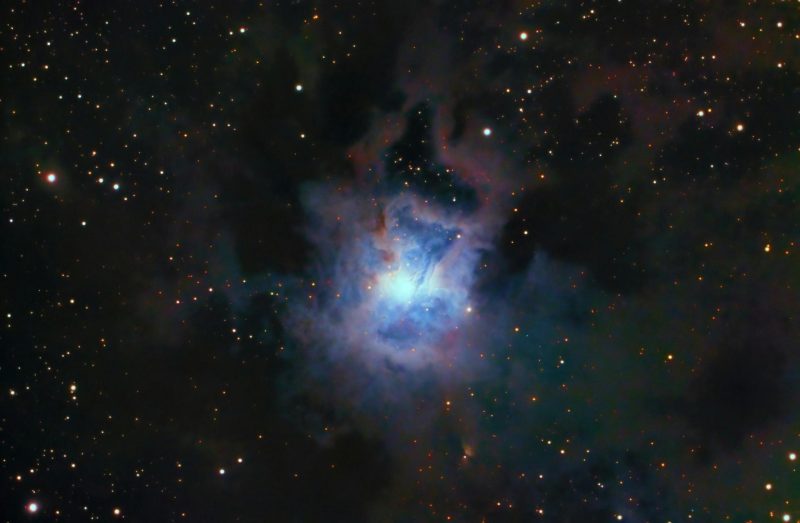
A mysterious gamma-ray glow at the center of the Milky Way — puzzling scientists for decades—may finally offer the first observational evidence of dark matter. The finding, based on a…
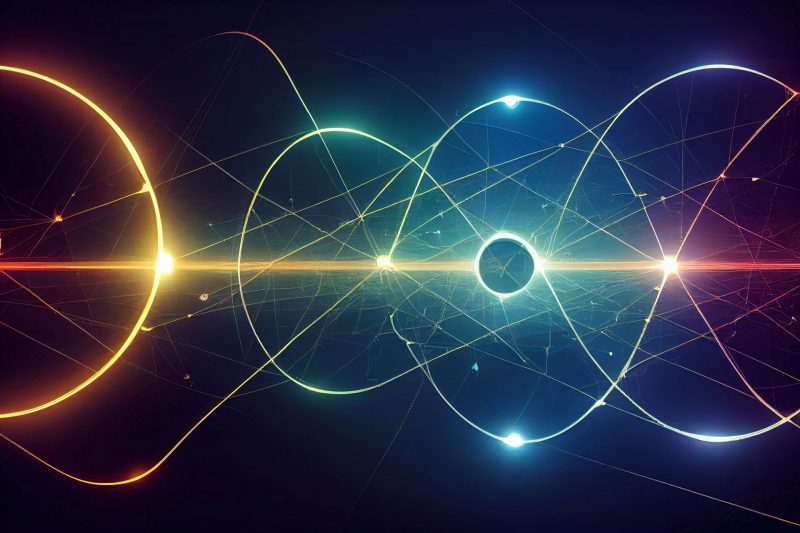
New Theory Suggests Gravity Might Trigger Quantum Entanglement Without Being Quantum Itself
In recent years, scientists have sought to test whether gravity can generate quantum entanglement —— a mysterious phenomenon in which two particles remain instantaneously linked, even when separated by vast…
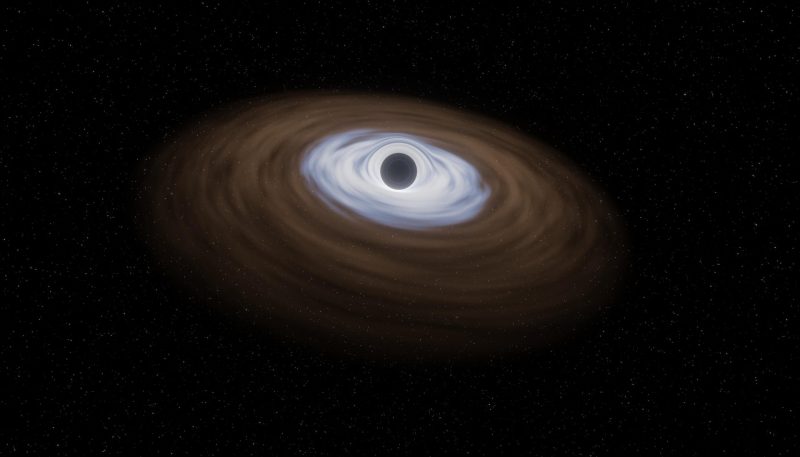
ng data from the MaNGA survey at the Apache Point Observatory, researchers detected this black hole in a dwarf galaxy about 230 million light-years away. Unlike typical supermassive black holes…
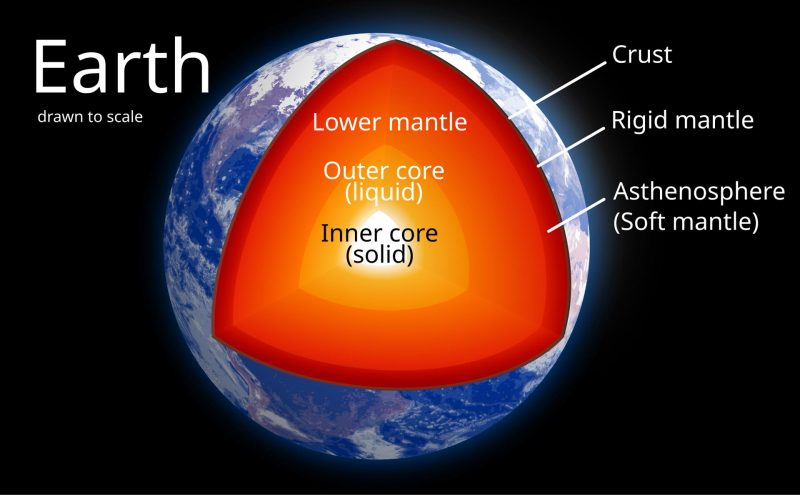
Scientists analyzing satellite data have uncovered a mysterious material disturbance near Earth’s core–mantle boundary that occurred between 2006 and 2008. The anomaly, recently detected by the US–German "Gravity Recovery and…
Quantum physics has successfully explained phenomena ranging from atomic structure to stellar radiation, yet it has long failed to account for one fundamental force—gravity. This unresolved challenge, known as the…
Despite their simple structure, mosses are capable of surviving in some of Earth's most extreme environments, such as Antarctica, deserts, and high mountains. Now, researchers from Hokkaido University in Japan…