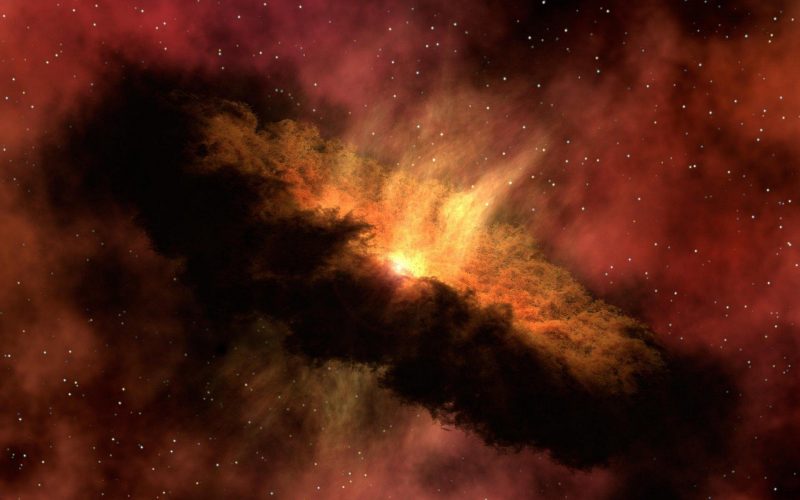
A recent study has revealed that the ozone layer in Earth's atmosphere experienced a temporary depletion as a result of a supernova explosion in 2022. This event briefly impacted the natural barrier that shields us from harmful solar radiation. The findings of this research were published in the scientific journal Nature Communications on Tuesday.
On October 9, 2022, a space telescope captured a stream of high-energy photons heading towards Earth, confirming a supernova explosion that occurred approximately 1.9 billion light-years away. Scientists have described this event as the most luminous supernova explosion ever observed.
A team of researchers conducted an analysis and determined that the supernova explosion caused noticeable changes in the number of ionized particles present in Earth's upper atmosphere, including the ozone molecules responsible for absorbing harmful solar radiation.
According to Pietro Ubertini, an astronomer at the National Institute of Astrophysics in Rome who contributed to the discovery of this atmospheric phenomenon, the ozone layer was partially depleted and temporarily destroyed. He further explained that the effect lasted only a few minutes before the ozone layer naturally repaired itself, resulting in no significant consequences. However, Ubertini warned that if a similar supernova explosion were to occur much closer to Earth, it would have catastrophic implications.
This study highlights how explosive events, even those occurring far beyond our solar system, can impact our atmosphere. In essence, our atmosphere serves as a vast sensor for investigating extreme cosmic phenomena.
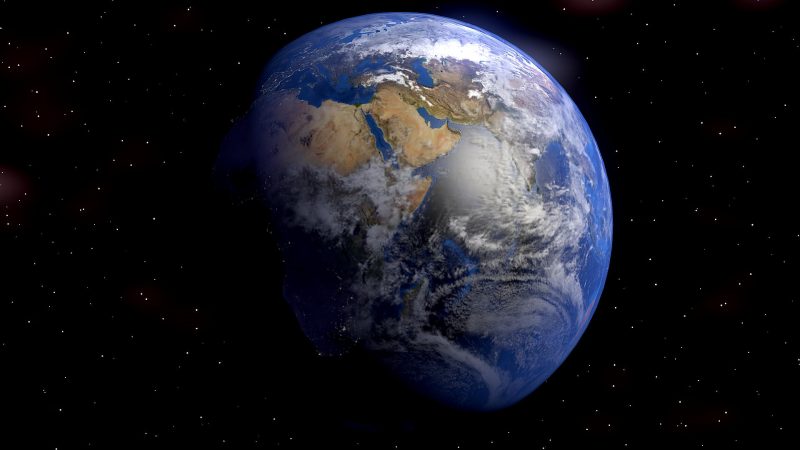
 Image Credit: Gerd Altmann
The majority of the ozone layer is concentrated within the thin layer of the stratosphere, situated approximately 16 to 40 kilometers above the Earth's surface. It was within this region that scientists first discovered the ozone hole above Antarctica, primarily caused by chlorofluorocarbon chemicals formerly used in aerosol sprays and plastic foam. The ozone layer plays a crucial role in absorbing a significant portion of the sun's ultraviolet radiation, safeguarding us against sunburn, skin cancer, and crop damage.
Simulations indicate that if a gamma-ray burst were to occur within our galaxy, the stratospheric ozone layer could vanish for several years, potentially leading to widespread species extinction.
Ozone also exists in the ionosphere, but at lower concentrations. The ionosphere is a region of the atmosphere that extends from 60 kilometers to 500 kilometers above sea level. At this altitude, ozone provides a certain level of protection, although it is less effective than in the stratosphere.
To investigate the impact of last year's gamma-ray bursts on Earth, Dr. Ubertini and his colleagues searched for signals at the uppermost part of the ionosphere. The researchers observed a significant increase in the electric field at the top of the ionosphere, which they correlated with the gamma-ray burst signals measured by the European Space Agency's International Gamma-ray Astrophysics Laboratory.
Furthermore, the scientists discovered that gamma rays ionize ozone and nitrogen molecules in the upper atmosphere, resulting in a 60-fold increase in the strength of the electric field. Once ionization occurs, ozone molecules are unable to absorb ultraviolet radiation, leading to a temporary elevation of harmful solar rays reaching Earth.
While it is known that gamma-ray bursts ionize ozone molecules at the base of the ionosphere, approximately 215 miles (346 kilometers) above the Earth's surface, this study represents the first evidence that such cosmic explosions affect the entire ionosphere. According to Laura Hayes, a solar physicist at the European Space Agency, it is uncommon for cosmic phenomena occurring far from Earth to cause such extensive atmospheric disturbances. In an email, she noted, "Fortunately, this gamma-ray burst occurred at a considerable distance, making its impact more of a scientific curiosity than a threat."
Dr. Ubertini explained that a gamma-ray burst a million times more powerful could ionize enough ozone to weaken the protective barrier for days or months. However, the probability of such an event is low. Supernova explosions as intense as the one observed last year are exceedingly rare, occurring only once every 10,000 years. Additionally, gamma rays emitted from supernovae manifest as jets and must be precisely aimed to impact Earth.
Nonetheless, understanding the ionosphere's response to any cosmic phenomenon is crucial for assessing threats closer to Earth. Dr. Hayes emphasized, "This helps us estimate recovery times following intense ionization, particularly in situations involving strong solar flares."
The encouraging news is that ozone has the ability to regenerate itself, and the free electrons are eventually recaptured by ionized molecules within the atmosphere. Consequently, the protective shield guarding Earth from space radiation can be partially restored, ensuring the safety of Earth's inhabitants against the sun's lethal radiation.
Last Year's Supernova: Partial Destruction of Earth's Ozone Layer for a Few Minutes
Tags
A groundbreaking study by scientists from Pennsylvania State University and Columbia University, recently published in Nature Geoscience, reveals that Earth's continents owe their long-term stability—and their role as the cradle…
Astronomers studying the unusual supernova SN2021yfj have gained rare insights into the internal structure of a massive star, challenging conventional theories of stellar death. The discovery, led by an international…
Core Leak? Study Suggests Earth's Core Material May Be Reaching the Surface via Volcanoes
A groundbreaking study from the University of Göttingen challenges long-held assumptions about Earth's internal structure, suggesting that material from the planet's core may be leaking to the surface through volcanic…
A provocative new theory has sparked interest and debate in the scientific community: Earth's rotation within its geomagnetic field might be harnessed to generate electricity. Although the idea remains contentious,…
Earth's atmosphere has undergone dramatic changes over time, yet the gas bubbles trapped in polar ice cores can only preserve atmospheric compositions from the past six million years—less than 0.2%…
A groundbreaking discovery suggests that the first generation of stars in the universe may have produced significant amounts of water upon their death, challenging previous assumptions about the timeline of…