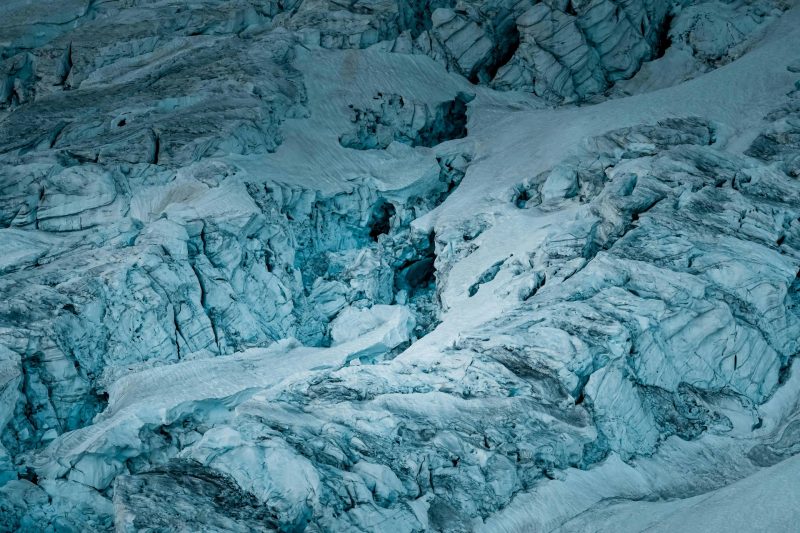
A groundbreaking study from the University of Göttingen challenges long-held assumptions about Earth's internal structure, suggesting that material from the planet's core may be leaking to the surface through volcanic activity. The findings, published in Nature, are based on a detailed isotopic analysis of rocks from Hawaii's volcanic islands.
Previous studies had hinted at the presence of core-derived material in certain volcanic rocks—such as those from Baffin Island in Canada—through anomalies in helium-3, tungsten, and hydrogen isotopes. However, since helium and hydrogen can also originate in the mantle, these indicators remained inconclusive.
Seeking more definitive evidence, the Göttingen team focused on ruthenium, a rare metal known to be highly concentrated in Earth's core. By refining extraction techniques and employing advanced mass spectrometry, they precisely measured ruthenium isotopes (atomic masses 100, 101, and 102) in Hawaiian lava samples. The results revealed distinct isotopic signatures not found elsewhere in Earth's crust, pointing to a possible core origin.
The Hawaiian Islands, formed by deep mantle plume activity, offer an ideal setting for studying materials from Earth's interior. The isotopic discrepancies align with the planet's geological history: while the core formed over four billion years ago, subsequent meteorite impacts introduced varying materials into the mantle and crust, leading to isotopic divergence.
This research bolsters the hypothesis that mantle plumes may originate at the core-mantle boundary. While the findings are compelling, scientists caution that further studies are necessary to eliminate alternative explanations. Future research will include sampling other volcanic hotspots to validate this potential paradigm shift in understanding Earth's deep interior.
Core Leak? Study Suggests Earth's Core Material May Be Reaching the Surface via Volcanoes
Tags
A groundbreaking study by scientists from Pennsylvania State University and Columbia University, recently published in Nature Geoscience, reveals that Earth's continents owe their long-term stability—and their role as the cradle…
Earth's climate has swung dramatically between extremes of ice and heat throughout its history. In fact, for much of geological time, Earth has been a warm, ice-free planet. During the Cretaceous…
Managing Underground Pressure May Prevent Volcanic Unrest in Southern Italy, Study Finds
Frequent earthquakes in Italy's Campi Flegrei volcanic region since 2022 have raised safety concerns for hundreds of thousands of residents, particularly around Naples. A new study led by researchers at…
A provocative new theory has sparked interest and debate in the scientific community: Earth's rotation within its geomagnetic field might be harnessed to generate electricity. Although the idea remains contentious,…
Earth's atmosphere has undergone dramatic changes over time, yet the gas bubbles trapped in polar ice cores can only preserve atmospheric compositions from the past six million years—less than 0.2%…