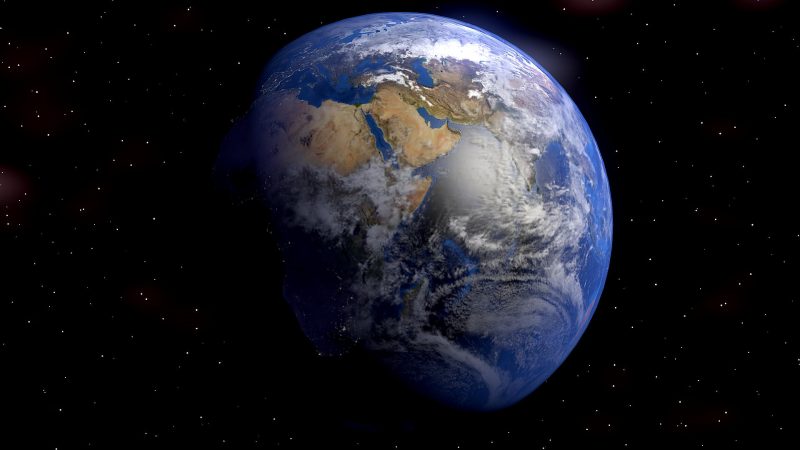
Earth's atmosphere has undergone dramatic changes over time, yet the gas bubbles trapped in polar ice cores can only preserve atmospheric compositions from the past six million years—less than 0.2% of Earth's history. To explore even earlier atmospheric conditions, scientists typically analyze chemical traces of metals and minerals in ancient rocks. Now, researchers at Rensselaer Polytechnic Institute (RPI) in the United States are taking a more direct approach: extracting and analyzing tiny liquid and gas inclusions trapped in salts, quartz veins, and crystallized magma.
These samples date back more than three billion years and contain direct records of rare gases, oxygen, nitrogen, and carbon dioxide. This breakthrough offers a new perspective on Earth's atmospheric history. While many findings remain preliminary, the research has already confirmed some longstanding hypotheses while challenging others. For example, studies indicate that oxygen levels were sufficient to support animal respiration as early as 800 million years ago—before animals emerged.
To extract these ancient gases, researchers gradually crush rock samples in a vacuum-sealed press, releasing the trapped gases for analysis using mass spectrometry. This process requires analyzing large quantities of rock—about 10 grams per sample—to obtain sufficient gas for measurement.
Additionally, by studying gas inclusions in rock salt deposits, such as those in Death Valley, scientists have traced nitrogen and oxygen, which are crucial for life. Although some gases dissolve in water over time, potentially affecting measurements, researchers have developed correction methods to enhance data accuracy.
This innovative approach marks a significant step forward in reconstructing Earth's atmospheric evolution, providing deeper insights into the planet's environmental conditions over billions of years.
Unveiling Earth's Ancient Atmosphere: Scientists Extract 3-Billion-Year-Old Gas Samples

Tags
A groundbreaking study by scientists from Pennsylvania State University and Columbia University, recently published in Nature Geoscience, reveals that Earth's continents owe their long-term stability—and their role as the cradle…

Archaeologists have uncovered stone tools at the Little Paxton site, about 80 kilometers east of London, dating back roughly 440,000 years. Using advanced infrared radiofluorescence dating, researchers confirmed the artifacts…
Over 10 million years ago, ancient African apes gained extra nutrition by eating fallen, fermented fruit—a behavior that may have laid the evolutionary foundation for humans' alcohol tolerance. A recent…

For decades, scientists believed leprosy was a disease of the Old World, introduced to the Americas around 500 years ago by European colonizers and African slaves. The disease was traditionally…

Core Leak? Study Suggests Earth's Core Material May Be Reaching the Surface via Volcanoes
A groundbreaking study from the University of Göttingen challenges long-held assumptions about Earth's internal structure, suggesting that material from the planet's core may be leaking to the surface through volcanic…
A provocative new theory has sparked interest and debate in the scientific community: Earth's rotation within its geomagnetic field might be harnessed to generate electricity. Although the idea remains contentious,…