Last month, the National Aeronautics and Space Administration (NASA) unveiled a remarkable breakthrough in our understanding of the universe. Through the release of captivating photos and preliminary research findings, NASA presented the world with a glimpse into the enigmatic world of the 4.5 billion-year-old asteroid Bennu. This celestial body, a time capsule from the early days of our solar system, holds vital clues about the origins of Earth and the fundamental building blocks of life itself.
The samples collected from Bennu have provided compelling evidence of the presence of carbon and water, two essential elements that form the bedrock of life on our planet. This revelation not only deepens our understanding of the mysteries of life but also suggests the tantalizing possibility that similar elements may exist beyond the confines of Earth.
However, the significance of asteroids extends beyond their role as cosmic messengers. Some of these celestial bodies pose formidable threats to human civilization, exemplified by the potential for catastrophic collisions with our home planet.
To safeguard against such dire scenarios, NASA's Near-Earth Object Research Center spearheads the operation of the "Sentinel" impact monitoring system. This cutting-edge surveillance network diligently tracks and conducts long-term analysis of potentially hazardous asteroids, enabling us to anticipate and mitigate the risks associated with their future orbits. In a recent report, the esteemed American Fun Science website highlighted the five asteroids in our solar system that pose the greatest peril to Earth.
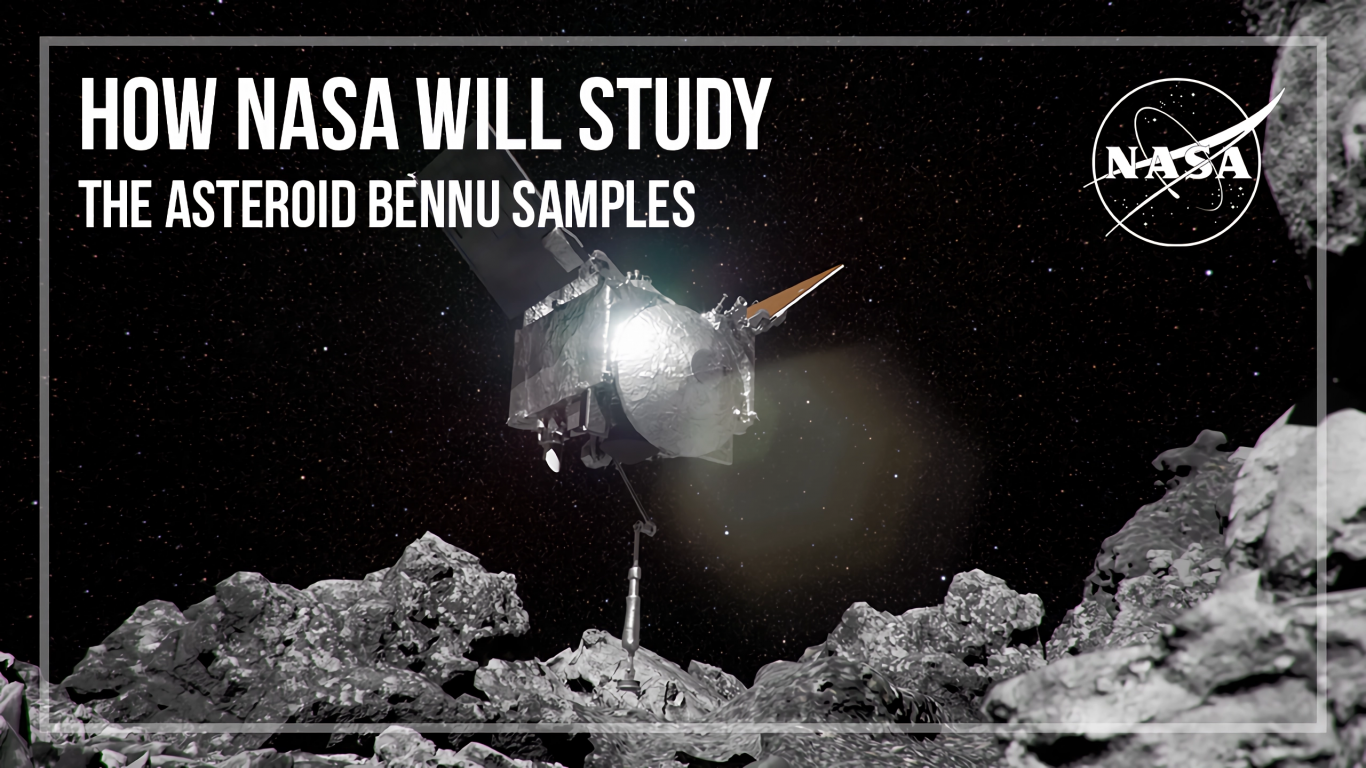 Image Credit: NASA's Goddard Space Flight Center
Bennu
Among these imminent threats looms the near-Earth asteroid Bennu, discovered in September 1999 and officially designated as "101955 Bennu (1999 RQ36)". With its current trajectory, Bennu stands as the most probable asteroid to collide with our planet. Boasting a radius of 0.49 kilometers and a staggering "weight" of 74 million tons, the impact of Bennu would unleash an unimaginable release of energy equivalent to the explosion of 1.4 billion tons of TNT. While the damage inflicted by such an impact would prove devastating to specific regions, it would not result in global catastrophe. Nonetheless, if Bennu were to strike densely populated areas, the loss of life could reach staggering proportions, potentially claiming the lives of millions.
Scientists estimate that the closest approach of Bennu to Earth will occur on September 24, 2182, with a calculated probability of impact standing at a mere 0.037%. Though seemingly distant in time, this impending encounter serves as a stark reminder of the ever-present threat that looms in our cosmic neighborhood.
In a momentous event on September 24, 2023, NASA's "Source Spectral Interpretation Resource Security Regolith Identification Probe" successfully returned the samples collected from Bennu back to Earth. As we speak, research teams across the globe are diligently analyzing these extraordinary space rocks, striving to unlock the secrets they hold and unravel the mysteries of our celestial origins.
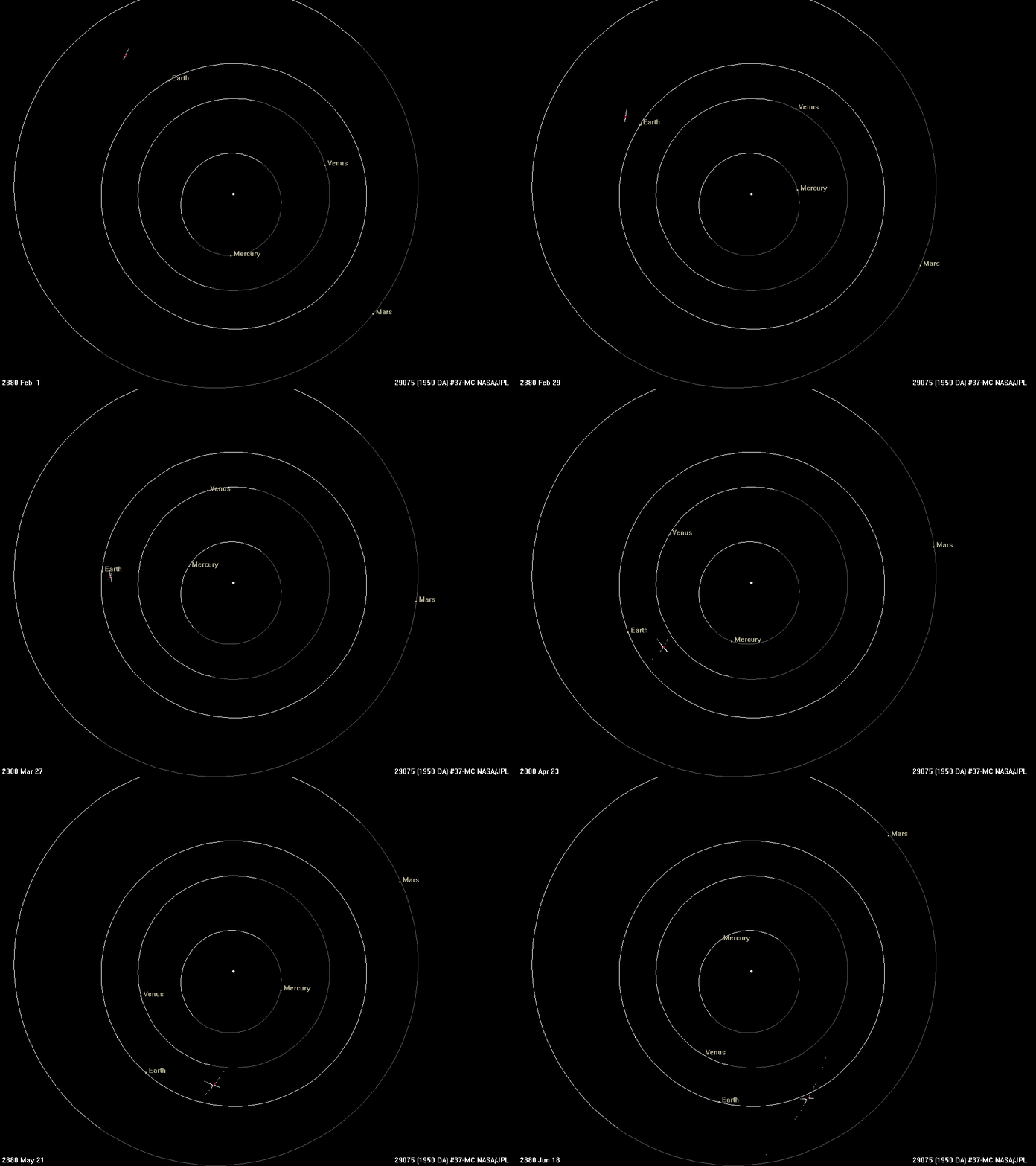 Image Credit: 29075 (1950 DA) - Animations/Simulations
29075: A Catastrophic Threat to Humanity
The ominous presence of asteroid 29075 (1950 DA) looms as a potential disaster that could bring about the destruction of humanity. With a radius of approximately 1.3 kilometers and a staggering "weight" of about 78 million tons, this asteroid is believed to be a loosely bound rubble pile with a high concentration of iron and nickel. Computer simulations have revealed that the probability of its collision with Earth on March 16, 2880, stands at a mere 0.0029%.
Should this catastrophic event occur, the impact would unleash an unimaginable release of energy equivalent to the explosion of 75 billion tons of TNT. Such an immense force would undoubtedly trigger a disaster capable of eradicating mankind from existence.
2023 TL4: Unveiling "Dangerous Elements" This Year
In the year 2023, scientists made a significant discovery with the identification of asteroid 2023 TL4. This celestial body possesses a radius of approximately 0.33 kilometers and a substantial "weight" of approximately 47 million tons. Based on observations gathered between October 8 and October 19, 2023, astronomers have calculated that there is a minute 0.00055% chance of it colliding with Earth on October 10, 2119. In the event of such an impact, the energy released by 2023 TL4 would be equivalent to the detonation of 7.5 billion tons of TNT.
2007 FT3: The "Lost Asteroid"
Asteroid 2007 FT3 has earned the moniker of the "lost" asteroid due to its disappearance from astronomers' view since 2007. With a radius of approximately 0.34 kilometers and a "weight" of approximately 54 million tons, this enigmatic celestial body remains shrouded in mystery. Currently, scientists possess limited knowledge about its orbit, but according to NASA's predictions, the asteroid carries a minute 0.000096% chance of colliding with Earth on March 3, 2030. Additionally, there is a slightly lower probability of impact on October 5, 2024, standing at 0.000087%.
In the event of such a collision, the energy unleashed by FT3 would be equivalent to the explosion of 2.6 billion tons of TNT. While this magnitude of impact would cause significant regional damage, it would not pose a global catastrophe.
1979 XB: Lost in the Depths of Time
Another "lost" asteroid, 1979 XB, has remained elusive for over four decades. First observed on December 11, 1979, this celestial body carries a minute 0.000055% chance of colliding with Earth on December 14, 2113. Such a collision would unleash an astounding amount of energy equivalent to the explosion of 30 billion tons of TNT.
Furthermore, when discussing dangerous asteroids, it is impossible to ignore the presence of Destruction (99942 Apophis), which has maintained its position on the list of hazardous asteroids for nearly two decades. With a radius of approximately 0.34 kilometers and a "weight" of around 27 million tons, Destruction was swiftly identified as one of the most perilous asteroids capable of colliding with Earth upon its discovery in June 2004. However, new research conducted in 2021 has reassured us that for at least the next 100 years, this asteroid poses no risk to our planet.
In truth, numerous potential "killer asteroids" may exist in our vast universe, which is why we must remain vigilant in our search for near-Earth asteroids. The quest to identify and understand these celestial threats continues, driven by the imperative to protect our planet and ensure the survival of humanity.
Tags
A groundbreaking study by scientists from Pennsylvania State University and Columbia University, recently published in Nature Geoscience, reveals that Earth's continents owe their long-term stability—and their role as the cradle…

Core Leak? Study Suggests Earth's Core Material May Be Reaching the Surface via Volcanoes
A groundbreaking study from the University of Göttingen challenges long-held assumptions about Earth's internal structure, suggesting that material from the planet's core may be leaking to the surface through volcanic…

A provocative new theory has sparked interest and debate in the scientific community: Earth's rotation within its geomagnetic field might be harnessed to generate electricity. Although the idea remains contentious,…
Earth's atmosphere has undergone dramatic changes over time, yet the gas bubbles trapped in polar ice cores can only preserve atmospheric compositions from the past six million years—less than 0.2%…

A molehill may seem insignificant compared to a mountain, but over time, the burrowing, digging, and trampling activities of animals—such as moles, ants, earthworms, beavers, hippos, elephants, and many others—leave…

Researchers from the University of Southern California have uncovered evidence that the shape of Earth's inner core is changing. By analyzing how seismic waves from an earthquake near the South…