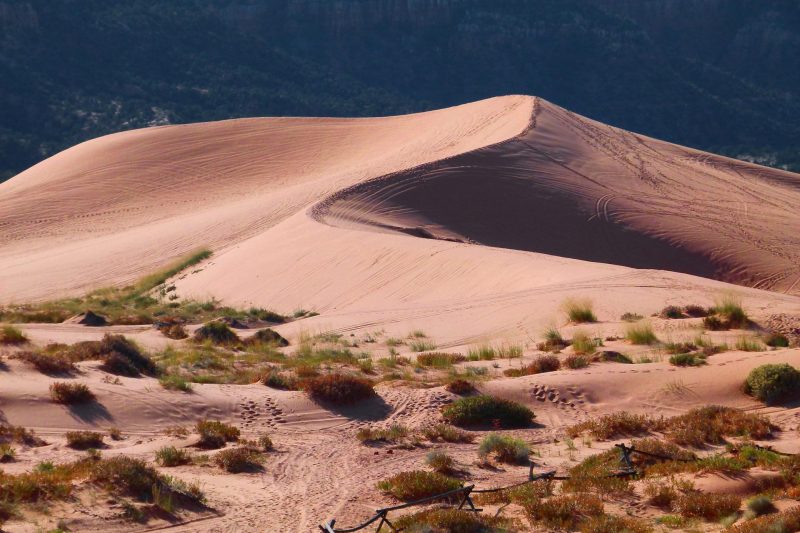
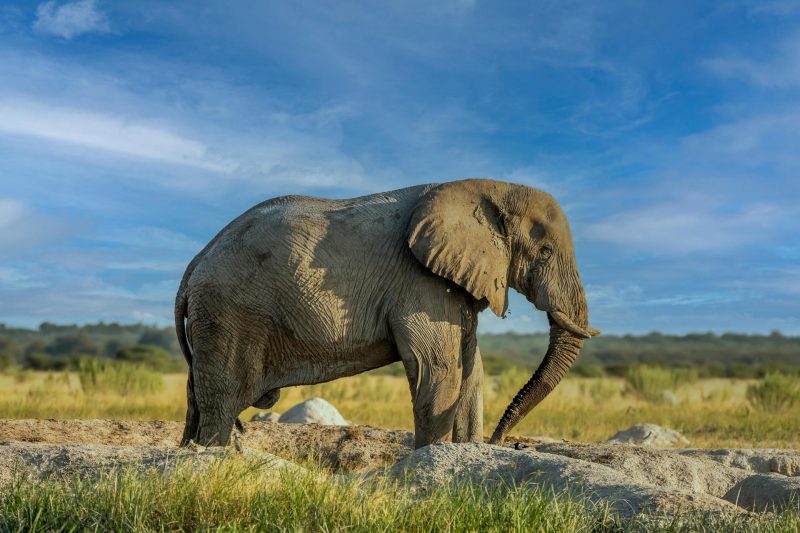
A molehill may seem insignificant compared to a mountain, but over time, the burrowing, digging, and trampling activities of animals—such as moles, ants, earthworms, beavers, hippos, elephants, and many others—leave a profound impact on our world.
Geographers have analyzed over 500 scientific studies documenting the landscape-altering effects of 495 wild animal species (excluding humans and marine life). By estimating the global populations of these so-called "ecosystem engineers" and calculating their collective annual energy output based on body size and weight, researchers have arrived at a striking figure: 6.7 billion gigajoules of energy per year.
This amount, recently reported in the Proceedings of the National Academy of Sciences (PNAS), is equivalent to the energy released by 200,000 monsoon seasons or 500,000 extreme floods. However, when examining data from five domesticated species—cattle, sheep, goats, yaks, and wild horses—scientists concluded that domesticated animals likely reshape the Earth’s surface on a much greater scale than their wild counterparts, by several orders of magnitude.
Despite data limitations—particularly the scarcity of studies from tropical and subtropical ecosystems—the researchers emphasized the undeniable ecological importance of wild animals. Their findings align with a recent Nature study that explored how termites, ants, and earthworms enhance soil fertility and aeration, ultimately fostering plant growth worldwide.
From the smallest insects to the largest mammals, animals play an essential role in Earth's ecological and geological processes. Their activities not only shape the physical environment but also support plant growth, soil health, and biodiversity. Recognizing and protecting these "ecosystem engineers" is crucial for maintaining planetary health and addressing environmental challenges.
How Animals Shape Our Planet: The Unsung Ecosystem Engineers
Tags
A groundbreaking study by scientists from Pennsylvania State University and Columbia University, recently published in Nature Geoscience, reveals that Earth's continents owe their long-term stability—and their role as the cradle…

A new study led by the University of Exeter warns that the world has crossed its first recognized climate "tipping point", as coral reef ecosystems enter a state of widespread…

Global conservation groups, scientists and beekeepers are sharply divided over whether to ban the deliberate release of genetically engineered organisms into the wild. Dozens of NGOs have urged the International…
Trees naturally adapt to their environment—branches grow toward sunlight, while roots stretch toward water sources, sometimes even infiltrating underground pipes or household plumbing. While a single tree cannot move, entire…
Core Leak? Study Suggests Earth's Core Material May Be Reaching the Surface via Volcanoes
A groundbreaking study from the University of Göttingen challenges long-held assumptions about Earth's internal structure, suggesting that material from the planet's core may be leaking to the surface through volcanic…
California's deserts, once thought to be naturally resistant to plant invasions, are now under severe threat from an aggressive weed—Sahara mustard (Brassica tournefortii). A recent study by the University of…