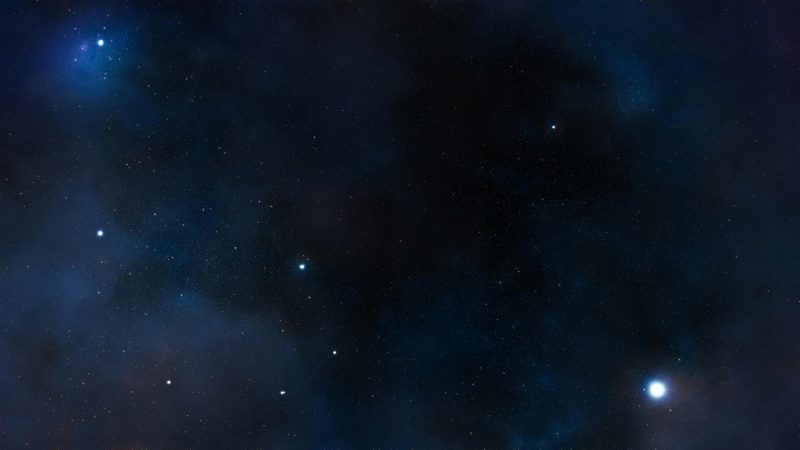
Countless stars pepper the universe, yet why does space appear so dark? This question has plagued humanity for centuries and is known in astronomy as "Olbers' Paradox".
An associate professor of astronomy at Boise State University in the United States has elucidated in an article on "The Conversation" website that the darkness of space is not solely due to the vast distances of stars from Earth.
Imagine Earth as the center of a vast bubble. If this bubble had a diameter of 10 light-years, it would encompass approximately 12 stars. Due to their distance, most of these stars would appear very faint when viewed from Earth.
Expanding the bubble's diameter to 1000 light-years, 1 million light-years, or even 1 billion light-years, although the farthest stars appear dimmer, the total number of stars within the bubble would significantly increase. In theory, this should illuminate the entire night sky brightly. However, in reality, the night sky is not fully lit up because the history of the universe is not infinitely long. The observable universe is limited to a region approximately 13 billion light-years away from Earth—stars beyond this range have not yet emitted light that has reached us.
Furthermore, the universe is expanding, with the most distant galaxies receding from Earth at speeds approaching the speed of light. Due to their rapid retreat, the wavelengths of light emitted by stars are stretched beyond the visible range of the human eye. This phenomenon is known as "Doppler redshift". Therefore, even if this light had ample time to reach our eyes, we would be unable to see it, meaning that the night sky will never be fully illuminated.
Tags
Astronomers studying the unusual supernova SN2021yfj have gained rare insights into the internal structure of a massive star, challenging conventional theories of stellar death. The discovery, led by an international…
Astronomers may have detected a giant exoplanet orbiting Alpha Centauri A, a Sun-like star located about 4.3 light-years from Earth. The candidate planet lies within the star's habitable zone and…
For the first time, astronomers have observed a planetary system in the earliest known stage of formation outside our solar system—a breakthrough that sheds new light on the origins of…
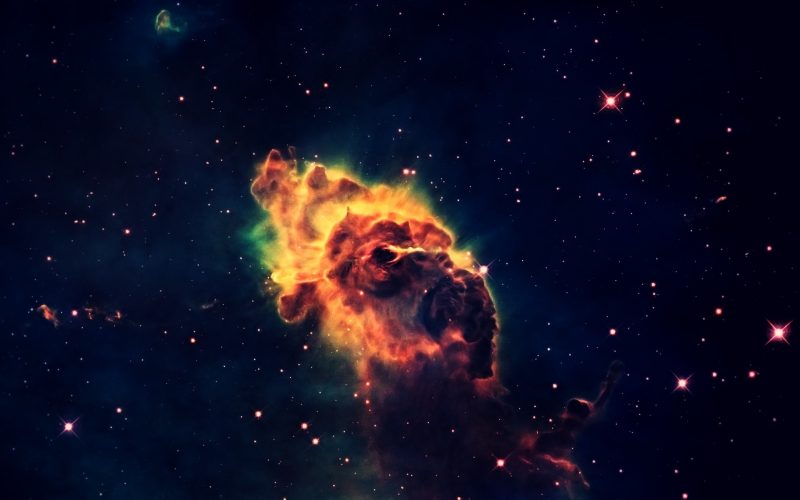
Using the Very Large Array (VLA) of the U.S. National Science Foundation’s National Radio Astronomy Observatory (NSF NRAO), astronomers have, for the first time, directly observed a dramatic accretion process…
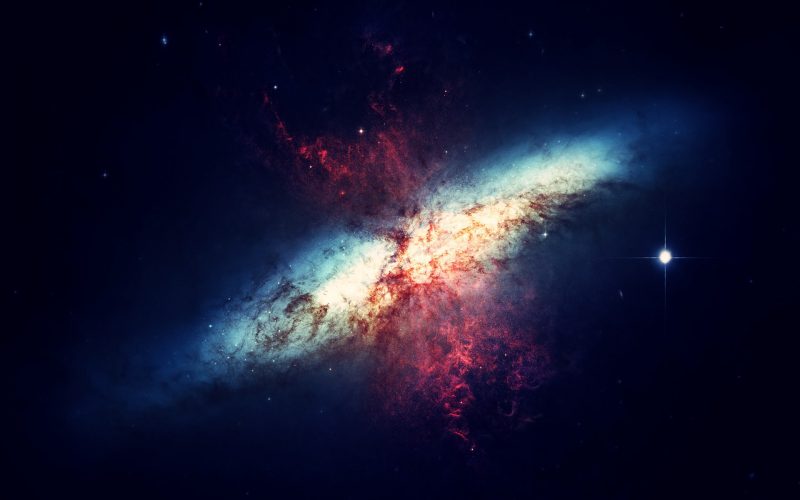
A new study published in Nature Astronomy suggests that the probability of a future collision between the Milky Way and the Andromeda galaxy may be only 50%—significantly lower than previously…
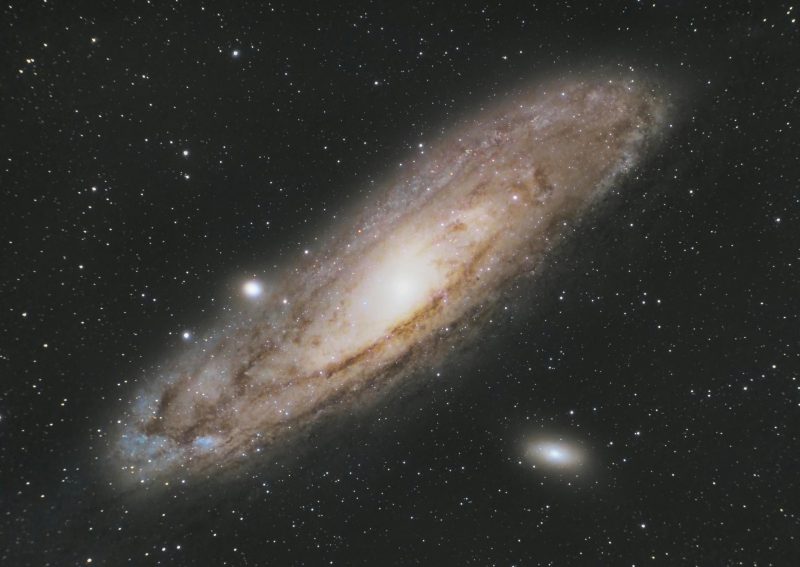
An international team of astronomers has discovered that "super-Earths"—planets several times the mass of Earth—can orbit their host stars at vast distances, much like gas giants such as Jupiter. This…