Scientists have successfully induced one of the universe's most inert elements—helium—into forming a new compound. The breakthrough, reported in the latest issue of Physical Review Letters, reveals that helium atoms can be embedded within crystalline iron under extreme pressure. This finding suggests that helium in the early solar system may have been stored in the iron that forms the Earth's core.
Helium is one of the most chemically unreactive elements on the periodic table and rarely forms compounds. However, under extremely high pressure, helium can interact with a few other elements, such as nitrogen, sodium, and now, iron. To synthesize this new compound, a research team from the University of Tokyo used a diamond anvil cell to compress helium and iron together. This high-pressure apparatus subjected the materials to pressures exceeding 50,000 times Earth's atmospheric pressure—equivalent to about 5 gigapascals (GPa)—and temperatures exceeding 1,832°F (1,000°C). The result was a crystalline structure containing both helium and iron.
This discovery may help explain certain helium observations deep within the Earth. Most helium on Earth—typically helium-4, with two neutrons—is generated by radioactive decay of elements like uranium. However, some oceanic volcanic eruptions release helium-3, a lighter isotope with only one neutron, believed to have originated shortly after the Big Bang. Its presence suggests that Earth absorbed this "primordial" helium during its formation. The loss of helium from magma has long hinted at a deep Earth reservoir of primordial helium. The newly discovered compound indicates that Earth's iron-rich core could be a potential storage site for this ancient helium.
Scientists Discover Novel Helium-Iron Compound Under Extreme Pressure
Tags
When earthquakes strike, the ground shaking people feel accounts for only a small fraction of the total energy released. Researchers at the Massachusetts Institute of Technology (MIT) have now shown…

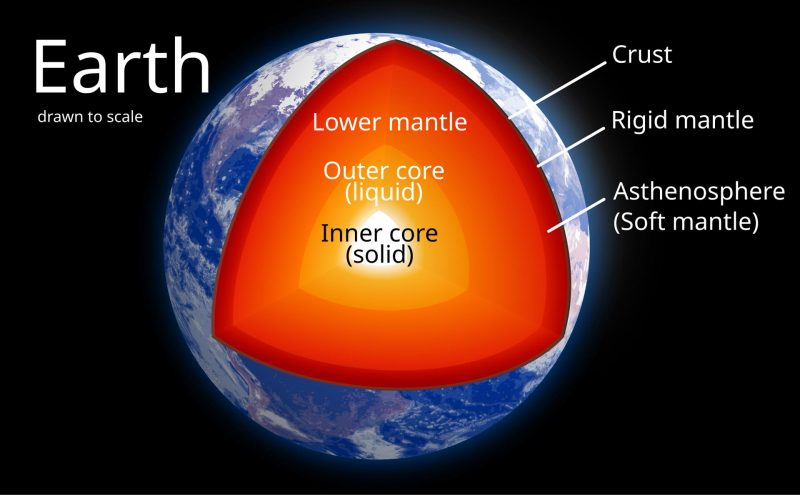
Scientists analyzing satellite data have uncovered a mysterious material disturbance near Earth’s core–mantle boundary that occurred between 2006 and 2008. The anomaly, recently detected by the US–German "Gravity Recovery and…
How did life arise from nothing? A new mathematical study offers a surprising perspective on this ultimate question. Researchers at Imperial College London suggest that the probability of life naturally…
Despite their simple structure, mosses are capable of surviving in some of Earth's most extreme environments, such as Antarctica, deserts, and high mountains. Now, researchers from Hokkaido University in Japan…

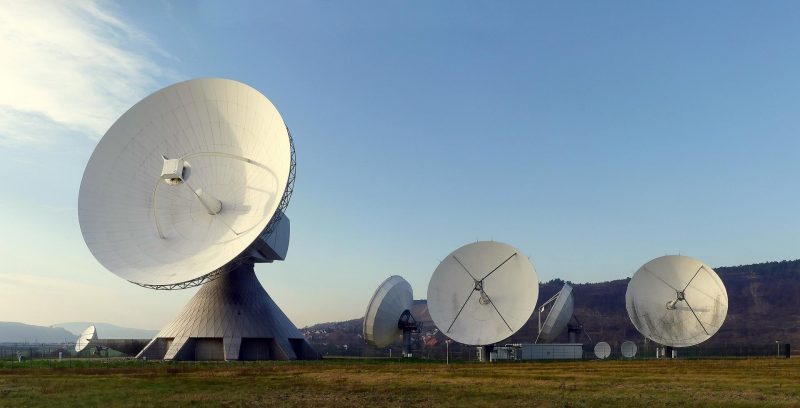
A new study reveals that Earth's civil and military radar systems may be inadvertently transmitting signals into space that could be detected by alien civilizations. These unintended electromagnetic emissions—especially from…
Earth's climate has swung dramatically between extremes of ice and heat throughout its history. In fact, for much of geological time, Earth has been a warm, ice-free planet. During the Cretaceous…