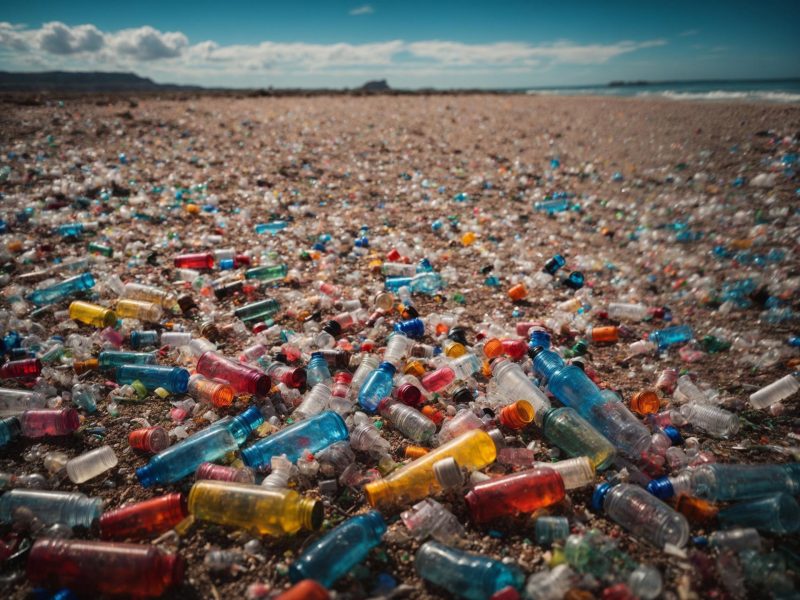
For years, researchers at the Woods Hole Oceanographic Institution (WHOI) in the United States have been investigating the lifespans of different types of plastics in the ocean, identifying those with the shortest and longest durations. They have also been studying which plastic products, such as straws and food packaging, are most likely to contribute to plastic pollution. With the development of more biodegradable materials like cellulose diacetate (CDA), a plastic-like polymer derived from wood pulp, researchers are striving to ensure that these materials can replace traditional plastics without harming marine ecosystems.
After years of testing, WHOI researchers have found that adding small pores, known as "foaming", to CDA materials can accelerate their degradation rate by 15 times compared to solid CDA. This innovation has made foamed CDA the fastest degrading bioplastic material in seawater known to date, even surpassing paper. This groundbreaking discovery was recently published in the Acs Sustainable Chemistry & Engineering journal.
The study monitored foamed CDA and solid CDA in seawater within WHOI's specially designed laboratory, while controlling environmental variables such as temperature and light to simulate natural marine conditions.
In a previous study, researchers used their dynamic seawater tank to test various items, including standard plastics, paper, solid CDA, and foamed CDA-made straws. They observed that the solid CDA straws and paper straws exhibited the most rapid decrease in quality. Comparing two CDA-made straws—one solid and the other foamed—scientists found that the foamed straw degraded 190% faster, indicating a shorter environmental lifespan compared to paper straws.
The authors of the research emphasize that one of the most urgent applications for foamed CDA is to replace polystyrene foam plastics and single-use plastics.
Tags
For years, biochar was seen mainly as a passive material—removing contaminants from water by adsorption or serving as a support for catalysts. However, new research has revealed that biochar itself…
Climate change and plastic pollution are two of the most pressing environmental challenges facing humanity. A research team at the University of Copenhagen has developed a breakthrough material, BAETA, that…

A study published in Science Advances reveals that green algae (Dunaliella salina) can grow in translucent bioplastic chambers under simulated Martian conditions—offering a novel approach to building habitable structures on…
Researchers at Brunel University London have discovered that Pseudomonas aeruginosa, a common hospital pathogen, can degrade polycaprolactone (PCL), a biodegradable plastic widely used in medical devices such as sutures, implants,…
Plastic is ubiquitous in everyday life, and new research suggests that chewing gum may be an overlooked source of microplastic exposure. A preliminary study conducted by researchers at the University…

Innovative Plastic Recycling: Converting Black and Colored Polystyrene Waste into Reusable Materials
Differences in the recycling difficulty of various types and colors of plastics have been significantly noted. Recently, researchers from Cornell University and Princeton University in the United States published a…