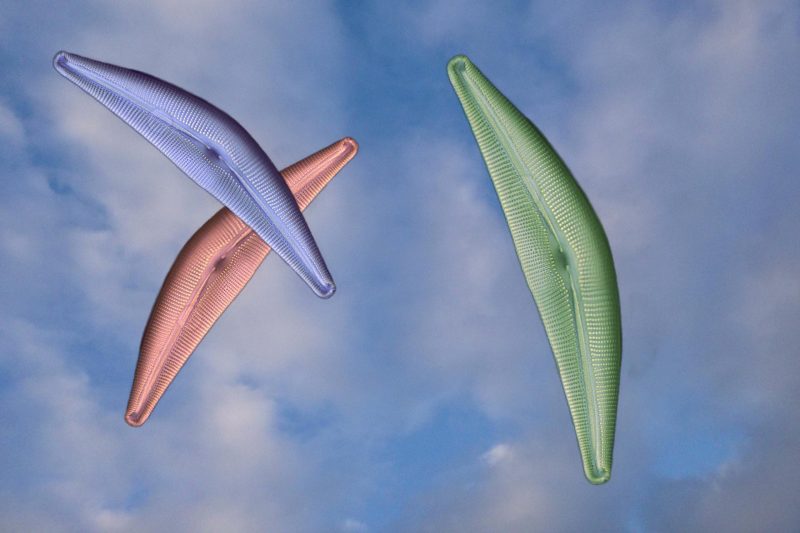
New research suggests that diatoms, a type of microscopic algae living in the ocean, have multiple methods of accumulating carbon. Aside from relying on photosynthesis, these single-celled plankton also increase their biomass by directly consuming organic carbon from the ocean. This discovery has the potential to revise scientists' estimates of how much carbon dioxide diatoms absorb from the atmosphere through photosynthesis. Consequently, our understanding of the global carbon cycle, especially in the context of climate change, may undergo significant changes.
The University of California, San Diego, led the study, which involved bioengineers, bioinformatics experts, and genomics researchers. The recent findings were published in the scientific journal Science Advances.
The researchers focused on a specific algae species called Cylindrotheca closterium, which is widely distributed in oceans worldwide. They discovered that this algae species often engages in a process known as mixotrophy, which involves a combination of photosynthesis and heterotrophic intake of organic carbon from sources like plankton. In over 70% of the water samples analyzed from oceans around the globe, Cylindrotheca closterium exhibited signs of both photosynthesis and direct consumption of organic carbon. Additionally, this diatom can grow at an accelerated rate when consuming organic carbon. The preliminary findings of the study also suggest the intriguing possibility that certain bacteria species directly supply organic carbon to the majority of diatoms inhabiting the world's oceans.
New Research Reveals Diatoms' Surprising Carbon Accumulation Methods
Tags
Prochlorococcus, the most abundant microbe in the oceans, is facing a survival crisis due to global warming. This single-celled cyanobacterium, found across more than 75% of the ocean's surface waters,…

Climate change and plastic pollution are two of the most pressing environmental challenges facing humanity. A research team at the University of Copenhagen has developed a breakthrough material, BAETA, that…

Earth's climate has swung dramatically between extremes of ice and heat throughout its history. In fact, for much of geological time, Earth has been a warm, ice-free planet. During the Cretaceous…

A recent study published in Science Advances highlights a striking gap in our understanding of the deep ocean, which covers 66% of Earth's surface. According to the findings, less than…

New Carbon Cloth Electrode Technology May Significantly Cut Costs in Seawater Desalination
A team of engineers from the University of Michigan and Rice University has developed a novel carbon cloth electrode that can effectively remove boron from seawater—potentially reducing the need for…

Korean Scientists Develop Radioactive Carbon Micro-Nuclear Battery with Enhanced Efficiency
Korean researchers are developing a micro-nuclear battery powered by radioactive carbon, which generates electricity through beta radiation-induced electron avalanche. This innovative technology is designed to be both environmentally friendly and…