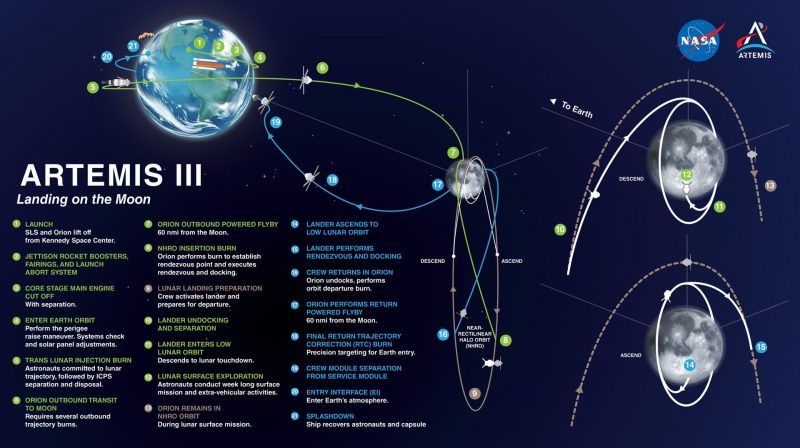
NASA recently unveiled the initial three scientific experiments planned for the Artemis III mission, which aims to pave the way for sustained human presence on the moon and prepare for future manned missions to Mars.
The first experiment, known as Lunar Effects on Agricultural Flora (LEAF), will investigate the impact of lunar conditions on plant life. Astronauts will cultivate plants on the lunar surface and closely observe their photosynthesis and growth processes. The experiment will provide valuable insights into how plants respond to low gravity and space radiation, offering a complete understanding of the growth cycle of plants on the moon for the first time.
The second experiment involves the deployment of the Lunar Environment Monitoring Station (LEMS), a compact seismometer. Astronauts will utilize LEMS to measure moonquakes near the moon's south pole, allowing them to analyze the movement characteristics of the lunar surface in that region. This research will enhance our understanding of the underlying structures beneath the moon's surface.
The final experiment will employ the Lunar Dielectric Analyzer (LDA) to measure the electrical conductivity of lunar soil. By detecting changes in conductivity, the LDA can identify frost deposits and monitor variations in the lunar soil during sunrise and sunset. This information will aid in identifying potential resources, such as ice, which can play a crucial role in sustaining human exploration and habitation on the moon.
Pam Melroy, NASA Associate Administrator, emphasized that the overarching objective of the Artemis program is to establish the groundwork for long-term human survival on the moon. The knowledge gained from these experiments will contribute to our understanding of the lunar environment and help humans prepare for future manned missions to Mars.
Earlier this year, NASA announced a delay in the Artemis 3 mission, originally scheduled for 2024. The mission, which will mark the first human footsteps on the lunar surface since the Apollo 17 mission in 1972, is now planned for launch in 2026.
Tags
A new NASA study indicates that Saturn's largest moon, Titan, may host naturally forming primitive cell-like structures called vesicles within its liquid hydrocarbon lakes. The finding offers fresh insight into…
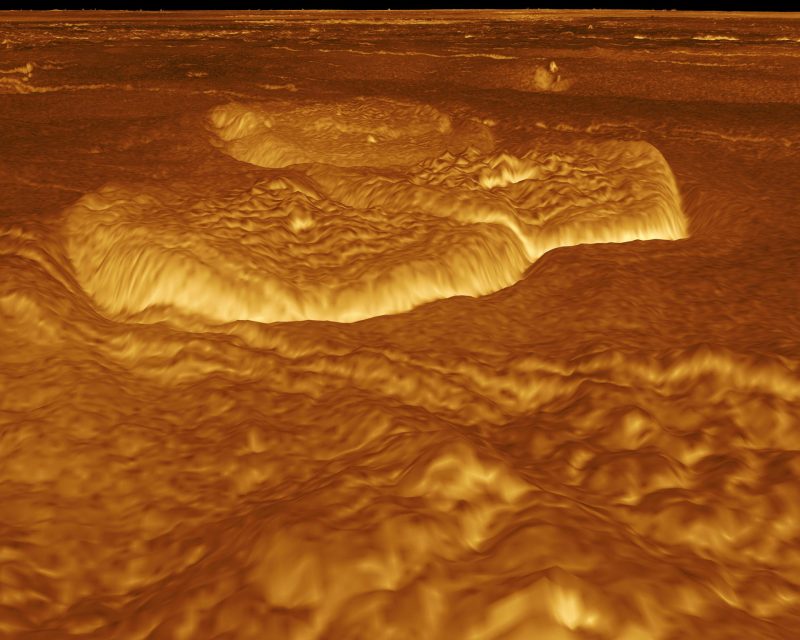
A recent NASA study reveals that large circular features on Venus—known as coronae—may be evidence of ongoing geological activity. The findings, published in Science Advances, are based on data collected…
California's deserts, once thought to be naturally resistant to plant invasions, are now under severe threat from an aggressive weed—Sahara mustard (Brassica tournefortii). A recent study by the University of…

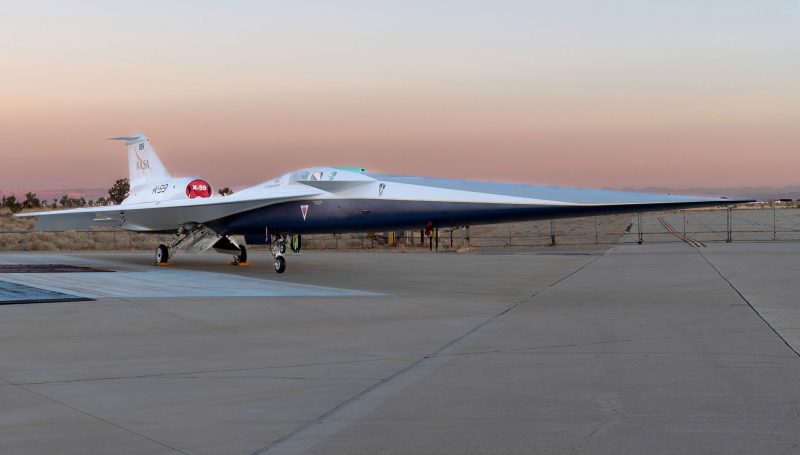
NASA has recently completed ground engine performance tests for the X-59 Quiet Supersonic Technology (QueSST) demonstrator—a key step toward mitigating the disruptive sonic booms produced by supersonic aircraft. In collaboration…
A research team from the Technical University of Munich is exploring ways to optimize the lifespan of plant enzymes. Certain plant enzymes have a short lifespan and require frequent replacement,…

Boeing to Cut 400 Jobs from NASA's SLS Lunar Rocket Program Amid Speculation of Policy Shifts
Boeing plans to lay off 400 employees from its Space Launch System (SLS) lunar rocket program, raising speculation about potential changes to NASA's space exploration plans under a second Trump…