France and Germany's space agencies have received official approval for the development of the "Carioqa" project. The project aims to install quantum accelerometers on satellites by 2030, with the goal of accurately mapping Earth's gravity from space. This groundbreaking initiative has the potential to predict earthquakes, volcanic eruptions, and assess changes in global water supplies.
Quantum accelerometers are capable of measuring various acceleration phenomena with exceptional precision, including the movement of masses that constitute the Earth. While these ultra-sensitive instruments already have a significant role in mining research, they currently lack a global perspective. By addressing the challenge of quantum sensors operating in microgravity, it will become possible to map the intensity of gravity on a global scale. This advancement will facilitate more accurate measurements of changes in Earth's gravity that are associated with earthquakes and rising sea levels.
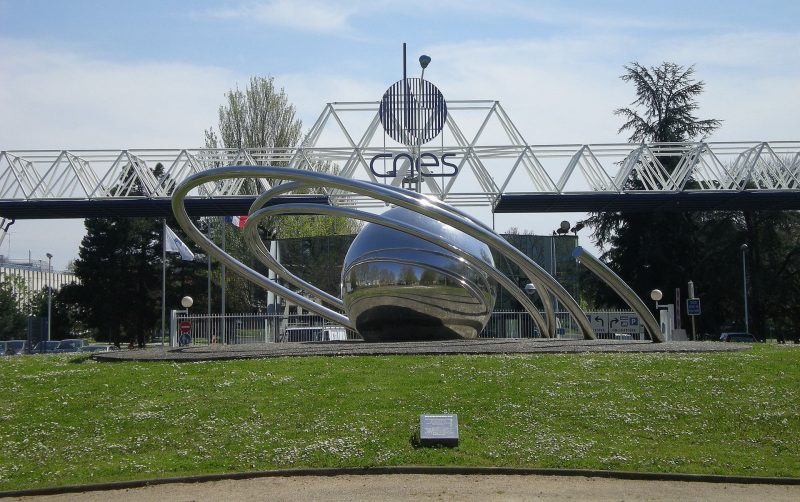
The "Carioqa" project was initiated by the French National Center for Space Research (CNES) and the German Aerospace Center (DLR). It has secured funding from the European Commission and involves collaboration with 17 European partners. Christian Farley, the program leader at France's CNES, described the deployment of quantum sensors in space as a "world first."
One of the key applications of this project is the detection of precursor signals for earthquakes. Quantum sensors have the potential to capture the movement of Earth's tectonic plates at depth from a space-based vantage point. Currently, scientists can only measure this movement on the surface and only after an earthquake has occurred. With satellite-based quantum sensors, continuous monitoring of earthquake-prone regions around the globe will be possible.
The project also extends to monitoring the movement of water masses in various scenarios, such as melting ice, heavy rainfall, and flooding. It will enable more detailed observations of sea level rise, which is crucial for understanding and monitoring the impacts of increased water masses and global warming on climate change.
In the initial demonstration phase, Airbus Defense and Space will design and deploy the quantum sensors in orbit at an altitude of 500-600 kilometers above Earth. These sensors will operate using cold atoms manipulated by lasers. The weightless environment in space will provide longer measurement times, significantly enhancing the sensitivity of the sensors.
France and Germany to Develop Quantum Sensors for Earthquake Prediction in Space
Tags
Scientists have discovered hundreds of massive coral boulders scattered inland on Anegada Island in the British Virgin Islands—evidence of a catastrophic tsunami that struck in the late 14th century. The…
Room-Temperature Quantum Motion Observed in Levitated Nanoparticles Marks Major Step for Quantum Sensors
A research team from ETH Zurich has achieved a major breakthrough in quantum sensing by observing quantum vibrations in levitated glass nanospheres at room temperature. The experiment provides a key…
When earthquakes strike, the ground shaking people feel accounts for only a small fraction of the total energy released. Researchers at the Massachusetts Institute of Technology (MIT) have now shown…

Climate change is not only intensifying droughts, heatwaves, and storm surges but may also be increasing the risk of earthquakes through accelerated glacier melt. A research team from ETH Zurich…
Managing Underground Pressure May Prevent Volcanic Unrest in Southern Italy, Study Finds
Frequent earthquakes in Italy's Campi Flegrei volcanic region since 2022 have raised safety concerns for hundreds of thousands of residents, particularly around Naples. A new study led by researchers at…

Mountains are among the most biodiverse ecosystems on Earth, yet global environmental changes are profoundly reshaping them. Over the past 50 years, rising temperatures and shifts in land use have…