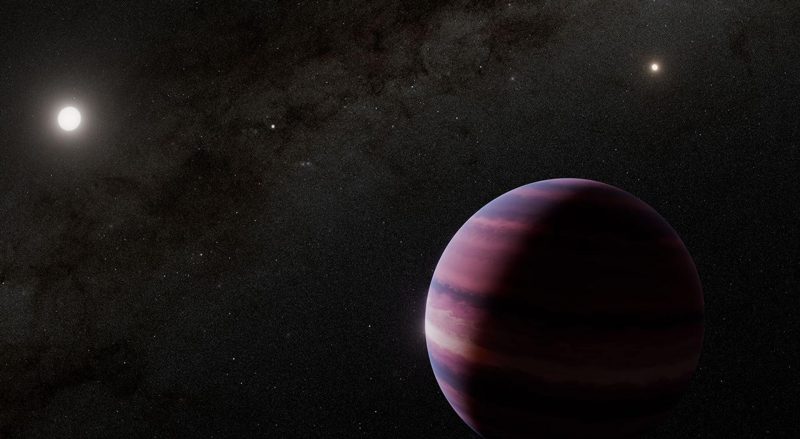
For decades, planetary scientists have believed that Jupiter's moon Europa may harbor potential habitats for extraterrestrial life. Beneath Europa's icy crust lies a vast salty ocean. However, researchers reported at last week's American Geophysical Union annual meeting that the unexpected thickness of Europa's ice shell suggests that the salty sea beneath may lack the heat and chemical reactions necessary for life to evolve.
These findings were gathered by NASA's Juno spacecraft. Since 2016, Juno has been orbiting Jupiter with the original mission of studying the planet's interior structure. However, it has also conducted flybys of several major moons including Europa. Researchers discovered that a Microwave Radiometer (MWR) on Juno could estimate the thickness of Europa's ice shell for the first time.
Scientists from NASA's Jet Propulsion Laboratory working on the Juno mission revealed at the meeting that the average thickness of Europa's ice shell is approximately 35 kilometers, equivalent to the height of four Mount Everests and three times the drilling depth currently achievable on Earth.
Planetary scientists expressed that these yet-to-be-published research results "diminish the likelihood of life existing on Europa." A thinner ice shell would potentially facilitate more chemical exchange between the ocean and the surface, promoting the chemical reactions necessary for life. However, a thick ice shell significantly reduces this possibility. Moreover, such an ice shell indicates less heat escaping from Europa's rocky core, lowering the chances of hydrothermal vents (another potential environment for nurturing life) existing on the seabed.
Europa's Thick Ice Shell Challenges Potential for Life, Juno Mission Reveals

Tags
At a joint meeting of the European Planetary Science Congress (EPSC) and the Division for Planetary Sciences (DPS) in Helsinki, scientists from the Space Research Institute of the Austrian Academy…
A groundbreaking study published in Nature Materials suggests that the combination of salt, ice, and mechanical strain could become a key to future renewable energy. Researchers have demonstrated that specially…

For nearly two centuries, scientists have attributed the slipperiness of ice to a thin lubricating layer formed by pressure or friction-induced melting. However, a new study from Saarland University in…

Astronomers have discovered a mysterious new world at the edge of the solar system—a trans-Neptunian object (TNO) designated 2017 OF201. The discovery, made by researchers from the Institute for Advanced…
A new NASA study indicates that Saturn's largest moon, Titan, may host naturally forming primitive cell-like structures called vesicles within its liquid hydrocarbon lakes. The finding offers fresh insight into…
Astronomers may have detected a giant exoplanet orbiting Alpha Centauri A, a Sun-like star located about 4.3 light-years from Earth. The candidate planet lies within the star's habitable zone and…