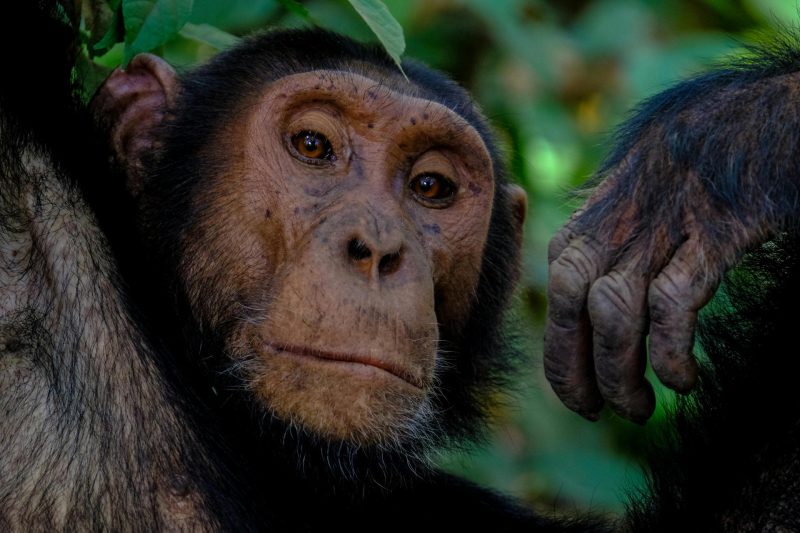
A groundbreaking study has revealed that the differences between humans and other primates extend beyond intelligence to include emotional and social cognitive abilities. By comparing brain scans of humans, chimpanzees, and macaques, researchers found that the human brain features uniquely specialized connections related to emotional regulation and social interaction—highlighting the vital role of interpersonal relationships in human evolution.
For decades, scientists believed that the primary distinction between humans and other primates lies in the prefrontal cortex—the brain region responsible for decision-making, reasoning, planning, and attention. However, new research published on March 17 in The Journal of Neuroscience (JNeurosci) offers a more comprehensive explanation. Led by researchers from the University of Oxford in the UK and Aix-Marseille University in France, the study explores key structural and functional differences between the human brain and those of other primates.
Unlike previous studies that focused mainly on macaques, this research also examined chimpanzees—humans' closest evolutionary relatives. The chimpanzee brain scan data were obtained from publicly available research archives and were collected prior to the implementation of new U.S. regulations on chimpanzee research in 2015.
The study found that in addition to differences in the prefrontal cortex, humans exhibit distinct brain connectivity related to emotional regulation, social cognition, and language processing. These differences are particularly pronounced in comparisons with chimpanzees. The researchers suggest that human evolution may have been driven not only by advanced reasoning abilities but also by uniquely developed emotional and social behaviors—traits that further distinguish humans from other primates.
Emotional and Social Cognition May Be the Key to Human Brain Evolution, Study Finds
Tags
A study published in Nature has uncovered a new mechanism for how the brain stores emotional memories—one that centers not on neurons, but on astrocytes, the star-shaped glial cells once…
A 97-million-year-old sea turtle fossil unearthed in Lebanon is reshaping scientists' understanding of how turtles adapted to life in the ocean. The study, published in iScience, a journal under Cell,…

When people experience striking events, not only do those moments become etched in memory, but even seemingly ordinary experiences that occurred shortly before can become unusually vivid. The neural mechanism…

A new study led by the University of Reading challenges long-held assumptions about primate origins. For decades, scientists believed primates, including humans, emerged from warm, humid tropical forests. However, reanalysis…

People with attention-deficit/hyperactivity disorder (ADHD) may possess an often-overlooked strength: excessive curiosity. While typically associated with distractibility and hyperactivity, this trait is also closely linked to creativity, adaptability, and a…

Are colors perceived the same way by everyone? A new neuroscience study suggests that, at least on the neural level, the answer may be yes. The question of whether color perception…