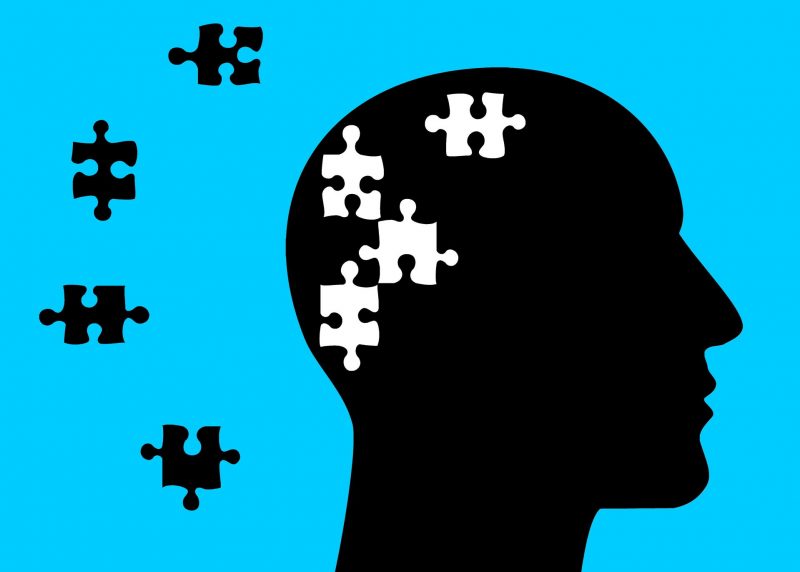
People with attention-deficit/hyperactivity disorder (ADHD) may possess an often-overlooked strength: excessive curiosity. While typically associated with distractibility and hyperactivity, this trait is also closely linked to creativity, adaptability, and a strong drive to explore.
For decades, research has focused largely on the negative impacts of ADHD, leaving its potential advantages underexplored. Growing academic interest is now shifting that perspective. A 2023 study published in BMJ Open found that many individuals with ADHD perceive themselves as more energetic, curious, and resilient. Some scholars suggest that impulsivity and curiosity may share similar neural reward pathways—a hypothesis described as "excessive curiosity".
From an evolutionary standpoint, such traits may have been advantageous in nomadic environments. In foraging simulations, individuals with ADHD-like tendencies were more likely to leave diminishing resource zones, explore new territories, and ultimately secure greater overall gains. In modern structured, information-saturated societies, however, the same behaviors can appear as restlessness or difficulty sustaining focus.
Research on information-seeking behaviors echoes this duality. While some people pursue knowledge like "hunters", drilling deeply into one subject, others act as "busy explorers", sampling widely across topics. ADHD individuals often fall into the latter category, frequently switching focus but also capable of intense concentration when engaged. Neuroscience studies show that satisfying curiosity activates the brain's reward circuits, much like fulfilling basic physiological needs.
Experts caution against viewing ADHD solely through a deficit lens—or, conversely, romanticizing it. Instead, they call for a balanced understanding that acknowledges both its challenges and potential strengths, particularly by creating educational and professional spaces that allow curiosity-driven exploration to flourish.

Tags
A study published in Nature has uncovered a new mechanism for how the brain stores emotional memories—one that centers not on neurons, but on astrocytes, the star-shaped glial cells once…
When people experience striking events, not only do those moments become etched in memory, but even seemingly ordinary experiences that occurred shortly before can become unusually vivid. The neural mechanism…

Are colors perceived the same way by everyone? A new neuroscience study suggests that, at least on the neural level, the answer may be yes. The question of whether color perception…

For decades, neuroscientists believed that when a person loses a limb, the brain's corresponding sensory region would be “taken over” by neighboring body parts—a process known as cortical reorganization. However,…
Researchers from the University of California, Los Angeles, and Columbia University have discovered that neurons in the brainstem's locus coeruleus act like a “memory reset button”, segmenting continuous experiences into…