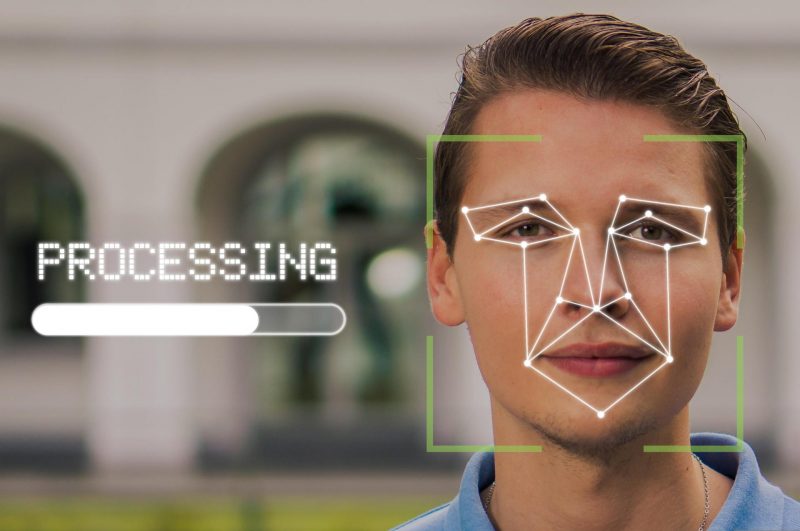
In late October, U.S. President Biden made a significant move by signing comprehensive artificial intelligence regulatory principles, marking a significant milestone in the United States. These principles aim to establish the U.S. as a global leader in technology development while ensuring data privacy, cybersecurity, non-discrimination, fairness, and close monitoring of rapidly growing industries.
This executive order, which has been in the works for several months, represents a major effort to bring order and regulation to the field of technology. It will specifically focus on overseeing the development of powerful artificial intelligence systems within the private sector. One of the key requirements is that companies must submit reports to the federal government, providing detailed information on how they train and test "dual-use base models." This category encompasses the most advanced artificial intelligence systems, among others.
1. Effectiveness of implementation
The newly issued executive order goes beyond the voluntary commitments previously made by companies like OpenAI, Google, and Meta earlier this year. However, it primarily focuses on establishing best practices and standards rather than enforcing the directive. In other words, the order does not carry legal authority.
The order "urges" the National Institute of Standards and Technology (NIST) to develop comprehensive standards, including rigorous "red team" testing, which involves assessing models' vulnerabilities by attempting to compromise them. Nevertheless, the executive order does not mandate AI companies to adhere to NIST standards or testing methodologies. Many aspects of the order still rely on the voluntary cooperation of technology companies.
However, the executive order will have a significant impact on over a dozen government agencies and their approach to artificial intelligence systems. These agencies are given a time frame of 90 to 240 days to meet the requirements outlined in the executive order. The new guidelines will also influence the purchasing decisions of federal agencies, providing enforcement tools that give them leverage in the U.S. market. Notably, President Biden's order specifically instructs the Federal Trade Commission (FTC) to focus on addressing anti-competitive practices and consumer harm within the artificial intelligence industry. FTC Chairman Lina Khan has expressed public support for this executive order.
Meanwhile, the U.S. Congress has been actively working on legislation to address the risks and potential of AI. While some politicians have expressed hopes of passing AI-related laws by the end of this year, Senate Majority Leader Chuck Schumer has indicated that a comprehensive AI bill may not be introduced until the following year.
2. Advancing cybersecurity and global leadership
The executive order highlights the White House's concerns regarding the rapid development of advanced cyber weapons by foreign entities. It recognizes the need to bolster domestic artificial intelligence capabilities to identify vulnerabilities in U.S. government networks and counter the military application of artificial intelligence by adversaries.
To mitigate the risk of powerful AI models falling into the hands of foreign adversaries, the order mandates that companies developing such models submit periodic reports to the Commerce Department. These reports must outline their strategies for safeguarding their technology against espionage or digital subversion. Additionally, major cloud service providers like Amazon and Microsoft will be required to notify the government whenever foreign entities rent server space to train large-scale artificial intelligence models.
Furthermore, the executive order calls for the National Security Council and the White House Office to develop a "National Security Memorandum" that will guide future actions on artificial intelligence and security. This memorandum aims to ensure that the U.S. military and intelligence community utilize artificial intelligence safely, ethically, and effectively in their operations, while also countering adversaries' military use of AI.
The executive order places significant emphasis on expanding cooperation at bilateral, multilateral, and multi-stakeholder levels in the field of artificial intelligence. It seeks to position the United States as a global leader in artificial intelligence policy. This order aligns with the agreement reached by the G7 on October 29, which established a code of conduct for companies involved in the development of advanced AI systems. Governments worldwide are striving to mitigate risks and potential misuse of this technology.
Notably, the upcoming British Artificial Intelligence Security Summit, scheduled in two days, will be influenced by this U.S. executive order. It may also encourage the European Union to finalize its own artificial intelligence bill, as the order conveys a clear message that the United States shares many of the EU's policy objectives in this domain.
3. New regulations for labeling AI-generated content - addressing counterfeiting and intellectual property concerns
As part of the executive order, the Commerce Department will be tasked with developing guidance on content authentication and watermarking for AI-generated labeling projects. This guidance will aid AI companies in creating labeling and watermarking tools that federal agencies, as directed by the White House, are encouraged to adopt.
These tools have been proposed as potential solutions to address issues like deepfakes and disinformation associated with AI-generated content. They also impose responsibilities on intellectual property regulators and federal law enforcement agencies to tackle the use of copyrighted works in AI training, including assessing whether artificial intelligence systems violate intellectual property laws.
Prominent AI companies such as Google and OpenAI have made voluntary commitments to develop such technologies, which they announced to the White House in August. However, it should be noted that technologies like watermarking are still in the development phase, and there is currently no foolproof method to accurately label text or determine if a piece of content was generated by a machine.
The White House intends to collaborate with the Content Provenance and Authenticity Alliance (C2PA Initiative) to promote the development and adoption of these technologies. The C2PA Initiative comprises major companies such as Adobe, Intel, and Microsoft and has designed a new internet protocol that employs encryption to encode information about the origin of content.
The draft executive order urges the Director of the U.S. Patent and Trademark Office and the Director of the U.S. Copyright Office to take further administrative actions to address concerns related to copyright protection of AI-generated works and the utilization of copyrighted works for training AI algorithms.
4. Encouraging competition, supporting small businesses, and preventing monopolies
The draft executive order instructs each agency to closely monitor competition within the artificial intelligence industry, taking into consideration the risks associated with centralized control. The aim is to prevent dominant companies from further consolidating their power.
Specifically, the executive order emphasizes its commitment to assisting small businesses in commercializing artificial intelligence breakthroughs. It seeks to provide technical support and resources to small developers and entrepreneurs. Furthermore, the order encourages the Federal Trade Commission (FTC) to leverage its authority in promoting a fair, open, and competitive ecosystem for artificial intelligence.
The substantial costs associated with artificial intelligence can create barriers to entry, potentially allowing only the largest companies like Google, Amazon, and Microsoft to compete effectively. This situation could further strengthen their market monopolies through the development of AI technologies.
Importantly, the executive order acknowledges the role of the Federal Trade Commission (FTC), which has expressed its determination to take strong action against AI companies engaging in anticompetitive practices. The order encourages the FTC to utilize its rulemaking authority to foster competition within the industry and protect consumers.
5. Launch of AI.gov and talent competition plan
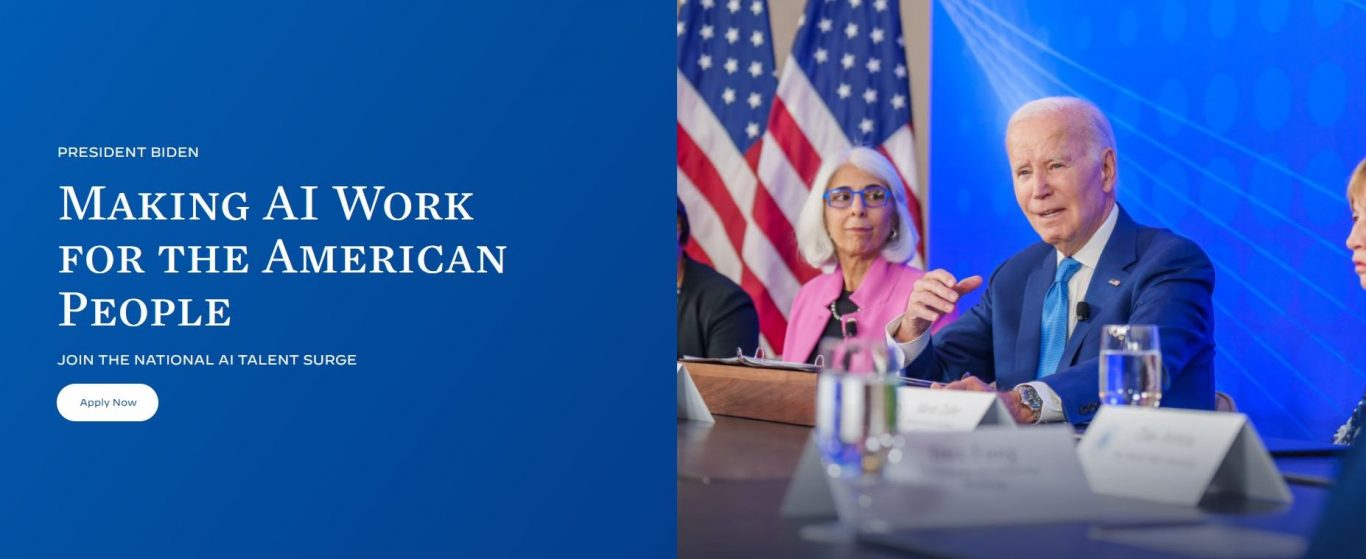 Image Credit: Screenshot of ai.gov
President Biden has announced the launch of AI.gov, a new website that showcases the efforts and achievements of the federal government in the field of artificial intelligence (AI). The website serves as a platform for researchers, developers, and the general public, providing them with resources and guidance. It is part of the broader strategy of the U.S. government to promote the development and adoption of AI in the United States.
One notable feature is the government's National Artificial Intelligence Talent Surge portal, which aims to rapidly recruit technical experts to build and manage AI systems in alignment with the government's values. The website also offers information on government investments in AI research and development.
Access to skilled workers is a significant focus for the technology industry. In line with this, an executive order has been issued to improve access to green cards for immigrants with expertise in artificial intelligence or other emerging technologies, enabling them to work for U.S. companies at the forefront of AI and emerging tech.
The order directs multiple agencies, including the Departments of State and Commerce, as well as the White House Office of Science and Technology Policy, to conduct an international campaign promoting the United States as an appealing destination for foreign individuals with expertise in science, technology, artificial intelligence, and other key areas of technological research or work.
The executive order builds upon non-binding agreements that have been established between the White House and artificial intelligence companies. The approach of the U.S. government remains relatively favorable towards technology companies, with a focus on promoting innovation and competition rather than imposing strict restrictions and regulations. This stance further reflects the U.S.'s relatively relaxed attitude towards the regulation of artificial intelligence. Consequently, major technology companies have largely welcomed the executive order.
Brad Smith, Vice Chairman and President of Microsoft, commended it as another significant step forward in the governance of artificial intelligence technology.
Kent Walker, President of Global Affairs at Google, expressed his anticipation for constructive collaboration with government agencies to fully unleash the potential of artificial intelligence, including enhancing government services to be better, faster, and more secure.

Tags
With the rapid advancement of large language models, today's most sophisticated artificial intelligence (AI) systems can easily pass the classic Turing Test. This has prompted scientists to reconsider whether new…

Artificial intelligence (AI) is rapidly transforming scientific research. Once limited to analyzing data, AI systems are now able to design experiments and even generate new hypotheses. Some experts believe that,…
According to WIRED, OpenAI is preparing to launch a standalone social app built around its AI video generation model, Sora 2. The app closely mirrors the design and user experience…

Artificial intelligence (AI) is increasingly helping scientists decode how animals communicate and explore the possibility of dialogue across species. Recent studies show that species such as bonobos, chimpanzees, Japanese tits,…

Artificial intelligence (AI) is increasingly accelerating research across multiple disciplines worldwide, particularly in automating the generation of scientific hypotheses. By scanning vast amounts of literature, AI can identify research gaps…

Advances in dataset optimization, computing power, and algorithms have significantly boosted the accuracy of artificial intelligence (AI)-based facial recognition, with most systems now surpassing 99% accuracy in controlled environments and…