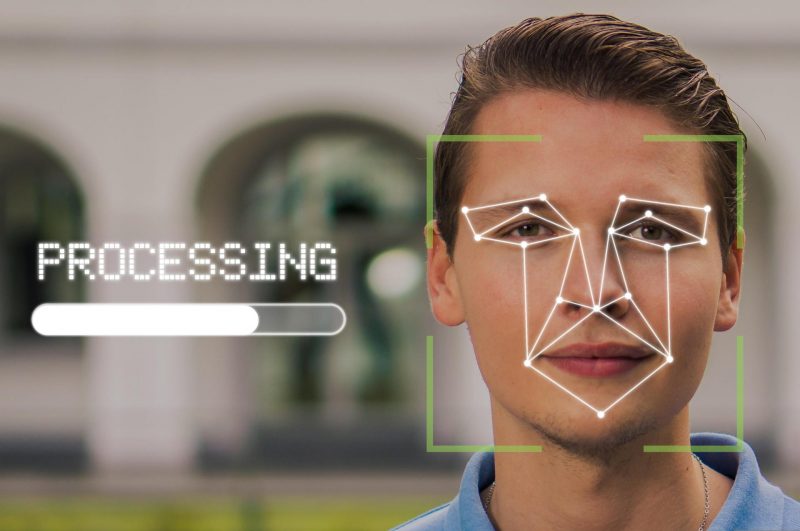
With the rapid advancement of large language models, today's most sophisticated artificial intelligence (AI) systems can easily pass the classic Turing Test. This has prompted scientists to reconsider whether new standards are needed to measure AI progress.
The Turing Test, proposed 75 years ago by British mathematician Alan Turing, was designed to judge whether a machine could mimic human intelligence through text-based conversation. Researchers point out, however, that it was essentially a philosophical thought experiment, never intended as a rigorous scientific assessment. While modern AI excels at language imitation, this does not indicate true understanding. When faced with tasks requiring deep reasoning or knowledge beyond its training data, AI systems can still make obvious errors.
To address these limitations, scientists are exploring more comprehensive evaluation methods. For example, the abstract reasoning test ARC-AGI-2 assesses AI adaptability through visual puzzles, while others have proposed a "Turing Olympics" comprising multiple tasks—from film comprehension to furniture assembly—closer to real-world applications. These efforts aim to move beyond mere language imitation and evaluate AI across multiple dimensions.
Experts agree that future AI assessments should emphasize safety and societal value. This includes system reliability, resistance to misuse, and performance in practical environments, as well as clarifying the distribution of benefits and risks to ensure AI development serves the public good.
The current consensus suggests that AI evaluation frameworks must evolve, shifting from simply testing intelligence imitation toward building safe, reliable, and socially beneficial AI systems. This transition will better guide AI technology in a direction that supports human society.

Tags
Artificial intelligence (AI) is rapidly transforming scientific research. Once limited to analyzing data, AI systems are now able to design experiments and even generate new hypotheses. Some experts believe that,…
According to WIRED, OpenAI is preparing to launch a standalone social app built around its AI video generation model, Sora 2. The app closely mirrors the design and user experience…

Artificial intelligence (AI) is increasingly helping scientists decode how animals communicate and explore the possibility of dialogue across species. Recent studies show that species such as bonobos, chimpanzees, Japanese tits,…

Artificial intelligence (AI) is increasingly accelerating research across multiple disciplines worldwide, particularly in automating the generation of scientific hypotheses. By scanning vast amounts of literature, AI can identify research gaps…

Advances in dataset optimization, computing power, and algorithms have significantly boosted the accuracy of artificial intelligence (AI)-based facial recognition, with most systems now surpassing 99% accuracy in controlled environments and…