According to research firm Canalys, AI phones are projected to account for less than 5% of total smartphone shipments in 2024, translating to an estimated 60 million units. Analysts from the agency suggest that the proliferation of generative AI poses new challenges to computing platforms and software capabilities when it comes to running large language models and other generative AI algorithms on the client side.
While AI capabilities in smartphones are not new, they have garnered attention for several years with the inclusion of ISP (Image Signal Processing) and NPU (Neural Processing Unit) in mobile phone System-on-Chips (SoCs), featuring various AI algorithms. The resurgence of AI as a popular concept can primarily be attributed to the emergence of large language models (LLMs), prompting mobile phone manufacturers to promote AI as a key selling point. However, users still harbor misconceptions about the concept of AI phones and the practical applications of AI on smartphones.
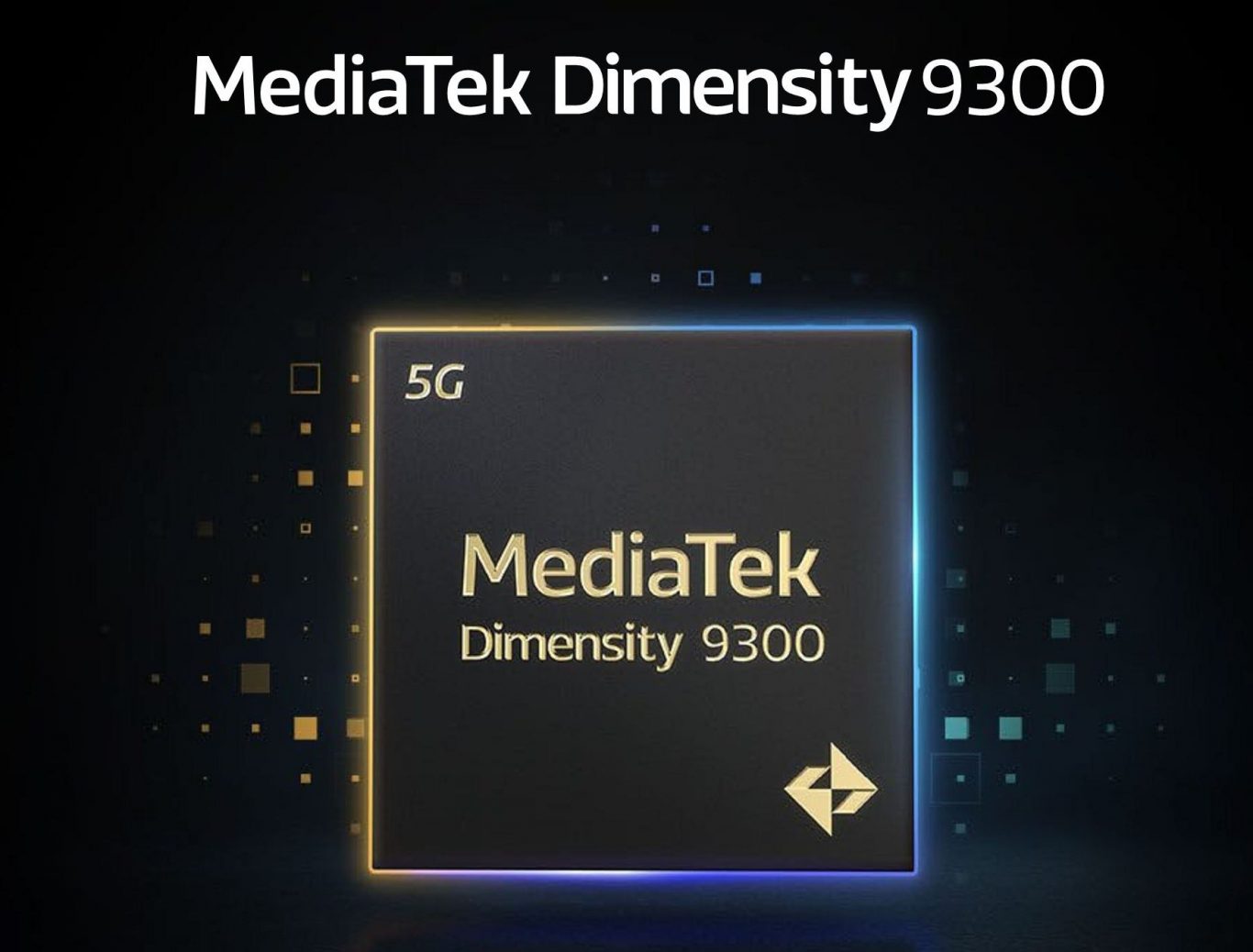 Image Credit: MediaTek Dimensity 9300
The term "AI phone" encompasses a complex and somewhat ambiguous notion, considering both hardware-level requirements and application aspects. Previously, chip manufacturers such as Qualcomm, MediaTek, and Samsung did not place significant emphasis on dedicated AI computing units within their SoCs. However, they have made design improvements including higher operating frequencies, larger caches, and faster memory bandwidth to enhance the performance of AI tasks like the NPU (Neural Network Processing Unit) and TPU (Tensor Processing Unit). For instance, the AI engine of Qualcomm Snapdragon 8 Gen3 offers nearly double the computing power compared to the previous generation. The MediaTek Dimensity 9300 exhibits a twofold increase in integer and floating-point performance, along with an eightfold boost in operator acceleration performance compared to its predecessor.
Consequently, an "AI mobile phone" concept encompasses SoCs with dedicated units for accelerating AI calculations, serving as the foundation for achieving greater efficiency. Furthermore, the ability to execute large models or other generative AI models on the device itself has become a prerequisite. The device-side execution of large models must surpass a certain speed threshold to ensure real-time AI operations.
Several flagship models already meet the prerequisites to be classified as "AI phones". And the upcoming Samsung Galaxy S24 series also boasts noteworthy AI capabilities. Reports suggest that this series may offer various AI functions, such as real-time language translation, text conversion and summarization, image expansion, wallpaper generation, and more. It is highly likely that more manufacturers will enter this domain in the future, although the extent to which they will do so remains uncertain in relation to Canalys's predictions.
While PC manufacturers are currently leveraging "AI" as a selling point for promoting new products, smartphones, being an integral part of most users' daily work and life, have already implemented various AI technologies in practical applications. Therefore, smartphones are poised to become crucial platforms for AI applications, particularly for on-device AI.
In terms of market size, Canalys predicts that the global smartphone market will reach 5 billion units in 2023, significantly surpassing the 1.4 billion PC market. Moreover, there are even user groups who have bypassed PCs entirely. Consequently, integrating on-device AI into smartphones will enable reaching a broader audience.
Modern smartphones have evolved beyond mere communication tools and have become central hubs within the smart ecosystem. They are extensively utilized not only for communication but also for payment, navigation, health management, smart homes, and more. As related technologies continue to advance, the functionality of smartphones undergoes constant upgrades and expansions, providing richer usage scenarios and ample space for AI applications.
Numerous research institutions and analysts have highlighted AI as a significant trend in the consumer electronics industry's future. Some analysts even assert that among all aspects of the AI industry chain, the operating system exerts the greatest influence on the AI product experience.
Currently, it is evident that some mobile phone manufacturers are actively exploring the deep integration of AI applications into their operating systems. This approach allows smartphones to offer users more personalized AI assistants, accurate content recommendations, and other AI-powered functionalities, thereby empowering smartphones with AI capabilities.
While the implementation of AI applications on smartphones may currently seem somewhat inconspicuous to many users, certain functions and applications have already demonstrated more tangible benefits. For instance, advancements in local AI computing power within new flagship SoCs have enabled AI assistants on some models to operate even without an internet connection. This not only safeguards user privacy but also ensures faster response times compared to cloud-based implementations.
Another significant area of improvement is the AI-driven enhancement of mobile phone imaging capabilities. Previously, smartphone imaging functions relied heavily on hardware specifications and algorithms to handle complex scenes. However, with the integration of AI, functions like video noise reduction and low-light enhancement are expected to perform even better. This advancement will have a positive impact on factors such as film yield and imaging quality.
The topic of "productivity applications" is often a subject of debate when considering smartphone usage scenarios. On one hand, the relatively small screen size limits the effectiveness of productivity-related applications. On the other hand, compared to PCs and tablets, mobile phones offer a less efficient input experience. However, the addition of AI, particularly the implementation of functions like voice transcription, document translation, and intelligent summarization, may transform smartphones into more capable productivity tools. This shift could dispel the notion that smartphones are unsuitable for productivity tasks and even make certain products stand out with their AI-empowered features, enhancing the differentiated user experience.
It is clear that AI is poised to play a crucial role in the future development and evolution of smartphones. While the current market conditions exhibit limitations such as limited applications, weak user perception, and absence of "rigid demand," AI has the potential to generate new demand for phone replacements and stimulate a faster recovery in the mobile phone market. However, it remains challenging to predict the extent to which AI will influence the overall market trend.
Nevertheless, as major mobile phone manufacturers continue to explore AI implementation, they may also create new business models and opportunities, fostering further innovation in the industry.
The Role of AI in Shaping the Future of Smartphones

Tags
With the rapid advancement of large language models, today's most sophisticated artificial intelligence (AI) systems can easily pass the classic Turing Test. This has prompted scientists to reconsider whether new…

Artificial intelligence (AI) is rapidly transforming scientific research. Once limited to analyzing data, AI systems are now able to design experiments and even generate new hypotheses. Some experts believe that,…

According to WIRED, OpenAI is preparing to launch a standalone social app built around its AI video generation model, Sora 2. The app closely mirrors the design and user experience…

Artificial intelligence (AI) is increasingly helping scientists decode how animals communicate and explore the possibility of dialogue across species. Recent studies show that species such as bonobos, chimpanzees, Japanese tits,…

Artificial intelligence (AI) is increasingly accelerating research across multiple disciplines worldwide, particularly in automating the generation of scientific hypotheses. By scanning vast amounts of literature, AI can identify research gaps…

Advances in dataset optimization, computing power, and algorithms have significantly boosted the accuracy of artificial intelligence (AI)-based facial recognition, with most systems now surpassing 99% accuracy in controlled environments and…