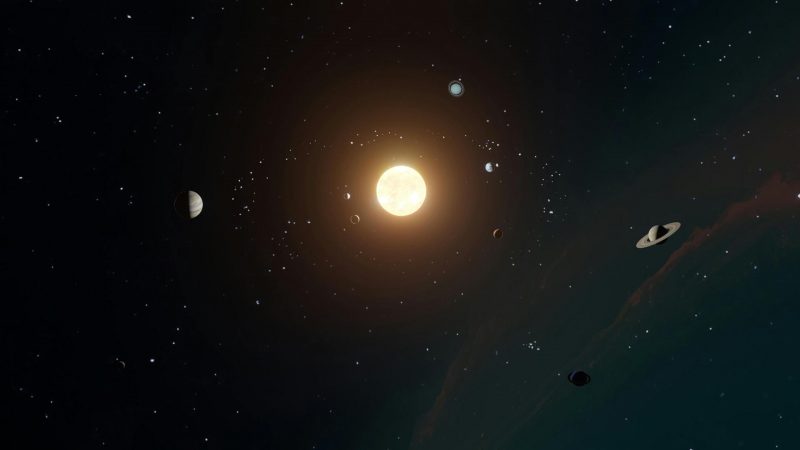
The Subaru Telescope has discovered a new celestial body beyond the known Kuiper Belt Objects (KBOs), revealing a more complex structure at the edge of the solar system than previously imagined. This finding has the potential to reshape our understanding of planetary formation processes and drive exploration for extraterrestrial life.
Since its inception in 2006, the Subaru Telescope has been observing the outer solar system, with its findings supporting NASA's New Horizons spacecraft in its close-up exploration of the Kuiper Belt at the outer edge of the solar system.
As of October 20 this year, these ongoing observations have unveiled 263 Kuiper Belt Objects. Among them, 11 celestial bodies are located beyond the recognized edge of the Kuiper Belt.
In recent years, mounting evidence has suggested the existence of objects beyond the known outer edge of the Kuiper Belt. However, this recent discovery holds significant importance as it unveils a substantial number of celestial bodies within a relatively small search area, ruling out the possibility of mere coincidence or misreporting. These 11 newly discovered celestial bodies appear to represent a new class of objects orbiting within a "ring", characterized by a distinct gap between this ring and the known Kuiper Belt, where very few objects reside. Many newly forming planetary systems observed by the Atacama Large Millimeter/submillimeter Array in Chile exhibit this ring-gap structure at their peripheries.
Astronomers suggest that apart from the known ring, there might be a second ring in the Kuiper Belt. Confirmation of this hypothesis would mark a significant discovery. The extent of the original solar nebula could be much larger than previously envisioned, significantly impacting research on the processes of planetary formation within the solar system.
Subaru Telescope Discovers New Celestial Body Beyond Kuiper Belt
Tags
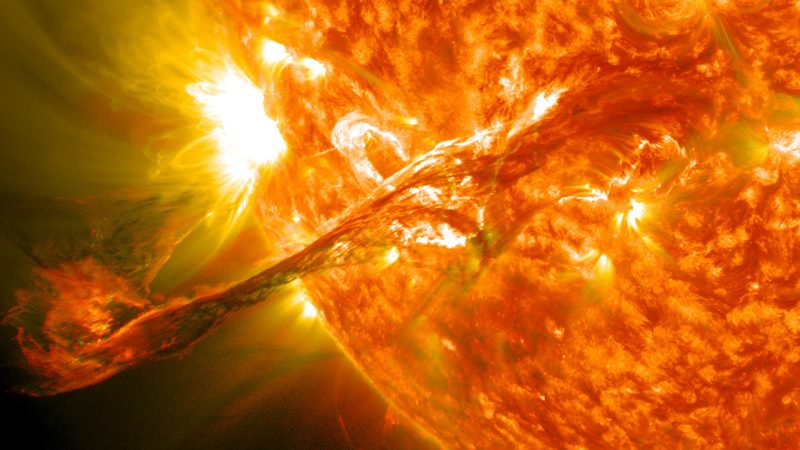
For decades, scientists have been puzzled by a strange solar phenomenon often called “solar rain.” Unlike rainfall on Earth, this occurs in the Sun's corona—a superheated plasma layer above its…
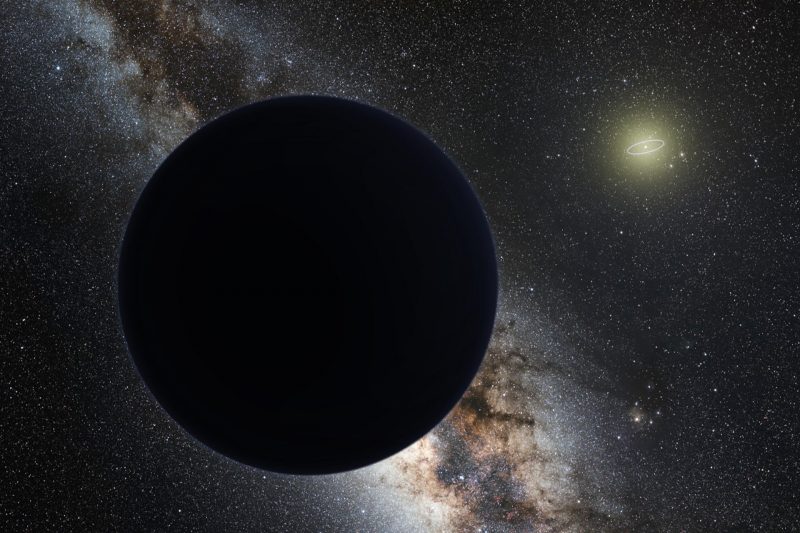
Astronomers have discovered a mysterious new world at the edge of the solar system—a trans-Neptunian object (TNO) designated 2017 OF201. The discovery, made by researchers from the Institute for Advanced…
Sunlight-Driven Device Recovers Ammonia from Wastewater for Fertilizer and Water Purification
As solar energy applications expand, scientists have developed a cost-effective technology that uses sunlight to recover ammonia from wastewater. The innovation, published in Nature Sustainability, offers a low-cost source of…
Researchers have developed a novel sponge-like device that can extract moisture from the air and release it into a container using solar energy. Unlike traditional fog-harvesting or radiative cooling techniques,…

A new study from Michigan State University suggests that integrating solar panel arrays into farmland—while continuing crop production—may be more economically beneficial than dedicating land solely to agriculture or solar…
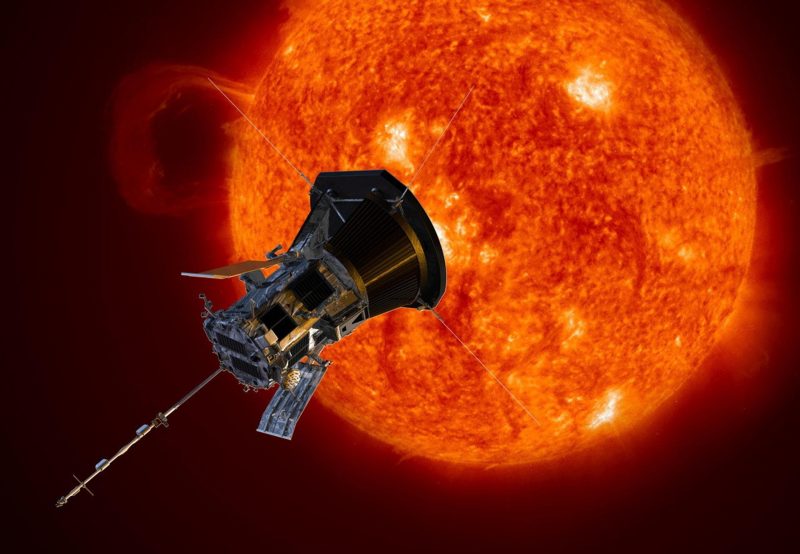
On December 24 of last year, NASA's Parker Solar Probe made history by becoming the first spacecraft to pass through the Sun's atmosphere. On January 1 this year, the probe…