The European Commission has recently announced that South Korea will be joining the "Horizon Europe" plan, marking the first participation of an East Asian country in the EU's prestigious scientific research and innovation funding program. South Korean Science and ICT Minister Lee Jong-ho and Illyana Ivanova, the European Commission’s Commissioner for Innovation, Research, Culture, Education, and Youth, have finalized an agreement. The formal signing is scheduled for later this year. The Horizon Europe program, with a budget of €95.5 billion over seven years, aims to expand its reach beyond Europe.
By becoming part of Horizon Europe, South Korea will enable its researchers to apply for and lead projects on an equal footing with scientists from EU member states. This move follows New Zealand's entry into the program less than a year ago, as the EU seeks to internationalize Horizon Europe. Previously, only countries from Europe's periphery were eligible, but the program is now open to countries beyond Europe that share a common commitment to research and innovation principles and values.
The program's "second pillar" funding, totaling €53.5 billion, will be accessible to researchers, institutions, and companies in participating countries. This funding will support research addressing global challenges in crucial areas like health, climate change, energy, and industrial competitiveness.
While some EU researchers have expressed reservations about extending the program to distant countries, arguing for a more Europe-centric approach, others advocate for further liberalization. James Wellston, a science policy expert at University College London, highlights the divide between those supporting expansion and those prioritizing European interests. Generally, countries with robust research and development systems are more receptive to widening participation, while weaker countries may exhibit more resistance.
Korean academics anticipate significant benefits from their involvement in Horizon Europe. Additionally, the South Korean government plans to increase research funding in 2025 to ensure that participation in Horizon Europe does not come at the expense of domestic projects.
Negotiations with Canada have concluded, and the country is expected to sign an association agreement later this year, following New Zealand's lead. Singapore and Japan are in preliminary discussions with the European Commission. Egypt has expressed interest in joining, but concerns regarding its track record on academic freedom could pose challenges to cooperation.
Tags
Chinese tech giant ByteDance is strategically positioning itself in the European artificial intelligence landscape with plans to establish a cutting-edge research and development center on the continent. According to a report…
South Korean IT giant Kakao's transportation platform, Kakao Mobility, which is the largest ride-hailing platform in South Korea, has recently been fined 72.4 billion Korean won (approximately 53.74 million USD)…

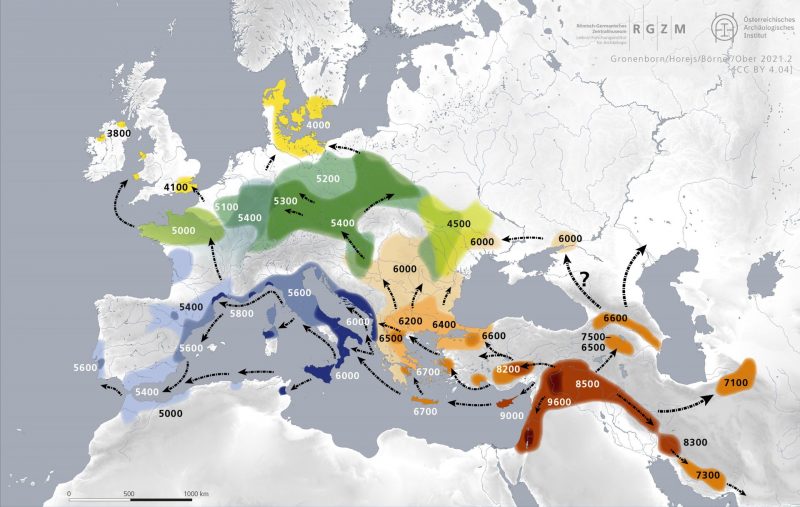
A research team led by the University of Barcelona in Spain has provided new insights into the emergence and development of early Neolithic agriculture in Western Europe. They have discovered…
The recent implementation of a 15-day visa-free travel policy for visitors from six European countries to China has sparked a significant surge in interest in traveling to the Asian nation. According…

Following its departure from the EU, the UK has chosen not to participate in the International Thermonuclear Experimental Reactor (ITER) project. Instead, the British government has declined the invitation to…