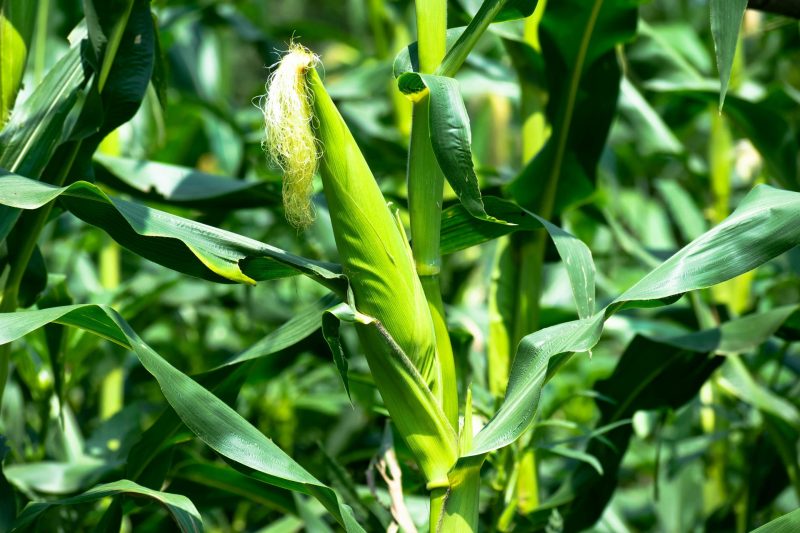
A research team led by the University of Barcelona in Spain has provided new insights into the emergence and development of early Neolithic agriculture in Western Europe. They have discovered that around 7,000 years ago, the first farmers in the western Mediterranean adopted advanced agricultural techniques similar to those used today. These farmers selected the most fertile lands for cultivation, planted cereal varieties similar to modern ones, and practiced efficient use of animal manure.
Published recently in the Proceedings of the National Academy of Sciences (PNAS), the study primarily draws on agricultural data from La Draga, one of the most significant and complex Neolithic sites on the Iberian Peninsula, along with 16 other sites in the region. It reconstructs the environmental conditions, crop management practices, and plant characteristics during the rise of agriculture in Western Europe.
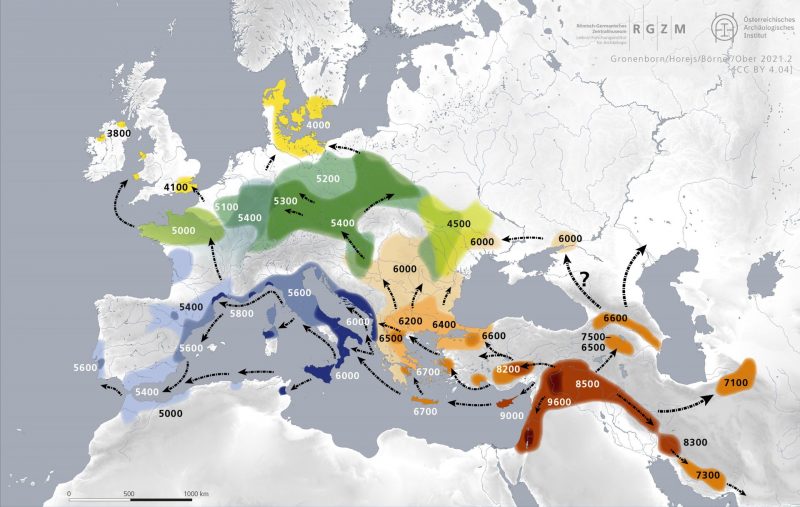
The research reveals that the earliest farmers on the Iberian Peninsula demonstrated a stable cereal cultivation technology, indicating an evolving transfer of techniques and genetic material as they migrated from the Fertile Crescent region to other parts of Europe. The Crescent region is the cradle of Neolithic agriculture in the Middle East.
Since its emergence around 12,000 years ago in the Fertile Crescent (referring to the fertile lands of Western Asia and North Africa, including the valleys of the two rivers), agriculture has significantly transformed the relationship between humanity and the natural environment, as well as socio-economic structures. Using paleoenvironmental reconstruction and archaeobotanical techniques, the team has now elucidated the conditions during the rise of agriculture in the La Draga region.
Located on the eastern shore of Lake Banyoles in Spain, La Draga is one of the earliest agricultural and pastoral communities in northeastern Iberia (5200-4800 BC), witnessing the initial agricultural and pastoral societies on the Iberian Peninsula. To provide a regional perspective to this study, researchers also examined cereal data from other Neolithic sites in the Iberian Peninsula and southern France.
New Insights into Early Neolithic Agriculture in Western Europe
Tags
Tens of millions of years before humans developed agriculture, termites had already evolved advanced farming systems—cultivating fungi inside their nests as a primary food source. Much like human farmers, these…
Sunlight-Driven Device Recovers Ammonia from Wastewater for Fertilizer and Water Purification
As solar energy applications expand, scientists have developed a cost-effective technology that uses sunlight to recover ammonia from wastewater. The innovation, published in Nature Sustainability, offers a low-cost source of…
Recent studies reveal that insect populations are rapidly decreasing, sparking widespread concern about the environmental and ecological implications. While intensive agriculture has often been identified as a leading cause, a…

A new study from Michigan State University suggests that integrating solar panel arrays into farmland—while continuing crop production—may be more economically beneficial than dedicating land solely to agriculture or solar…
Driven by strong demand for popular fruits like strawberries, the fruit cultivation industry continues to expand. However, a growing labor shortage is posing serious challenges. While elevated seedbed systems have…

Researchers from the University of York and the University of Copenhagen have reconstructed the genome of maize dating back approximately 1000 years, unveiling a close genetic connection between maize from…