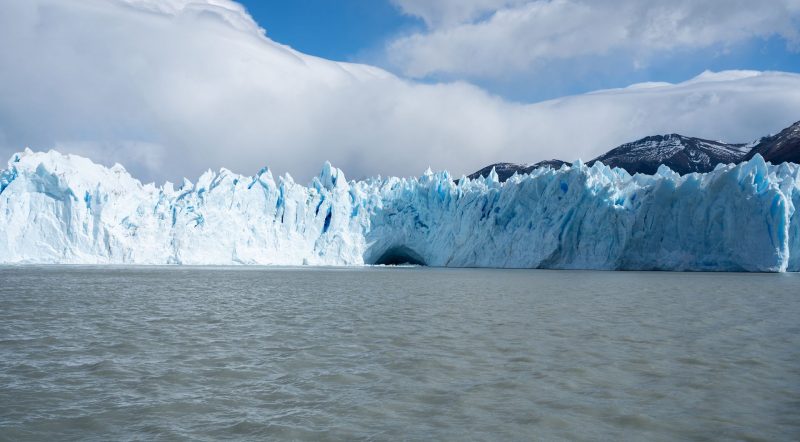
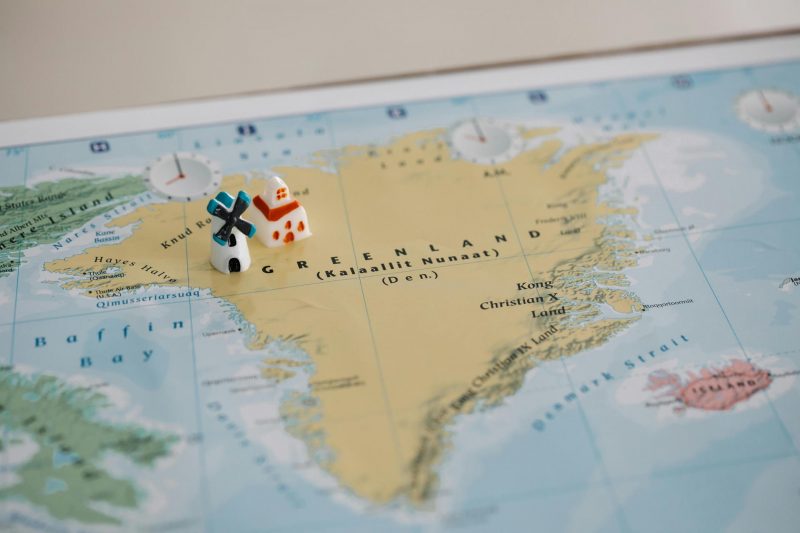
French scientists have made a significant discovery, revealing that the North Greenland ice shelf is rapidly retreating, resulting in a reduction of over 30% in total volume since 1978. Previously considered stable, three of the five ice shelves in the region have completely collapsed since the 2000s. The researchers highlight that the remaining five ice shelves are facing increasing instability near glaciers, which will further retreat as the ocean warms, leading to serious consequences for future sea-level rise. The findings of this relevant research were recently published in Nature Communications.
The loss of ice from the Greenland ice sheet contributed to 17.3% of the observed sea-level rise between 2006 and 2018. The sole remaining floating ice shelf in Greenland, located on the northern edge of the Greenland Ice Sheet, plays a crucial role in stabilizing the ice sheet by regulating the flow of ice into the ocean. However, the glaciers in northern Greenland have only recently begun to exhibit signs of instability, with more ice being lost than formed over the past 20 years. This is primarily due to the weakening and collapse of certain floating extensions of these glaciers. To better predict the impact on sea-level rise, it is necessary to understand the timing and factors driving changes in the remaining ice shelves and the response of glaciers. However, a comprehensive description of the evolution of these ice shelves and the complex processes influencing them has been lacking.
Romain Millan from the French National Center for Scientific Research and colleagues conducted an analysis using thousands of satellite images and climate modeling to examine glacier-climate-ocean interactions in North Greenland. Their research revealed a significant and widespread increase in ice shelf mass loss. Since 2000, they have found that ocean warming is primarily responsible for the loss of ice at the base of the Greenland Ice Shelf. Additionally, the study observed that Greenland glaciers have started to retreat, causing an increase in ice flow into the ocean, which coincides with the loss of ice shelves.
The results indicate that under future projections of ocean thermal stress, basal melt rates will continue to increase or remain at high levels. This could further destabilize Greenland glaciers. The researchers believe that the glaciers in northern Greenland could significantly contribute to sea-level rise caused by the ice sheet if the ice shelves were to collapse entirely. It is therefore crucial to closely monitor and better understand the ongoing changes in these ice shelves and the complex processes influencing them. This knowledge is essential for accurately predicting and mitigating the potential consequences of rising sea levels.
Rapid Retreat of North Greenland Ice Shelf Raises Concerns for Sea Level Rise
Tags
A research team from The Hong Kong Polytechnic University has, for the first time, used Satellite Laser Ranging (SLR) technology to generate precise global records of ocean mass changes spanning…
Climate change is not only intensifying droughts, heatwaves, and storm surges but may also be increasing the risk of earthquakes through accelerated glacier melt. A research team from ETH Zurich…
A groundbreaking study published in Science reveals that terrestrial water storage—comprising groundwater, soil moisture, and surface water—has been declining at an alarming rate since the start of the 21st century,…
A new study analyzing the genomes of nearly 6,000 Greenlanders reveals that after their Inuit ancestors first settled the island about 1,000 years ago, little subsequent migration occurred. This prolonged…
Coastal cities play a vital role in the global economy, yet they face significant challenges due to climate change. This highlights their essential role in global climate adaptation efforts. …
Glaciologists have recently released a white paper advocating for increased research into novel strategies to protect fragile ice sheets, including the construction of flexible barriers and deep drilling. Over the…