Tens of millions of years before humans developed agriculture, termites had already evolved advanced farming systems—cultivating fungi inside their nests as a primary food source. Much like human farmers, these subterranean growers face the challenge of controlling competing fungi that threaten crop yields.
A recent study focused on Odontotermes obesus, a South Asian termite species that maintains a highly organized agricultural chain. Worker termites gather plant material, chew and process it, and deposit it into specialized chambers with stable temperature and humidity, designed for cultivating Termitomyces fungi. Once mature, the fungi provide a continuous, nutrient-rich food supply.
Researchers at the Indian Institute of Science Education and Research (IISER) Mohali uncovered the termites' integrated defense system against the competing fungus Pseudoxylaria. Laboratory observations showed that termites adopt different strategies depending on infection severity: mild infections are locally removed, while severe infestations are managed through complete burial.
Further experiments revealed that soil microbiota play a critical role in this defense. Sterilized soil failed to inhibit fungal growth, whereas extracts containing natural microbial communities effectively suppressed it. This indicates that termites harness antifungal microbes in the soil by burying contaminated fungus gardens, thereby achieving biological control.
Behavioral studies also demonstrated that termites can precisely identify infected sections when healthy and contaminated gardens are connected, isolating and treating only the infected areas while preserving healthy ones. This ability to tailor responses based on threat levels highlights sophisticated behavioral regulation.
The team is now investigating the neurobiological basis of termite decision-making and the specific mechanisms of soil microbes. Insights from these ancient farming systems not only deepen our understanding of insect social complexity but also inspire new directions for sustainable agricultural practices.
Termites' Ancient Farming Systems Reveal Sophisticated Pest Management Strategies
Tags
Sunlight-Driven Device Recovers Ammonia from Wastewater for Fertilizer and Water Purification
As solar energy applications expand, scientists have developed a cost-effective technology that uses sunlight to recover ammonia from wastewater. The innovation, published in Nature Sustainability, offers a low-cost source of…

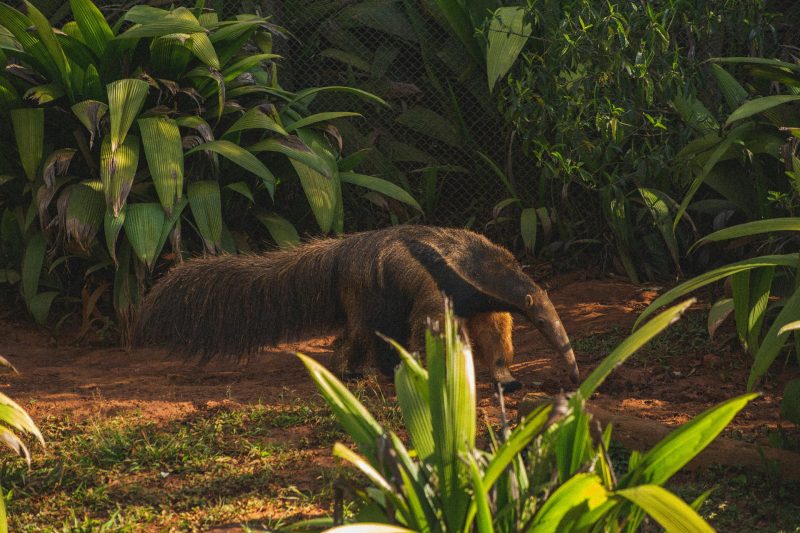
Mammals Have Evolved Ant- and Termite-Eating Adaptations at Least 12 Times Since Dinosaur Extinction
Since the extinction of non-avian dinosaurs 66 million years ago, mammals have independently evolved specialized adaptations for feeding on ants and termites at least 12 times. This finding, published in…
Flooding along the U.S. West Coast is often driven by atmospheric rivers—narrow corridors of concentrated moisture that deliver much-needed precipitation but can also trigger severe disasters. While storm intensity plays…

A research team from Rice University and Baylor College of Medicine has developed a groundbreaking method for detecting soil pollutants, capable of identifying harmful substances that have never been isolated…

Recent studies reveal that insect populations are rapidly decreasing, sparking widespread concern about the environmental and ecological implications. While intensive agriculture has often been identified as a leading cause, a…