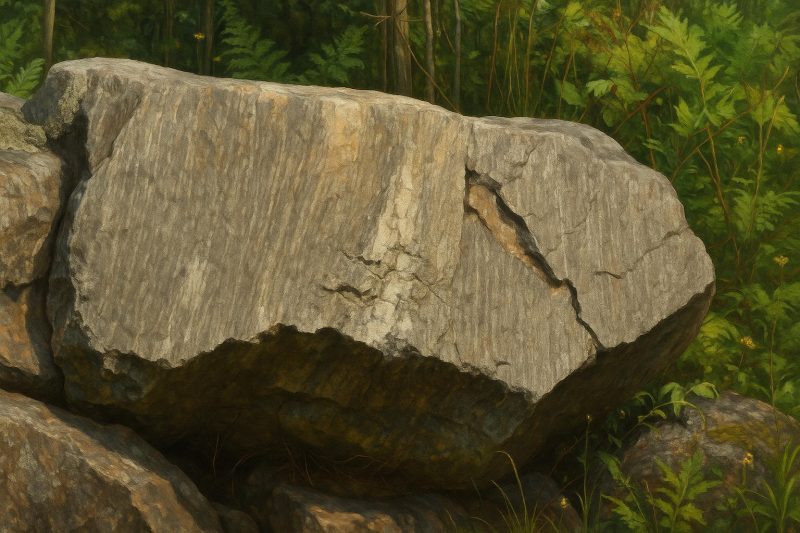
A sign once proudly declared a piece of gneiss in Minnesota's Minnesota River Valley to be the “oldest rock on Earth”, dated at 3.8 billion years. However, new geological research has debunked that claim, revealing the rock is neither the oldest globally—an honor currently held by the 4.0-billion-year-old Acasta Gneiss in Canada—nor likely the oldest in the United States. Scientists now believe the Minnesota gneiss's age was overestimated by at least 300 million years.
Through detailed mineral analysis, particularly of zircon crystals, geologists have identified Michigan's Watersmeet Gneiss as the oldest known rock in the U.S., with an age of at least 3.6 billion years. Zircon dating is a standard but complex method, as zircons can survive longer than their host rocks or be incorporated from older materials during tectonic processes, making age interpretation challenging.
The study examined gneiss samples from Minnesota, Wyoming, and Michigan, uncovering wide variations in zircon ages. For instance, Wyoming's Sacajewea Gneiss showed zircons mostly around 3.4 billion years old, with a few reaching 3.8 billion. Michigan's Watersmeet Gneiss revealed zircons ranging from 3.8 billion to as young as 1.3 billion years, suggesting a tumultuous history of volcanic intrusion and plate movement.
These findings are not merely about geological bragging rights—they offer critical insights into Earth's formative years. Accurate rock dating underpins our understanding of major events like the emergence of life and mountain formation. Researchers emphasize that while younger rocks are relatively easy to date, Earth's earliest history remains elusive. Some scientists speculate that even older rocks may exist, hidden deep within the crust or recycled into the mantle.
Minnesota Rock Loses Claim to “Oldest in the World” Amid New Geological Findings
Tags
A groundbreaking study by scientists from Pennsylvania State University and Columbia University, recently published in Nature Geoscience, reveals that Earth's continents owe their long-term stability—and their role as the cradle…

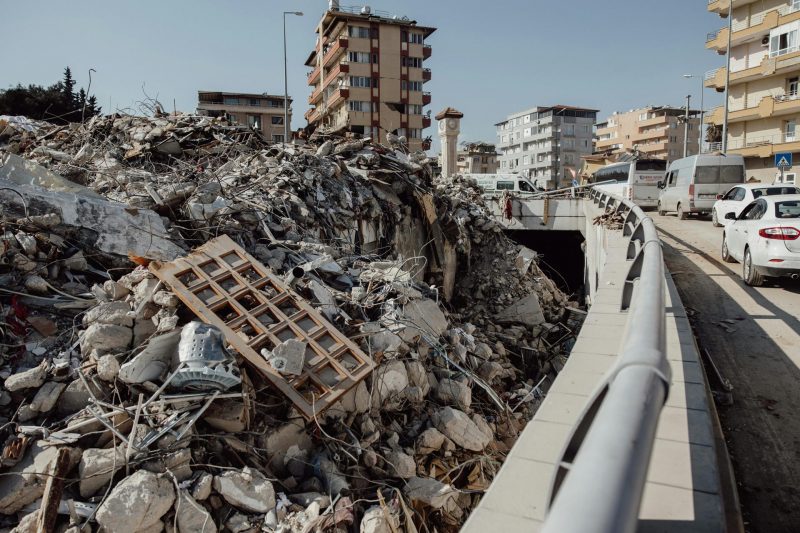
When earthquakes strike, the ground shaking people feel accounts for only a small fraction of the total energy released. Researchers at the Massachusetts Institute of Technology (MIT) have now shown…
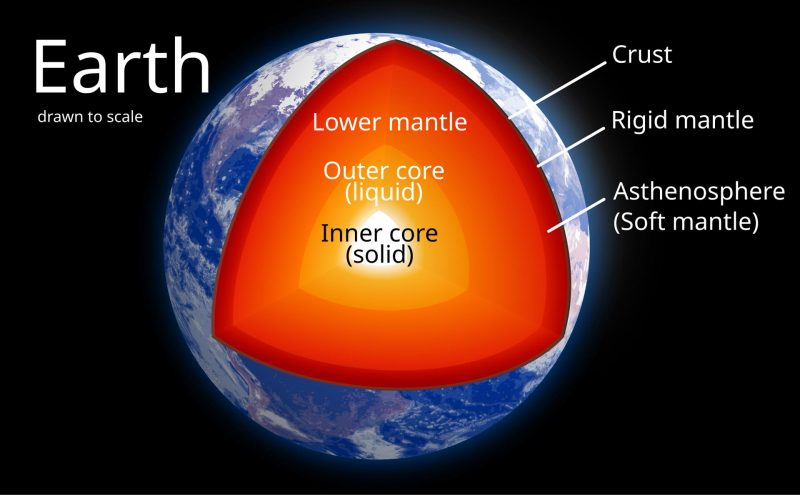
Scientists analyzing satellite data have uncovered a mysterious material disturbance near Earth’s core–mantle boundary that occurred between 2006 and 2008. The anomaly, recently detected by the US–German "Gravity Recovery and…
How did life arise from nothing? A new mathematical study offers a surprising perspective on this ultimate question. Researchers at Imperial College London suggest that the probability of life naturally…

Despite their simple structure, mosses are capable of surviving in some of Earth's most extreme environments, such as Antarctica, deserts, and high mountains. Now, researchers from Hokkaido University in Japan…
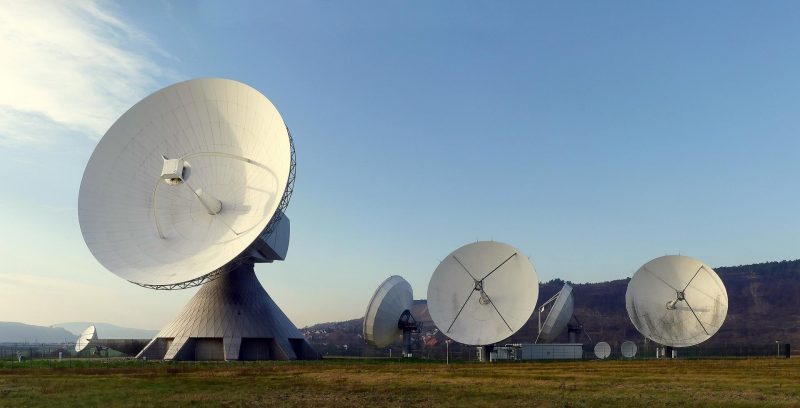
A new study reveals that Earth's civil and military radar systems may be inadvertently transmitting signals into space that could be detected by alien civilizations. These unintended electromagnetic emissions—especially from…