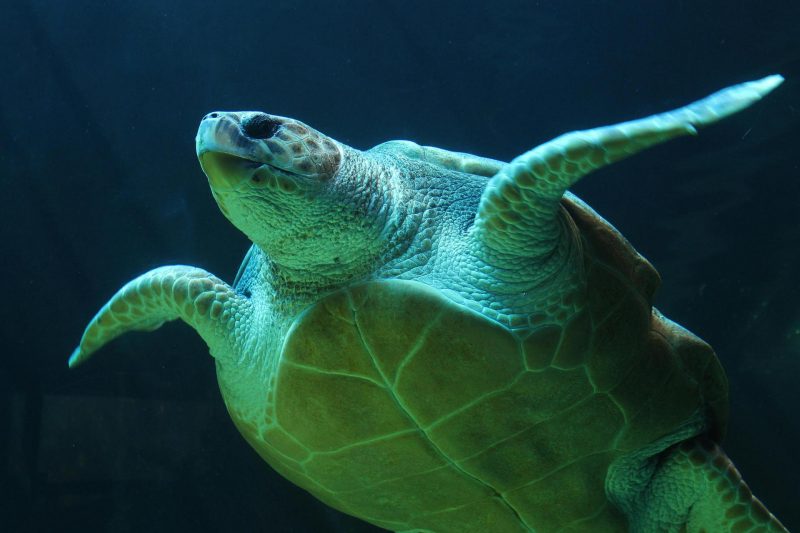
Green turtles are adapting their nesting behavior in response to rising global temperatures, with females beginning to lay eggs earlier in the season to cope with warmer conditions. This finding was recently reported in the journal Proceedings of the Royal Society B: Biological Sciences.
It has long been known that the sex of most sea turtle hatchlings is determined by the incubation temperature—higher temperatures tend to produce females, while lower temperatures yield males. As climate change drives global temperatures upward, this skewed sex ratio—more females and fewer males—poses a potential threat to the stability of turtle populations. Additionally, extreme heat can prove fatal to turtle eggs.
To understand how green turtles are responding to these environmental changes, researchers from the University of Exeter analyzed 30 years of nesting data from approximately 600 tagged green turtles on beaches in northern Cyprus. The data included the number of hatchlings successfully emerging from each nest and the temperatures recorded during incubation. The team found that as temperatures rose, females began nesting earlier in the season—on average, nesting occurred more than six days earlier for every 1°C increase in temperature.
This study is the first to observe such adaptive changes at the individual level, rather than merely at the population level. While previous research had already shown that turtle populations were nesting earlier overall, this new study confirms that individual turtles are actively adjusting their behavior in response to climate change. Researchers note that shifts in population-level nesting behavior could be influenced by a variety of factors, making individual-level observations especially valuable.
Beyond temperature, other factors such as reproductive experience and the number of clutches laid within a year also affect nesting timing. Additional studies suggest that earlier nesting observed in some sea turtle species may already be helping to mitigate the harmful effects of higher temperatures on eggs, offering hope for the species' resilience in a warming world.
Green Turtles Shift Nesting Habits in Response to Rising Global Temperatures
Tags
The Sahara Desert, one of the driest places on Earth with an average annual rainfall of just about three inches, may experience a striking transformation later this century. A new study…

A 97-million-year-old sea turtle fossil unearthed in Lebanon is reshaping scientists' understanding of how turtles adapted to life in the ocean. The study, published in iScience, a journal under Cell,…
A new study led by the University of Exeter warns that the world has crossed its first recognized climate "tipping point", as coral reef ecosystems enter a state of widespread…

A new study led by the University of Reading challenges long-held assumptions about primate origins. For decades, scientists believed primates, including humans, emerged from warm, humid tropical forests. However, reanalysis…

A research team from The Hong Kong Polytechnic University has, for the first time, used Satellite Laser Ranging (SLR) technology to generate precise global records of ocean mass changes spanning…

Prochlorococcus, the most abundant microbe in the oceans, is facing a survival crisis due to global warming. This single-celled cyanobacterium, found across more than 75% of the ocean's surface waters,…