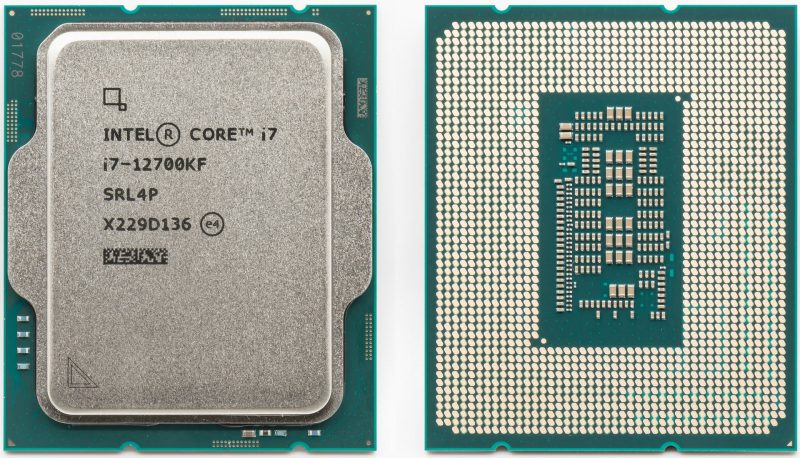
In a recent ruling, the Dusseldorf District Court in Germany has found Intel guilty of patent infringement against US-based R2 Semiconductor (R2 Semiconductor Company). Consequently, the court has issued an injunction, prohibiting the sale of several Intel processors and devices based on these processors within Germany. This ruling is expected to impact devices from Dell and HP as well.
R2 Semiconductor claims that Intel's Core series processors, including Ice Lake, Tiger Lake, Alder Lake, and Xeon scalable processors, alongside consumer laptops and servers incorporating these processors, have violated its voltage regulation technology European patent.
In response, Intel has argued that R2 Semiconductor's patents were declared invalid in the United States and has accused the company of being a patent troll. Intel believes that entities like R2, which seemingly operate as shell companies solely engaged in litigation, should not be granted injunctions against CPUs and other crucial components, as it would come at the expense of consumers, workers, national security, and the overall economy.
Intel is currently engaged in a legal battle with R2 Semiconductor in the UK and is striving to resolve its longstanding dispute with VLSI.
Regarding the recent injunction imposed by the Dusseldorf District Court, Intel maintains that its products do not infringe upon R2 Semiconductor's patents. The company plans to appeal the ruling and has requested the German Patent Court to declare the patent invalid.
While many of the affected Ice Lake and Tiger Lake processors are already discontinued, mitigating the impact on Intel and its partners, there are still some downsides as some PCs continue to utilize Intel's 12th generation core, "Alder Lake." Boxed and tray versions of these CPUs are still available, potentially leading to some repercussions.
It is worth noting that Intel's latest generation Core series processors, namely Raptor Lake and Raptor Lake Refresh, as well as Core Ultrabook Meteor Lake CPUs, do not infringe upon any of R2 Semiconductor's patents, and therefore, remain unaffected by the sales ban.
Germany Bans Sale of Certain Intel Processors Following Patent Infringement Case
Tags
On February 5 (local time), Qualcomm CEO Cristiano Amon announced that Arm, the chip design company under SoftBank, had withdrawn its breach of contract allegations against Qualcomm and that there…

According to media reports, ASML's CEO, Christophe Fouquet, has announced that Intel has completed the assembly of its second High-NA EUV lithography machine. Christophe Fouquet stated that unlike conventional EUV…
Intel's Chip Foundry Business Reports $7 Billion Loss in 2023, Faces Long Road to Recovery
In a recent filing with the U.S. Securities and Exchange Commission (SEC), Intel revealed concerning financial figures for its chip manufacturing division, Intel Foundry. The document stated that the division's…
Intel introduced the oneAPI toolkit in late 2020, marking its debut as a cross-architecture programming tool. The toolkit aims to simplify programming across various hardware platforms including GPUs, CPUs, FPGAs,…
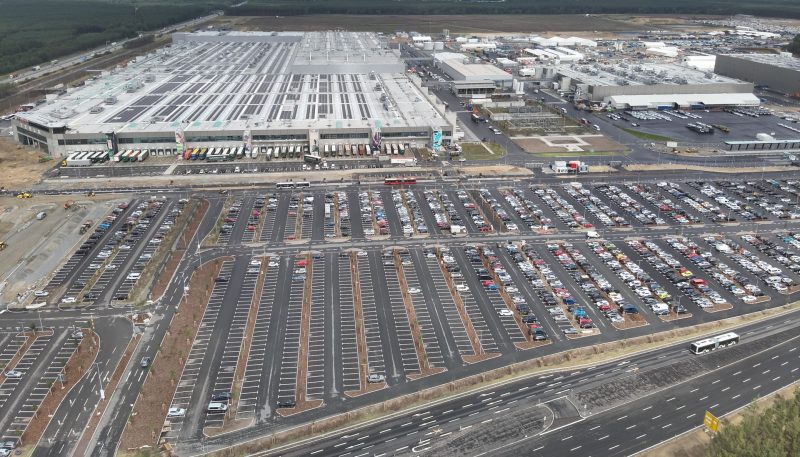
The Tesla Gigafactory in Brandenburg, Germany, situated near Berlin in the Grinheide district, is facing opposition from local residents as it seeks to expand its operations. Currently, the Gigafactory produces…
Biden Administration Negotiating $10 Billion Subsidy Deal with Intel to Boost US Semiconductor Manufacturing
Bloomberg has reported that the Biden administration in the United States is currently in negotiations to provide Intel Corporation with over $10 billion in subsidies. If successful, this funding award…