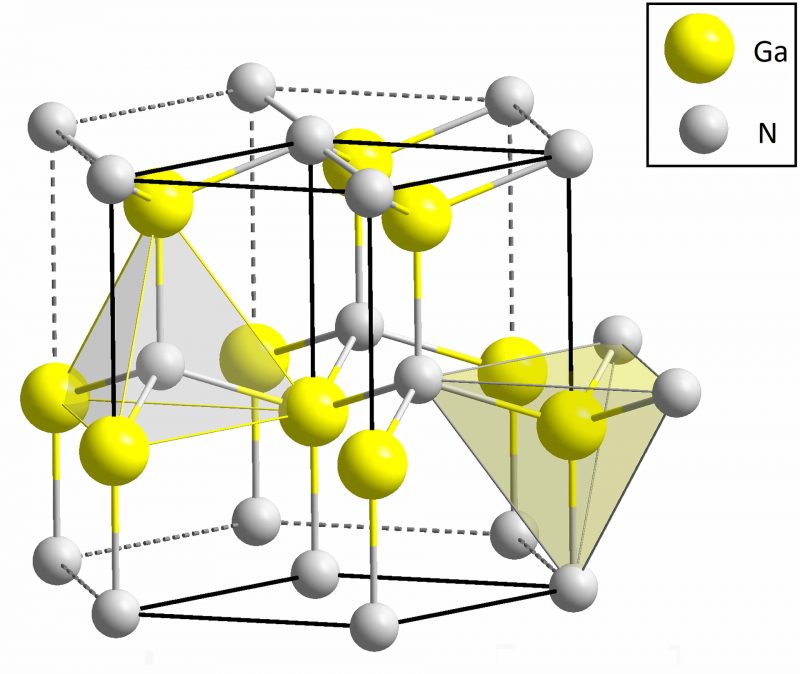
Researchers are exploring the use of gallium nitride, known for its ability to withstand temperatures above 500 degrees Celsius, in high-temperature environments like Venus. With surface temperatures reaching a scorching 480 degrees Celsius, Venus poses significant challenges for both humans and machines. One obstacle preventing the deployment of probes to Venus is that silicon-based electronics cannot endure such extreme temperatures for extended periods.
In a recent publication in Applied Physics Letters, a group of scientists from MIT and other institutions delved into the properties and performance of gallium nitride at exceptionally high temperatures. Their study focused on examining the impact of temperature on ohmic contacts within gallium nitride devices. These contacts play a crucial role in connecting semiconductor devices to the external world.
Surprisingly, the researchers discovered that extreme temperatures did not cause significant degradation to either the gallium nitride material or the ohmic contacts. Even after enduring exposure to 500 degrees Celsius for 48 hours, the structural integrity of these ohmic contacts remained intact, defying expectations.
This investigation into the behavior of ohmic contacts within gallium nitride devices at extreme temperatures is a critical step toward the team's ultimate objective: developing high-performance transistors capable of functioning on Venus's surface. Moreover, these transistors could find applications on Earth, such as facilitating geothermal energy extraction or monitoring the internal workings of jet engines.
Gallium Nitride Shows Promise in High-Temperature Environments, Including Venus
Tags
A rare mineral found in meteorites and on Mars has drawn scientific interest for its unusual thermal behavior. Unlike typical materials, this substance maintains nearly constant thermal conductivity across temperature…

Earth's climate has swung dramatically between extremes of ice and heat throughout its history. In fact, for much of geological time, Earth has been a warm, ice-free planet. During the Cretaceous…

New Molecular Magnet Sets Record for High-Density Data Storage at Elevated Cryogenic Temperatures
A research team from the University of Manchester and the Australian National University has developed a novel molecular magnet capable of storing data at the ultra-low temperature of 100 Kelvin…

In recent weeks, extreme heatwaves have grippedd the United States, China, and Europe. Yet scientists warn that persistent high temperatures—even those not meeting official heatwave criteria—can also pose serious health…

A recent NASA study reveals that large circular features on Venus—known as coronae—may be evidence of ongoing geological activity. The findings, published in Science Advances, are based on data collected…

Global warming could significantly increase methane emissions from wetlands by promoting the growth of methane-producing microbes while suppressing the activity of methane-consuming organisms, according to a study published in Science…